


UNC FAMILY DRAMA BREWING? 🚨: A Tar Heel Legend Just Revealed He Was Denied Even an Interview for the Job Michael Malone Landed—and His Emotional Comments About Being “Shut Out” Are Suddenly Sparking Major Questions About What Really Happened Behind Closed Doors in Chapel Hill…
For months, the conversation surrounding North Carolina Tar Heels men’s basketball has focused almost entirely on the future.
Michael Malone’s arrival brought national headlines. International recruiting efforts generated excitement. Transfer portal additions created optimism. And after a turbulent ending to the Hubert Davis era, Chapel Hill appeared ready to embrace a bold new direction.
But now, an unexpected revelation from one of the program’s own legends has reopened old emotions—and sparked an entirely different conversation.
A conversation about loyalty.
About identity.
And about whether North Carolina quietly turned its back on one of its own.
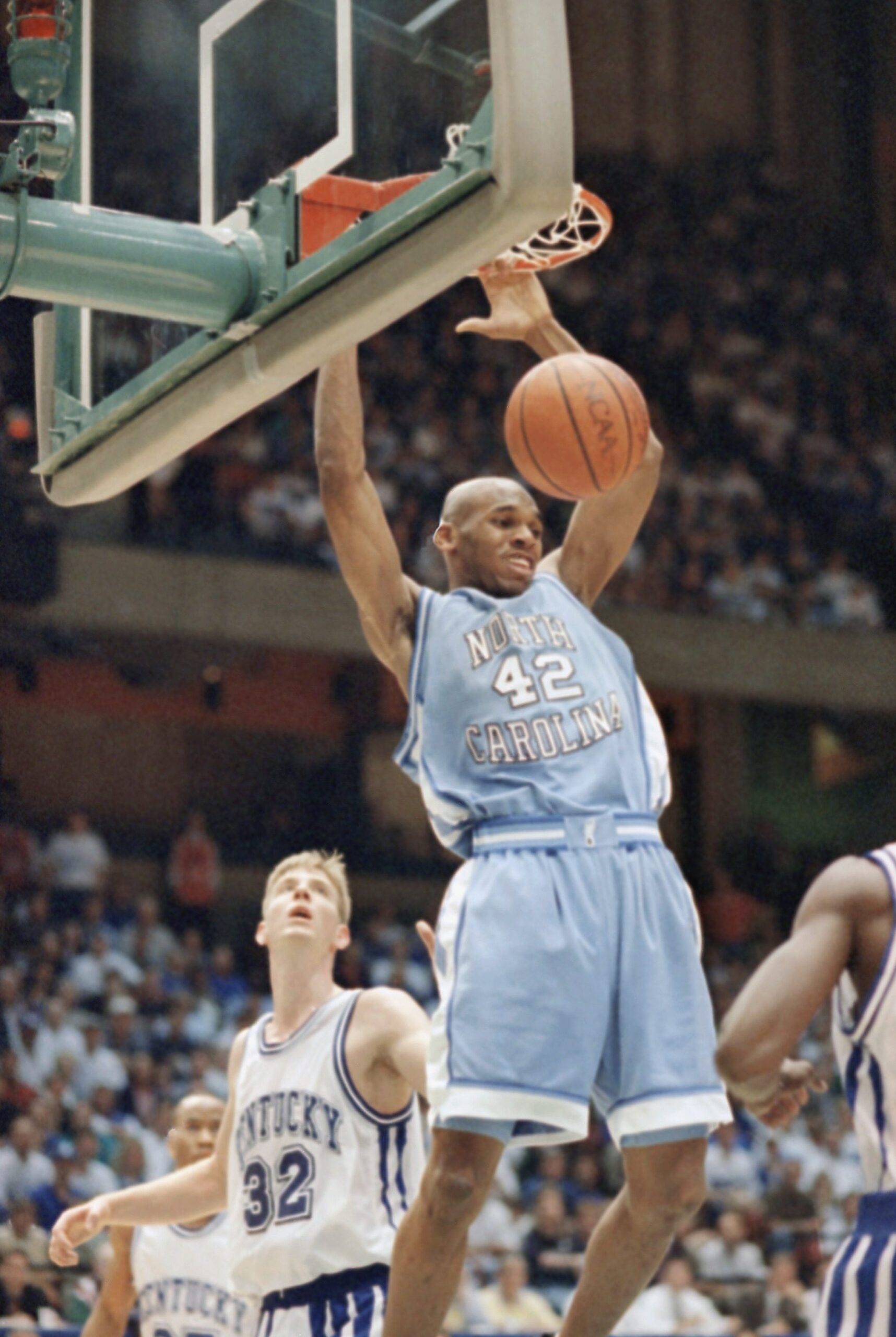
Former Tar Heel star Jerry Stackhouse recently revealed that he was never even granted an interview for the head coaching position that ultimately went to Malone. And while Stackhouse made it clear he respects UNC’s new coach, his disappointment over how the process unfolded has immediately become one of the most talked-about storylines surrounding the program.
Because for many fans, this isn’t just about a coaching search anymore.
It’s about what UNC basketball is becoming.
Stackhouse Didn’t Hide His Frustration
During a candid interview discussing the coaching search, Stackhouse admitted that being denied the opportunity to even present his vision for the program was deeply disappointing.
Not because he believed the job belonged to him automatically.
But because he felt he had earned the right to at least be heard.
And honestly, from his perspective, it’s not difficult to understand why.
Stackhouse isn’t just another former player hoping for a dream opportunity. He’s one of the most recognizable figures in modern UNC basketball history—a former All-American, NBA veteran, and respected basketball mind who later transitioned into coaching.
After spending time developing talent at Vanderbilt and later joining the Golden State Warriors staff, Stackhouse believed his résumé deserved legitimate consideration.
Instead, according to him, the door never even opened.
That’s the part that seems to sting most.
The Hubert Davis Situation Still Lingers
What made Stackhouse’s comments especially emotional was his reference to how Hubert Davis’ departure unfolded.
Even months later, that situation remains sensitive within portions of the UNC fanbase.
Davis was viewed by many as “family”—a former player who deeply understood the culture, expectations, and emotional weight of North Carolina basketball. So when the program moved on from him, some fans already felt uneasy about how quickly the search shifted toward an outside candidate.
Stackhouse clearly noticed that tension.
And when UNC reportedly declined to interview another Carolina alum for the job, it reinforced the growing perception that the program may be moving away from its traditional “Carolina Family” identity.
That realization has quietly become one of the biggest undercurrents surrounding the Malone era.
Michael Malone Was the Bold, Unconventional Choice
To be clear, none of this is necessarily criticism of Michael Malone himself.
In fact, Stackhouse openly praised Malone during his comments, calling him a coach he respects and someone he believes can succeed in Chapel Hill.
That matters.
Because this isn’t about bitterness toward Malone.
It’s about the process.
UNC didn’t simply hire another college basketball coach. It made one of the boldest hires in recent memory by bringing in an NBA championship-winning coach with no college head coaching experience.
That decision signaled something important:
North Carolina was prioritizing innovation over familiarity.
The administration clearly wanted a fresh voice, modern roster construction ideas, and NBA-level systems capable of evolving the program for the future.
Malone represented all of that.
But with bold decisions come consequences.
And one consequence may be alienating portions of the Carolina family who believed the program’s traditions still mattered deeply in leadership decisions.
The Debate Now Dividing Fans
Since Stackhouse’s comments surfaced, UNC fans have largely split into two camps.
One side believes the administration made the correct decision.
Their argument is simple:
College basketball has changed dramatically. NIL, the transfer portal, and international recruiting have transformed roster-building. UNC needed a coach capable of adapting aggressively to modern basketball realities, and Malone’s NBA background offered a fresh perspective.
To those fans, the hire was about maximizing the future—not protecting nostalgia.
But the other side sees something more troubling.
They believe UNC’s identity has always been built on continuity, relationships, and the idea that former players remain deeply connected to the program’s future. From Dean Smith to Roy Williams to Hubert Davis, Carolina basketball historically valued internal culture as much as external success.
Ignoring Stackhouse completely feels, to many, like a break from that philosophy.
And that emotional divide may not disappear anytime soon.
Why Stackhouse’s Resume Complicates Everything
If this were simply a former player expressing interest without coaching credentials, the reaction probably wouldn’t be nearly as strong.
But Stackhouse’s background makes the situation harder to dismiss.
At Vanderbilt, he inherited one of the SEC’s toughest rebuilding situations and still managed to develop NBA-caliber talent despite significant roster limitations. Players like Aaron Nesmith, Scotty Pippen Jr., and Saben Lee all flourished under his watch.
Was his overall record elite?
No.
But context matters.
Stackhouse coached during one of the most chaotic periods in college athletics history while operating at a program that historically struggles to compete consistently in basketball-heavy recruiting battles.
That’s why many around the sport believed he deserved at least a conversation.
And apparently, he believed that too.
What This Means for Michael Malone Moving Forward
Fair or unfair, Stackhouse’s comments increase the pressure surrounding Malone’s first season.
Because now, Malone isn’t simply trying to win games.
He’s also trying to justify the program’s decision to move outside the Carolina family tree.
Every loss will intensify scrutiny.
Every roster gamble will be dissected.
Every recruiting battle will carry extra weight.
That’s the reality when a blue blood program bypasses internal candidates with strong emotional ties to the school.
The expectations become enormous immediately.
And while Malone has already impressed many with his aggressive recruiting style and international approach, fans ultimately care about one thing above everything else:
Winning.
If UNC quickly returns to national contention, much of this debate fades into the background.
But if struggles continue?
Stackhouse’s comments could become part of a much larger conversation about whether the program abandoned its identity too quickly.
The Carolina Family Conversation Isn’t Going Away
Perhaps the most important takeaway from all of this is that the “Carolina Family” concept still matters deeply to people connected to the program.
For decades, UNC basketball has sold itself as more than a school or a team. It has presented itself as a lifelong brotherhood built on loyalty, relationships, and shared legacy.
Stackhouse’s disappointment exposed the emotional tension that can emerge when modern business decisions collide with that tradition.
Because in today’s college sports world, programs are increasingly forced to think like corporations:
maximize resources,
adapt aggressively,
modernize quickly,
and prioritize results above sentiment.
UNC appears to be embracing that reality.
But the reaction to Stackhouse’s comments proves something else too:
Not everyone is fully comfortable with what that transformation looks like.
And until Michael Malone starts delivering major victories in Chapel Hill, those questions about what UNC sacrificed—and whether it was worth it—are only going to grow louder.




