


The Single Shot That Launched a Dynasty: They Don’t Talk About This Enough
Long before the championships, the billion-dollar brand, and the six NBA titles, Michael Jordan was just another freshman trying to earn the trust of one of college basketball’s toughest coaches.
That’s the part of the story most people forget.
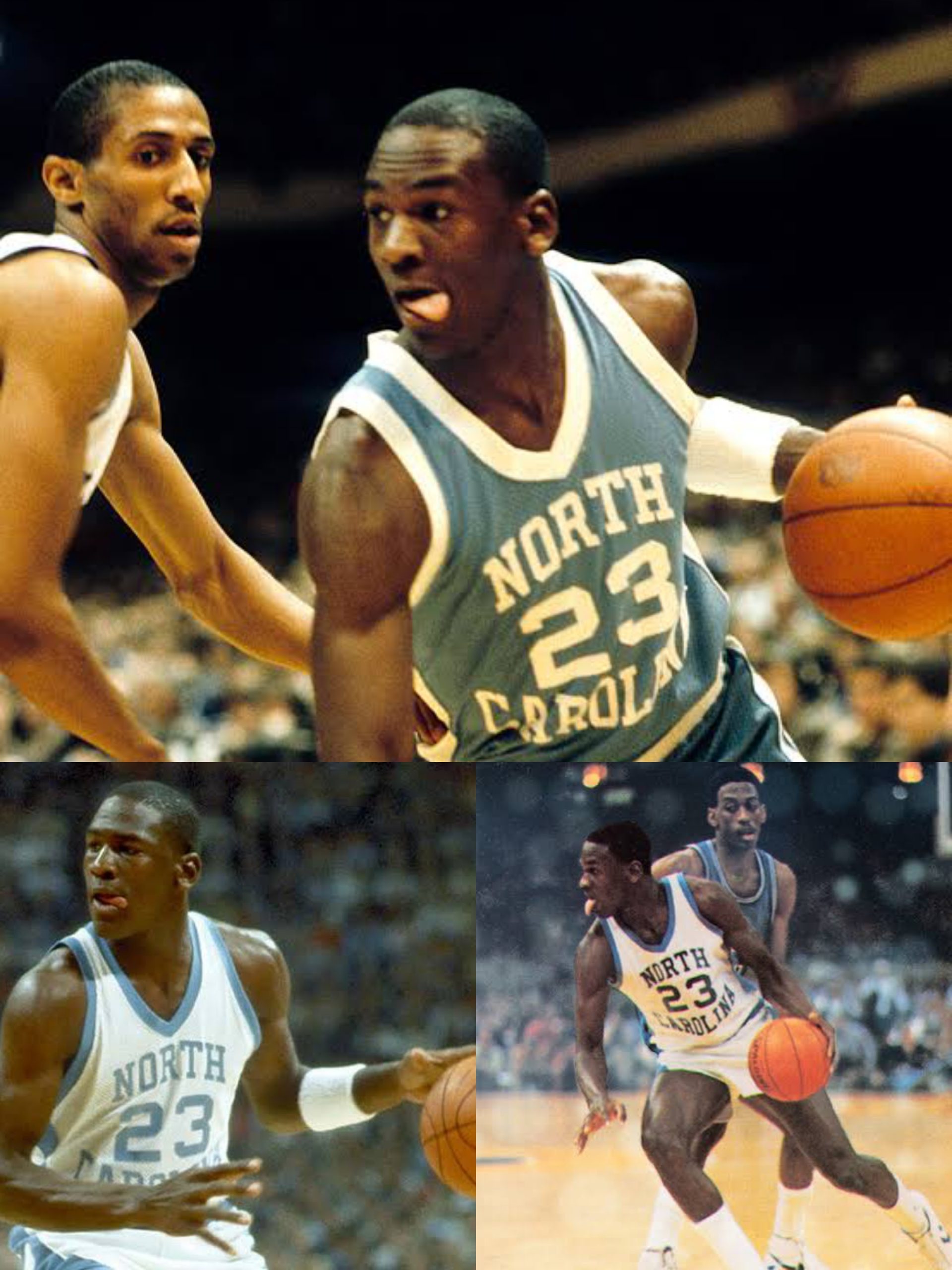
The iconic shot against Georgetown Hoyas in the 1982 national championship game has been replayed for more than four decades. It lives in documentaries, highlight reels, and basketball mythology. Fans know the moment by heart: 15 seconds left, North Carolina trailing by one, and a skinny freshman calmly burying a baseline jumper to win the title for North Carolina Tar Heels men’s basketball.
But the truth behind that shot — the part rarely discussed — is even more unbelievable.
Because there was a moment when Jordan almost wasn’t the one taking it at all.
Dean Smith Wasn’t Looking at the Freshman
The final minutes of the 1982 NCAA championship were pure chaos.
North Carolina and Georgetown were locked in a brutal defensive battle inside the Louisiana Superdome. The Hoyas, led by future NBA star Patrick Ewing, were physical, intimidating, and relentless. Every possession felt heavy. Every mistake felt fatal.
On the UNC sideline stood legendary head coach Dean Smith, already one of the sport’s most respected minds but still chasing another national championship.
And despite what history now tells us, Smith’s offense was never designed around freshmen taking heroic shots.
That wasn’t Carolina basketball.
Veterans were trusted. Experienced players carried responsibility. Freshmen were expected to learn their role.
Jordan was talented, yes. Explosive even then. But he was still a young player surrounded by proven stars like James Worthy and Sam Perkins — future NBA standouts with far more experience.
In fact, when North Carolina drew up the final possession, Georgetown’s defense expected the ball to go somewhere else entirely.
So did many people watching.
The Forgotten Detail Behind “The Shot”
Here’s what many fans never realized:
Jordan wasn’t the primary superstar on that team yet.
Worthy was already viewed as the established star. Perkins was an elite weapon. Those were the names opponents feared most. Georgetown’s defense naturally tilted attention toward UNC’s veterans.
And for a split second, that changed everything.
As the Tar Heels worked the ball around the perimeter, Georgetown’s defense momentarily collapsed inward, wary of Carolina attacking through its stars. Jordan drifted into open space near the left baseline.
Wide open.
The pass came.
And suddenly, the biggest possession in college basketball belonged to a freshman who would later admit he wasn’t fully sure what was about to happen next.
Jordan has spoken over the years about the confidence Dean Smith built within him, but at that stage of his career, he was not yet the cold-blooded assassin the world would later know.
He was still developing.
Still learning.
Still becoming Michael Jordan.
Then he rose up and released the shot.
Fifteen Seconds That Changed Basketball Forever
Swish.
63-62.
North Carolina.
The Superdome exploded.
In one instant, a freshman transformed into the future face of basketball.
The image became immortal: Jordan jogging back down the court after hitting the go-ahead jumper with calmness that looked almost unnatural for a teenager playing on the sport’s biggest stage.
But what happened after the basket mattered just as much.
Smith’s trust in Jordan deepened immediately. Teammates saw something different in him. And Jordan himself later admitted that moment changed his entire mindset.
It convinced him he belonged in the biggest moments.
Not eventually.
Right then.
Many historians now view that shot as the true birth of Jordan’s legendary competitive identity — the moment the fearless mentality fully awakened.
The Dynasty Before the Dynasty
People often associate Jordan’s greatness with the Chicago Bulls years.
The championships.
The MVPs.
The flu game.
The global fame.
But insiders around the Carolina program have long believed the foundation for all of it was built under Dean Smith.
At UNC, Jordan learned discipline. He learned structure. He learned defensive accountability. Smith’s famous “Carolina Family” culture demanded unselfishness, conditioning, and mental toughness.
Jordan hated losing even then, but Smith helped sharpen that obsession into something productive.
And perhaps most importantly, Smith taught him patience.
That’s why the irony of “The Shot” remains so fascinating.
The player who would later become basketball’s ultimate closer wasn’t even supposed to dominate the offense yet. He was still earning his place.
Yet when the biggest moment arrived, the ball somehow found him anyway.
The Shot That Became a Warning to the World
In hindsight, the basket feels inevitable.
Of course Michael Jordan made the shot.
Of course the future GOAT delivered under pressure.
But in 1982, nobody knew the full story that was about to unfold.
Not the NBA.
Not the media.
Not even Dean Smith.
They saw a gifted freshman making a championship play.
What they didn’t realize was that basketball history had just shifted permanently.
Because that single jumper became more than a title-winning shot.
It became a warning.
A preview.
A glimpse of the competitor who would later terrorize the NBA for more than a decade.
Years later, Jordan himself famously said that shot gave him confidence he had never felt before. It showed him he could perform under ultimate pressure.
The world remembers the championships that followed.
But the legend truly began with one quiet freshman, standing open near the baseline, taking a shot even he wasn’t completely sure would fall.
And somehow, it changed everything.




