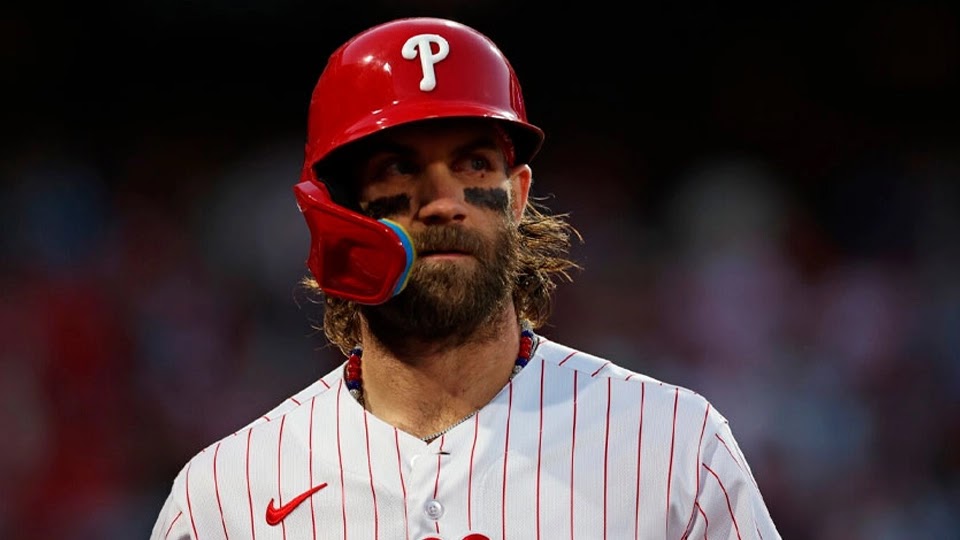
The Philadelphia Phillies arrived in Milwaukee hoping to build momentum and strengthen their position in the National League race. Instead, they left American Family Field with more questions than answers after running into one of the most dominant pitching performances of the 2026 season.
On Friday night, Milwaukee Brewers flamethrower Jacob Misiorowski delivered a breathtaking display of power, precision, and poise, leading the Brewers to a commanding 6-0 victory over Philadelphia. The 24-year-old right-hander wasn’t simply effective—he was virtually unhittable.
For nine innings, Misiorowski overwhelmed one of baseball’s most talented lineups, showcasing a rare combination of triple-digit velocity and remarkable command. By the end of the night, he had struck out 15 Phillies, allowed just one hit, and completed the first complete game of his professional career.
The performance felt less like a regular-season contest and more like a glimpse into baseball’s future.
That future throws 104 miles per hour.
The warning signs appeared immediately.
In the opening inning, Bryce Harper was blown away by a 104.1-mph fastball. Trea Turner followed, striking out against a 103.5-mph heater. Kyle Schwarber then stepped in and saw a blistering 104.5-mph pitch, the hardest strikeout pitch ever recorded by a starting pitcher in the pitch-tracking era.
Those numbers alone would have been enough to make headlines.
What made Misiorowski’s outing truly special, however, was not simply the velocity. It was the efficiency with which he dominated an elite offense.
The Phillies had no answers.
Schwarber’s leadoff single in the fourth inning represented Philadelphia’s only hit of the game. No other Phillies batter reached safely. Misiorowski never issued a walk, never allowed a runner into scoring position, and needed fewer than 100 pitches to finish the masterpiece.
Every inning seemed to follow the same script.
A Phillies hitter would step into the batter’s box with confidence. Moments later, he would return to the dugout shaking his head after being overpowered by one of the most electric arms in the sport.
As the strikeouts piled up, so did the sense that everyone inside the stadium was witnessing something extraordinary.
When Justin Crawford became strikeout victim number 15 to end the game, the Milwaukee crowd erupted. Misiorowski had completed one of the finest pitching performances seen anywhere in Major League Baseball this season.
For Philadelphia, the loss only counts as one game in the standings.
The larger concerns stretch far beyond a single night.
Earlier in the day, the Phillies received devastating news when outfielder Adolis García was placed on the 60-day injured list with a torn lat muscle. The injury removes one of the club’s most dangerous right-handed power bats and creates another challenge for an outfield group already dealing with inconsistency and uncertainty.
Losing García significantly impacts the lineup’s balance and leaves manager Rob Thomson searching for solutions as the team moves deeper into the summer months.
The pitching staff also continues to raise questions.
Highly regarded rookie Andrew Painter showed flashes of his tremendous potential but endured another uneven outing. The young right-hander surrendered five runs over five innings, continuing a trend that has followed him throughout much of his rookie campaign.
Painter’s talent remains undeniable. His fastball, secondary pitches, and overall arsenal still project him as a future frontline starter. However, major-league hitters have repeatedly capitalized on mistakes when he falls behind in counts or struggles to command his fastball consistently.
The Phillies remain fully invested in Painter’s development, and there is no indication that confidence within the organization has diminished.
Still, his growing pains highlight a larger issue facing Philadelphia.
While Zack Wheeler and Cristopher Sánchez have provided stability at the top of the rotation, the depth behind them remains uncertain. Championship contenders often enter October with multiple dependable starting options capable of handling postseason pressure.
At the moment, Philadelphia is still searching for those answers.
That reality could influence the club’s approach as the trade deadline approaches.
President of Baseball Operations Dave Dombrowski has never been afraid to make aggressive moves when he believes his team has a legitimate opportunity to contend for a championship. Friday night’s performance served as another reminder that the Phillies may need reinforcements if they hope to navigate a deep postseason run.
To be clear, the Phillies did not lose because of poor roster construction.
They lost because Jacob Misiorowski delivered a performance that very few pitchers on the planet are capable of producing.
Sometimes baseball offers nights when greatness simply cannot be denied. Friday was one of those nights.
Yet the best organizations use such moments as opportunities for reflection.
The Phillies looked into that mirror in Milwaukee.
What they saw was the emergence of a potential superstar wearing a Brewers uniform. They also saw lingering concerns about their own roster, concerns involving offensive depth, rotation stability, and the challenges that injuries continue to create.
Milwaukee celebrated the arrival of a future ace.
Philadelphia boarded its flight home reminded that while it remains a contender, important questions still need answers.
And as October draws closer, those questions will only become more urgent.