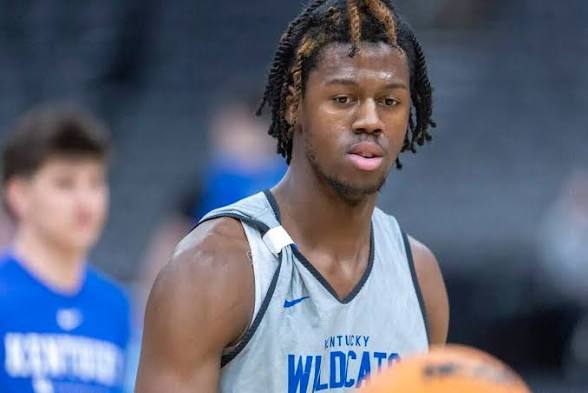
When Kam Williams went down with a broken foot during Kentucky’s victory over Texas, the mood around Big Blue Nation changed instantly. The Wildcats had just lost one of their most versatile players at a crucial point in the season, and what looked like a promising campaign suddenly faced a major obstacle.
At first, the injury appeared to end Williams’ season altogether. Broken feet are among the toughest injuries for basketball players because so much of the game depends on explosiveness, balance, and confidence while planting and cutting. Yet almost immediately after surgery, there was a sense of cautious optimism surrounding his recovery.
That optimism wasn’t based solely on hope.
It was fueled by encouraging medical progress, Williams’ determination to return, and the belief within Kentucky’s program that if there was even the slightest opportunity for him to play again, he would do everything possible to make it happen.
Although an in-season comeback ultimately never materialized, the discussion surrounding his possible return became one of the most fascinating storylines of Kentucky’s season. It also highlighted just how valuable Williams had become to Mark Pope’s team.
From devastating setback to renewed hope
Every injury tells a different story.
For Williams, the initial diagnosis was difficult enough. Breaking a foot midway through the SEC schedule often means the season is effectively over. Most players immediately shift their focus toward rehabilitation and preparing for the following year.
But Williams and those closest to him never completely ruled out the possibility of returning.
His father, Greg Williams Sr., remained optimistic shortly after surgery, believing there was still a chance his son could contribute if Kentucky made a deep postseason run. At the time, many viewed that outlook as wishful thinking.
As the weeks passed, however, updates from the coaching staff suggested there might actually be a realistic path back.
Mark Pope repeatedly emphasized that while the timeline remained extremely tight, Williams continued progressing in the right direction.
Every positive report kept Kentucky fans believing.
Why Kam Williams had become so important
Williams didn’t become valuable to Kentucky simply because of his scoring.
His importance came from doing a little bit of everything.
Standing 6-foot-8 with impressive athleticism, Williams provided versatility on both ends of the floor. He could defend multiple positions, stretch the floor offensively, attack the basket, and rebound effectively.
Those are the kinds of players every coach wants on the floor.
As the season developed, Williams continued earning more trust from Pope and his coaching staff. Early inconsistencies gave way to steady improvement, and by the heart of SEC play, he had established himself as one of Kentucky’s most dependable contributors.
That growth didn’t happen overnight.
It was the result of consistent work, increased confidence, and a willingness to embrace whatever role the team needed.
By the time the injury occurred, Williams wasn’t simply another rotation player.
He had become one of the Wildcats’ most reliable pieces.
Mark Pope’s confidence said everything
One of the strongest indicators of Williams’ value came directly from Mark Pope himself.
Coaches don’t hand out praise lightly, especially during the middle of a competitive SEC season.
When Pope described Williams as one of those players coaches can almost forget is on the floor because he consistently makes the right decisions, it spoke volumes.
Every successful team has players like that.
They’re dependable.
They’re disciplined.
They understand the system.
They rarely force mistakes.
They quietly make winning plays.
Williams had developed into exactly that type of player.
For a first-year Kentucky team still developing chemistry, having someone capable of filling multiple roles without disrupting offensive or defensive flow was incredibly valuable.
The minutes Kentucky desperately needed
One issue Kentucky battled throughout the season was workload management.
Several key players were forced to play heavy minutes night after night, particularly during conference play.
As the season wore on, fatigue naturally became a concern.
Adding even ten quality minutes from Williams each game could have made a significant difference.
Fresh legs often decide close games in March.
Having another experienced wing capable of defending, rebounding, and making perimeter shots would have eased the burden placed on Kentucky’s starters.
That was one reason Pope repeatedly mentioned how important Williams could be if he returned.
It wasn’t necessarily about expecting him to score twenty points.
Sometimes simply allowing teammates to rest for a few possessions changes the complexion of an entire game.
More than just statistics
Basketball value isn’t always measured through points.
Williams brought energy.
He brought defensive versatility.
He communicated well.
He understood spacing.
He moved without the basketball.
He defended multiple positions.
He embraced difficult assignments.
Those traits often go unnoticed until they’re missing.
Kentucky felt that absence almost immediately following his injury.
The Wildcats continued competing, but replacing everything Williams provided proved difficult.
His impact extended far beyond the box score.
The Willis Reed comparison captured everyone’s imagination
Perhaps the most memorable part of Williams’ recovery story came from his father’s comparison to one of basketball’s most iconic moments.
Greg Williams Sr. envisioned something similar to Willis Reed’s famous return during Game 7 of the 1970 NBA Finals.
The comparison wasn’t about expecting Williams to dominate statistically.
Instead, it reflected the emotional lift his return could have provided.
Imagine Kentucky preparing for an NCAA Tournament game.
Then, moments before tipoff, Williams emerges from the tunnel after weeks of rehabilitation.
Even limited minutes would have energized teammates, coaches, and fans alike.
While that dream ultimately remained just that—a dream—it perfectly illustrated the belief surrounding Williams inside the program.
Patience remained the priority
Despite growing optimism, Kentucky never lost sight of what mattered most.
Williams’ long-term health always came first.
Broken foot injuries require patience.
Returning too early risks setbacks that can impact an entire career.
Pope consistently reminded everyone that there would be no unnecessary pressure placed on Williams.
If medical experts determined he wasn’t ready, Kentucky would continue moving forward without him.
That measured approach demonstrated the culture Pope wanted to establish.
Winning games mattered.
Protecting players mattered even more.
What his return might have looked like
If Williams had been medically cleared during postseason play, expectations likely would have been realistic.
Nobody expected him to play thirty-five minutes immediately.
Instead, Kentucky likely would have eased him back gradually.
Five minutes.
Then perhaps eight.
Maybe twelve if everything felt right.
Within those limited opportunities, Williams still possessed the ability to impact winning.
One defensive stop.
One timely three-pointer.
One important rebound.
One hustle play.
Championship runs are often remembered because role players produce unforgettable moments.
Williams possessed that potential.
The bigger lesson from his recovery
Looking back, Williams’ injury story became about far more than basketball.
It showcased resilience.
It highlighted determination.
It demonstrated the support system surrounding Kentucky basketball.
His rehabilitation reflected the work required behind the scenes—long hours, difficult exercises, and countless moments away from the spotlight.
Even though fans never saw the comeback they hoped for, Williams earned tremendous respect through the way he attacked his recovery.
Why Kentucky fans still remember
Kentucky supporters appreciate players who fully invest in the program.
Williams did exactly that.
His willingness to battle through adversity and his relentless pursuit of returning to help his teammates resonated throughout Big Blue Nation.
Sometimes players leave lasting impressions not because of championships or individual awards, but because of the character they display when circumstances become difficult.
Williams embodied that spirit.
Final thoughts
While the dream of an in-season return ultimately remained unrealized, the possibility alone gave Kentucky fans hope during one of the most challenging stretches of the season.
Mark Pope’s confidence in Williams wasn’t accidental.
He recognized a player who had developed into one of the team’s most dependable contributors, someone capable of making winning plays without needing the spotlight.
Whether it was five minutes or twenty, Williams would have given Kentucky another versatile weapon at exactly the right time.
Although history unfolded differently, the conversations surrounding his potential return remain one
of the more compelling “what if” stories from that Kentucky season.
Sometimes the biggest impact a player makes isn’t measured by the games he played.
Sometimes it’s measured by how badly everyone wished he could return.