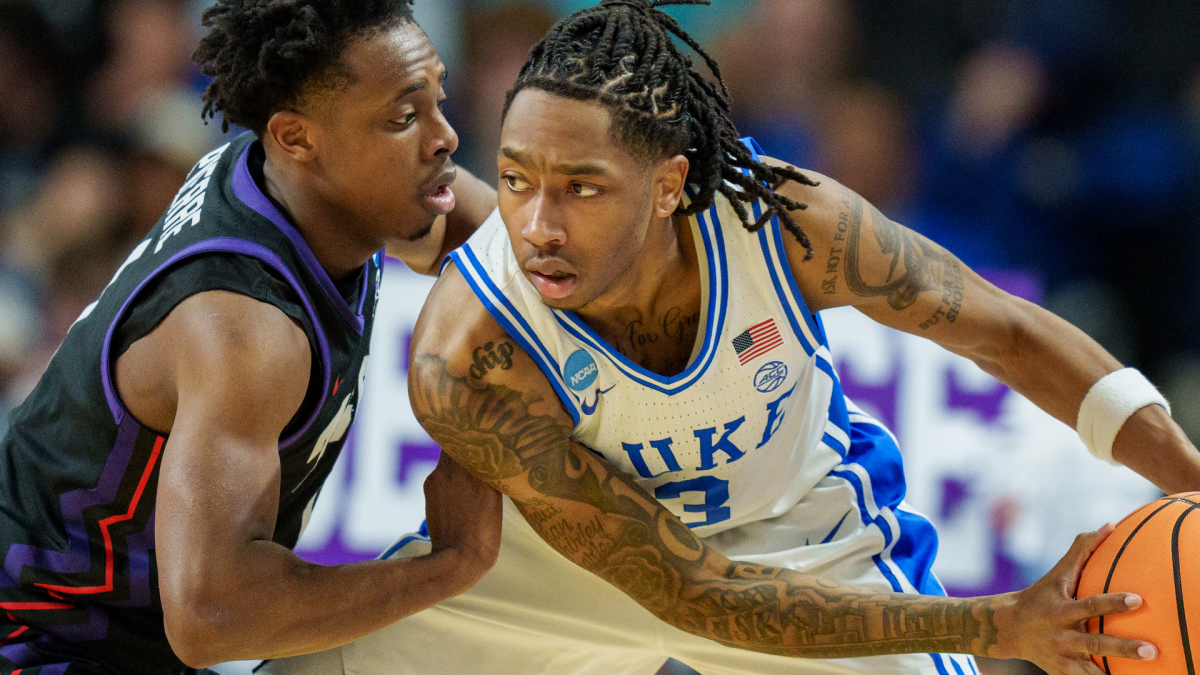
The modern era of college basketball has transformed dramatically with the rise of Name, Image, and Likeness (NIL) opportunities. Elite players now have the chance to earn life-changing money while competing at the collegiate level, forcing many to weigh financial security against the pursuit of professional basketball. This offseason, two of the biggest names to make that difficult decision were North Carolina’s Henri Veesaar and Duke’s Isaiah Evans.
Despite having lucrative NIL opportunities waiting for them, both players chose to continue chasing their NBA dreams rather than returning to college for another season.
According to CBS Sports, North Carolina had an NIL package worth between $3.5 million and $4.5 million prepared for Veesaar if he decided to withdraw from the NBA Draft and return to Chapel Hill. The deal would have made him one of the highest-paid players in college basketball and the centerpiece of Michael Malone’s first Tar Heels roster.
Veesaar had every reason to consider coming back. After an impressive campaign, he was widely projected as a leading candidate for the 2026-27 ACC Player of the Year award. His combination of size, skill, rim protection, and offensive versatility would have made him one of the nation’s premier big men.
The Tar Heels also appeared poised to compete for an ACC championship with Veesaar anchoring the frontcourt. His leadership, experience, and ability to dominate both ends of the floor would have significantly elevated North Carolina’s national championship aspirations.
Yet, despite the enormous financial incentive, Veesaar never changed course during the NBA Draft process. He remained committed to pursuing a professional career, believing the opportunity to establish himself in the NBA outweighed the benefits of another season in college basketball.
While the guaranteed NIL money was substantial, the chance to begin earning NBA experience, develop against the world’s best players, and start his professional journey ultimately proved more valuable.
Duke standout Isaiah Evans faced a similar crossroads.
Evans reportedly also passed on a massive NIL opportunity that would have kept him in Durham for another season. As one of the nation’s most gifted scorers and athletic wings, Evans could have returned as one of the ACC’s marquee players while earning millions through NIL agreements.
Instead, like Veesaar, Evans decided to bet on himself.
His decision reflects the mindset shared by many elite prospects. While NIL has dramatically changed college athletics, the NBA remains the ultimate destination for players with first-round ambitions. For many, beginning a professional career one year earlier provides long-term benefits that extend well beyond immediate earnings.
Starting an NBA career allows players to begin accumulating professional experience, negotiate future contracts sooner, and accelerate their overall development against elite competition.
For North Carolina, Veesaar’s departure leaves a significant void heading into Michael Malone’s debut season. Replacing an experienced, highly skilled center is never easy, especially one capable of impacting every aspect of the game.
Fortunately, the Tar Heels have been aggressive throughout the offseason in reshaping their roster through recruiting and the transfer portal. Malone and his coaching staff have emphasized building a deeper, more versatile lineup capable of competing in one of the country’s toughest conferences.
While no single player can fully replace Veesaar’s production, North Carolina hopes its collective talent and improved depth will help offset the loss.
Meanwhile, Duke enters the season without one of its most explosive offensive weapons in Evans. Jon Scheyer has consistently recruited at an elite level, and the Blue Devils once again possess one of the nation’s most talented rosters. However, Evans’ shot-making ability and athleticism would have provided another dynamic scoring option.
The decisions made by Veesaar and Evans also highlight the evolving landscape of college basketball. Just a few years ago, remaining in school for another season often meant sacrificing significant income. Today, NIL has changed that equation entirely.
Players can now earn millions while continuing their college careers, making the choice between college and the NBA more complex than ever before. Financial considerations remain important, but career goals, professional development, draft projections, and personal aspirations often carry equal weight.
For both Veesaar and Evans, the NBA represented more than just another paycheck. It symbolized the realization of lifelong dreams and the next step in their basketball journeys.
Only time will determine whether those decisions prove to be the right ones. If both players establish successful NBA careers, few will question walking away from substantial NIL deals. On the other hand, their choices will continue fueling debates about whether another dominant college season might have further improved their draft stock and long-term earning potential.
Regardless of the outcome, both stars demonstrated that not every decision in today’s college basketball landscape is driven solely by money. Sometimes, the opportunity to compete at the highest level and fulfill a lifelong dream is worth more than even a multi-million-dollar NIL contract.