The transfer portal has transformed college basketball into a year-round spectacle, with recruiting battles often becoming just as captivating as the games themselves. Every offseason, coaches across the country are forced to make difficult decisions about which players to pursue, how much to invest in them, and whether the potential reward outweighs the risk.
For Kentucky head coach Mark Pope, this past spring presented exactly that kind of dilemma.
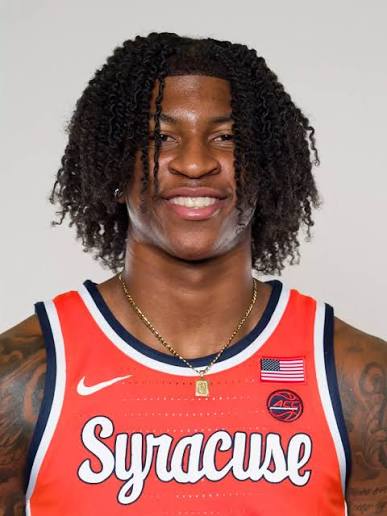
One of the biggest names available in the transfer portal was former Syracuse forward Donnie Freeman, a talented player whose combination of size, athleticism, and scoring ability made him one of the most sought-after prospects on the market. Kentucky quickly emerged as one of the schools heavily involved in his recruitment, and for a time, many believed Freeman would eventually become a Wildcat.
Instead, the recruitment took an unexpected turn.
Freeman ultimately committed to St. John’s, where Hall of Fame head coach Rick Pitino secured one of the portal’s most high-profile additions. Kentucky, meanwhile, shifted its attention elsewhere, a decision that initially left some members of Big Blue Nation questioning whether Pope had missed an opportunity to land an impact player.
Months later, the conversation has changed dramatically—but not for reasons anyone wanted.
This week, it was reported that Freeman suffered a torn Achilles tendon that will cause him to miss the entire 2026-27 college basketball season.
The news was heartbreaking.
For any athlete, an Achilles injury is among the most difficult setbacks imaginable. It often requires surgery, months of rehabilitation, and tremendous mental resilience before a player can return to competition. For Freeman, the injury is especially painful because it continues a frustrating pattern of health challenges that have already interrupted much of his young basketball career.
During his two seasons at Syracuse, Freeman appeared in just 37 games while dealing with recurring foot and toe injuries. Although his talent was never questioned, staying healthy became an ongoing challenge.
Despite those concerns, his upside remained so significant that numerous programs aggressively pursued him after he entered the transfer portal.
Kentucky was one of those schools.
At one point during the recruiting process, the Wildcats appeared to have a legitimate chance of landing Freeman. Reports indicated that Kentucky and St. John’s had become the two primary contenders as the recruitment reached its final stages.
As negotiations continued, however, another factor entered the equation.
According to reports, Freeman’s NIL asking price continued to rise, creating additional challenges for programs attempting to finalize a commitment. At the same time, questions surrounding his injury history remained part of every evaluation.
For Mark Pope and his staff, the decision became increasingly complicated.
On one hand, Freeman possessed exactly the type of versatile frontcourt talent Kentucky needed. His ability to score around the basket, rebound effectively, and defend multiple positions would have made him an attractive addition to almost any roster in the country.
On the other hand, investing heavily in a player with a history of foot-related injuries carried undeniable risk.
Pope had already experienced the challenges that can come with relying on talented players whose availability is uncertain due to injuries. Building a championship-caliber roster requires not only acquiring talent but also maximizing the likelihood that key contributors can remain on the floor throughout an entire season.
Ultimately, Kentucky decided to move in another direction.
At the time, the decision generated mixed reactions among fans.
Some believed Pope had exercised smart roster management by avoiding a potentially risky investment. Others worried that Kentucky had allowed an elite talent to slip away because of financial considerations or excessive caution.
Now, following Freeman’s devastating Achilles injury, many fans have revisited that decision.
Some have argued that Pope’s choice has been completely validated.
However, framing the situation as Kentucky somehow “dodging a bullet” misses the bigger picture.
There is nothing fortunate about seeing a young athlete suffer a season-ending injury.
Regardless of which school Freeman ultimately chose, his injury represents a personal setback that no competitor ever wants to experience. College basketball is built on the dreams and dedication of young athletes who spend countless hours preparing for opportunities like the upcoming season.
Watching those dreams temporarily disappear because of an injury is heartbreaking, regardless of school colors or recruiting outcomes.
If anything, Freeman deserves support and encouragement as he begins what will likely be a lengthy rehabilitation process.
The situation also highlights one of the difficult realities coaches face during every transfer portal cycle.
Evaluating players extends far beyond watching game film.
Coaching staffs must carefully assess injury history, long-term durability, financial considerations, roster fit, and future availability before making significant investments.
Sometimes those evaluations lead to successful outcomes.
Sometimes they do not.
Even the most experienced coaches cannot predict future injuries with certainty.
They can only make decisions based on the information available at the time.
That appears to be exactly what Pope did.
Kentucky’s coaching staff recognized Freeman’s tremendous talent while also acknowledging the legitimate concerns surrounding his medical history. Rather than committing substantial resources despite those uncertainties, the Wildcats chose to pursue alternative roster-building strategies.
Whether that decision ultimately benefits Kentucky on the court remains to be seen.
Basketball seasons are rarely determined by a single recruiting battle.
Instead, success usually depends on roster chemistry, player development, coaching adjustments, and maintaining health throughout the long grind of conference play.
Meanwhile, Freeman’s decision to join Rick Pitino at St. John’s generated plenty of excitement when it was announced.
Pitino has built one of the greatest coaching careers in college basketball history and is widely respected for his ability to maximize player development and build winning programs.
His demanding style has become legendary.
Practices are known for their intensity, conditioning standards remain exceptionally high, and players are expected to compete with relentless effort every day.
Some observers have wondered whether such a physically demanding system presented additional challenges for a player already managing a history of foot-related injuries.
However, there is no evidence that Pitino’s coaching methods caused Freeman’s Achilles injury. Injuries of this nature can occur in a variety of settings and often result from multiple factors. Any suggestion that a specific coaching style directly led to this injury would be speculative.
What is clear is that Freeman now faces a long road back.
Recovering from an Achilles tear requires patience, discipline, and unwavering determination. Fortunately, many athletes have successfully returned from similar injuries, though recovery timelines vary from player to player.
As for Kentucky, Pope continues building his program around a philosophy that emphasizes balancing elite talent with long-term roster stability.
The Wildcats enter the upcoming season with optimism surrounding their new additions and confidence that careful roster construction will position the program for sustained success.
Whether fans originally agreed with Pope’s decision regarding Freeman or not, the discussion now serves as a reminder that recruiting is never as simple as landing the highest-rated available player.
Every scholarship, every NIL investment, and every roster spot involves careful evaluation and difficult choices.
Sometimes those choices become controversial.
Sometimes they prove wise.
And sometimes unexpected events completely reshape the conversation.
For Big Blue Nation, the focus should remain on supporting Kentucky’s current roster while also wishing Freeman a full and successful recovery. Rivalries and recruiting debates are part of college basketball, but injuries transcend competition.
As the new season approaches, Pope’s decision will likely continue to be discussed by fans and analysts alike. Yet the most important story is not whether Kentucky made the “right” choice—it is that a gifted young player has been forced to postpone his season before it even began.
Everyone associated with college basketball can agree on one thing: the sport is better when its best players are healthy and able to compete.
Freeman now begins the difficult journey back to the court, while Kentucky continues preparing for another highly anticipated season under Mark Pope. Time will ultimately determine how each program’s roster decisions play out, but for now, the hope across t
he basketball community is simple—that Donnie Freeman makes a full recovery and eventually returns to the game he loves.