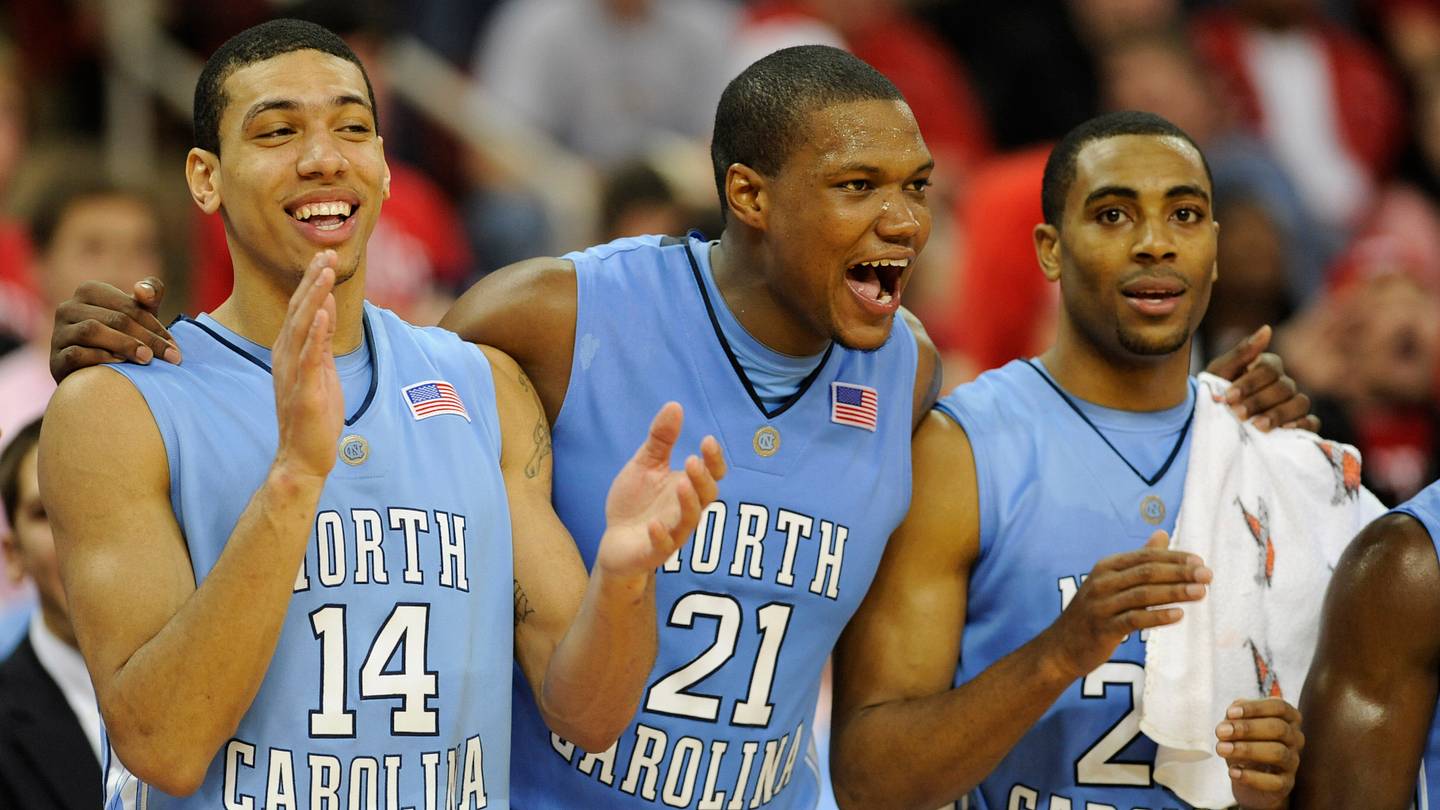
Former North Carolina standout Danny Green believes there is something special about wearing the Tar Heel jersey, and his recent comments perfectly capture why excitement is building around the program ahead of the 2026-27 season.
Appearing on Byron Scott’s Fast Break podcast, Green reflected on his journey to Chapel Hill and explained how the culture surrounding North Carolina basketball helped shape his career. His memories also serve as a reminder of the expectations that come with representing one of college basketball’s most prestigious programs.
Green admitted that he was far from a highly touted recruit. He described himself as a late bloomer who did not begin attracting major recruiting attention until his senior year of high school. Even after arriving at North Carolina, he wasn’t expected to be one of the team’s biggest stars.
“I was a late bloomer,” Green explained. “Even coming out of high school, I wasn’t highly recruited until going into my senior year. Even when I started, I was the fifth option. We had Tyler Hansbrough, Ty Lawson, Wayne Ellington and Deon Thompson.”
Despite not being the centerpiece of the team, Green said the experience of playing for North Carolina was unlike anything he had imagined.
“I wasn’t one of the top guys there, but our campus was a lot of fun, and we were idolized in a sense,” Green continued. “As the years went on and we played and got better, we were definitely idolized as a team.”
Those comments speak volumes about the tradition that continues to surround North Carolina basketball. While the college game has changed dramatically with NIL opportunities and the transfer portal, the passion of Tar Heel fans remains one of the program’s greatest strengths. Every player who puts on the Carolina blue uniform is expected to compete for championships and represent one of the sport’s most recognizable brands.
That culture will be especially important this season as new head coach Michael Malone begins a new era in Chapel Hill.
Following two consecutive first-round exits in the NCAA Tournament, North Carolina entered the offseason determined to restore its place among college basketball’s elite. Hiring Malone was viewed as a major step in that direction, bringing an experienced coach with championship credentials and a reputation for building disciplined, competitive teams.
Malone inherited a roster that needed significant reconstruction after the departure of eight of the team’s 10 leading scorers from last season. Rather than viewing the challenge as a setback, he aggressively attacked the transfer portal and international recruiting market to quickly reshape the roster.
Among the notable additions are Neoklis Avdalas, Terrence Brown, Matt Able, Sayon Keita, Alexandros Samodurov, Kevin Thomas and Angelo Brizzi. Each player brings a unique skill set, giving the Tar Heels greater depth, versatility and experience than they possessed a season ago.
The returning core is relatively small, with Jarin Stevenson, Jaydon Young and Isaiah Denis providing valuable continuity. Their familiarity with the program should help ease the transition for the newcomers while establishing the standards expected inside the locker room.
Although many of the new additions could spend only one season at North Carolina, Green’s comments illustrate why players often form lasting connections with the program regardless of how long they stay. The support from fans, the history of success and the pride associated with representing the Tar Heels create an environment that few schools can match.
Building chemistry in today’s era of college basketball is never easy. With player movement at an all-time high, coaches must establish trust and unity almost immediately. Malone appears to understand that challenge, emphasizing relationships and accountability from the moment he arrived on campus.
His early recruiting success has generated optimism throughout Chapel Hill, where fans are eager to see a refreshed team compete under new leadership. There is a renewed belief that North Carolina can once again become a legitimate national championship contender.
Green’s story also provides an encouraging message for players who may not arrive as stars. His own career demonstrates that development, patience and commitment to the team can lead to tremendous success. He eventually became an important contributor for the Tar Heels before enjoying a long and successful NBA career.
That same mindset could benefit several newcomers on this year’s roster as they work to carve out their roles. North Carolina has always valued team success over individual accolades, and Malone will likely continue emphasizing that philosophy.
With an upgraded coaching staff, a talented collection of transfers and international prospects, and one of the nation’s most passionate fan bases behind them, the Tar Heels enter the new season with legitimate expectations of returning to national prominence.
If the roster develops as expected and the new pieces quickly build chemistry, North Carolina should be well-positioned to move beyond the disappointment of recent NCAA Tournament exits. Green’s reflections remind everyone that playing for the Tar Heels is about more than basketball—it’s about embracing a tradition of excellence that continues to inspire generations of players and fans alike.