


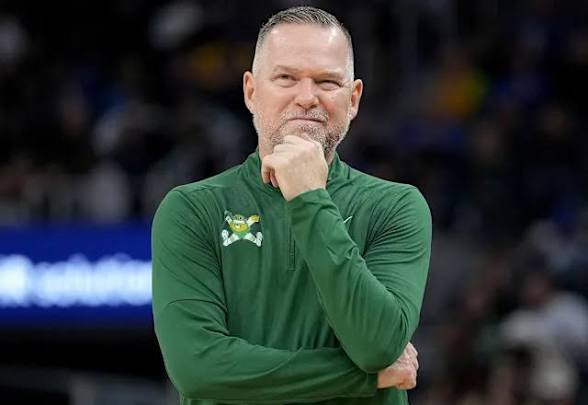
For months, North Carolina basketball fans have wondered what exactly would separate Michael Malone’s first Tar Heel team from the squad that struggled under Hubert Davis during his final season. There has been plenty of discussion about new faces, recruiting victories, transfer additions, and a new coaching philosophy, but one major difference has quietly emerged that could ultimately define the Tar Heels’ 2026-27 campaign.
It isn’t necessarily more star power.
It isn’t simply better talent.
Instead, it’s something championship-caliber teams almost always possess: experience.
As the Tar Heels prepare for a new era under Michael Malone, one glance at the projected roster reveals a group that appears much more prepared for the demands of high-level college basketball. While talent has never been an issue in Chapel Hill, experience often separates good teams from great ones when the pressure intensifies in March.
That may prove to be Malone’s greatest advantage from day one.
Learning From the Past
Hubert Davis’ final roster featured plenty of promise, but it also carried significant growing pains.
The Tar Heels entered last season relying heavily on players who were still adjusting to the speed, physicality, and expectations of major college basketball. Several key contributors were experiencing Division I basketball for the first time, forcing the coaching staff to depend on potential instead of proven production.
Freshman guard Derek Dixon was thrown into an important role almost immediately. While his talent was undeniable, he was still learning the game at the collegiate level.
Caleb Wilson also entered his freshman season carrying enormous expectations. Every game became another learning opportunity as he adjusted to facing older, stronger, and more experienced opponents.
International standout Luka Bogavac brought tremendous upside, but like many overseas prospects, he needed time to adapt to the American college game. The differences in style, pace, and physical play created another developmental challenge.
Henri Veesaar possessed previous college experience from Arizona, but he had not been a full-time featured player before arriving in Chapel Hill. His breakout season came while simultaneously adapting to a much larger role.
Outside of Seth Trimble, there simply weren’t many players who had accumulated years of meaningful college basketball experience.
That lack of veteran leadership became evident throughout stretches of the season.
Why Experience Matters
College basketball is unique.
Unlike professional basketball, roster turnover can dramatically reshape teams every offseason. Freshmen arrive with enormous expectations, transfers change programs, and coaching changes create entirely new systems.
Because of that reality, experienced players become incredibly valuable.
Veterans understand game preparation.
They know how to handle hostile road environments.
They recognize late-game situations.
They’ve experienced conference battles, tournament pressure, and difficult losing streaks.
Most importantly, they know how to respond when adversity strikes.
Talent may win games during the regular season, but experience often wins championships.
Michael Malone’s First Roster Looks Different
Fast forward to today, and the picture surrounding North Carolina basketball looks noticeably different.
Michael Malone inherits a roster that appears much more mature than the group Hubert Davis coached during his final campaign.
Rather than relying primarily on freshmen, Malone has assembled players who already understand what it takes to compete at the college level.
That difference alone could significantly shorten the adjustment period under a new coaching staff.
Neoklis Avdalas Brings Valuable Experience
One of the most intriguing additions is transfer guard Neoklis Avdalas.
Already battle-tested through high-level competition, Avdalas arrives with valuable experience that should allow him to contribute immediately.
Instead of spending months adjusting to college basketball, he can focus on learning Malone’s offensive and defensive systems.
That puts North Carolina in a much stronger position entering the season.
Terrence Brown Adds Another Veteran Presence
Terrence Brown also strengthens the Tar Heels’ experience level.
Having competed at multiple collegiate stops, Brown understands different coaching styles, offensive systems, and defensive responsibilities.
Players like Brown often become extensions of the coaching staff on the floor.
They help younger teammates stay composed while providing leadership that statistics cannot always measure.
Matt Able Is Ready for a Bigger Role
Matt Able enters Chapel Hill after gaining valuable experience elsewhere.
Rather than asking a freshman to develop while playing major minutes, Malone now has a player who already understands college basketball’s daily demands.
Practice habits.
Film study.
Strength training.
Travel.
Conference competition.
Every previous experience prepares players like Able to contribute immediately.
Jarin Stevenson Could Be One of the Biggest X-Factors
Perhaps no player better represents North Carolina’s improved experience than Jarin Stevenson.
His basketball journey has already included valuable minutes at Alabama before continuing his development at North Carolina.
Those experiences should prove invaluable under Malone.
Stevenson has already faced elite competition.
He’s played meaningful games.
He’s experienced different coaching philosophies.
That type of versatility becomes increasingly valuable during long seasons.
Sayon Keita Represents the Future
Among the projected starters, Sayon Keita stands out as the lone player expected to experience college basketball for the first time.
The talented international prospect arrives with exciting upside and tremendous potential.
Like many international players before him, Keita may require time to adjust to the speed and physicality of the college game.
The difference this season, however, is that he won’t be surrounded by several other inexperienced starters.
Instead, he’ll have veteran teammates helping ease that transition.
That environment often accelerates development.
Balance Could Become Malone’s Greatest Strength
Experience alone does not guarantee victories.
Talent still matters.
Depth still matters.
Coaching still matters.
However, combining experienced veterans with emerging young talent creates a much healthier roster balance.
That appears to be exactly what Michael Malone has assembled.
Rather than depending almost entirely on freshmen to deliver immediate results, the Tar Heels can now allow younger players to develop naturally while experienced teammates shoulder much of the early-season responsibility.
That formula has consistently produced successful teams across college basketball.
Better Prepared for March
When NCAA Tournament basketball arrives, every possession becomes magnified.
Mistakes become costly.
Pressure increases dramatically.
Veteran players generally remain calmer during those moments because they’ve experienced similar situations before.
North Carolina hopes this improved experience level translates into stronger tournament performances.
Instead of entering March still learning how to win difficult games, Malone’s roster could arrive much more prepared for championship-level basketball.
That alone may represent the biggest difference between this year’s Tar Heels and last season’s group.
A New Identity Is Taking Shape
Michael Malone hasn’t coached a regular-season game yet, but his roster construction already reveals a clear philosophy.
He wants maturity.
He wants versatility.
He wants players capable of contributing immediately.
While recruiting elite high school talent remains essential, Malone also understands the importance of surrounding those players with experienced veterans who can stabilize the locker room.
That balance gives North Carolina a foundation that appears much stronger entering the season.
Expectations Are Rising in Chapel Hill
Tar Heel fans always expect championships.
That standard never changes.
With a new head coach, an experienced roster, and several talented newcomers, optimism has returned throughout Chapel Hill.
There will undoubtedly be challenges as Malone establishes his culture and implements his system, but this roster appears better equipped to handle adversity than the previous one.
The combination of veteran leadership, transfer experience, and promising young talent gives North Carolina a chance to compete at a much higher level.
Whether that ultimately results in an ACC championship, a Final Four appearance, or an even deeper NCAA Tournament run remains to be seen.
What is already becoming clear, however, is that Michael Malone has quietly addressed one of the biggest weaknesses that limited Hubert Davis’ final team.
Experience may not dominate highlight reels or recruiting rankings, but history repeatedly shows that it wins games when they matter most.
If this veteran-heavy roster performs as expected, Tar Heel
fans may soon discover that the biggest offseason upgrade wasn’t a single player at all—it was Michael Malone’s commitment to building a team prepared for the long journey from November to March.




