Year after year, the top programs in college basketball continue to prove an important point: landing a highly ranked recruit does not automatically guarantee that player a starting spot or significant playing time.
For a program like Duke, this reality is especially important. The Blue Devils consistently recruit some of the best players in high school basketball, while also bringing in talented transfers and experienced veterans. With so much talent competing for limited minutes, even elite recruits have to prove themselves once they arrive in Durham.
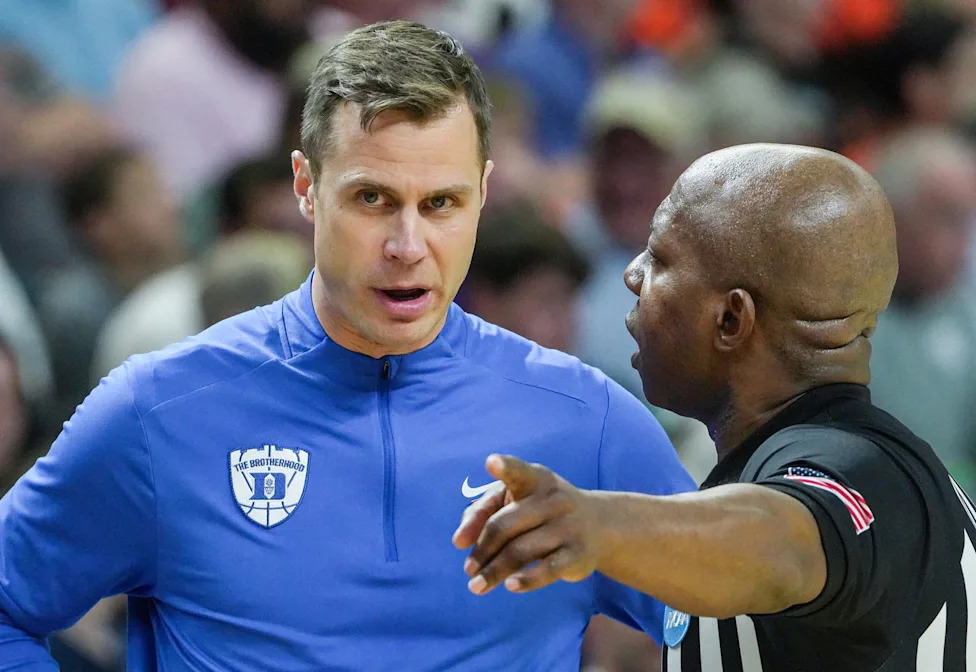
That is why Jon Scheyer’s approach to playing time should be viewed as a positive for Duke.
Scheyer has made it clear that he is not going to hand out guaranteed roles simply because of a player’s recruiting ranking, previous accomplishments or reputation. Instead, every player must earn his opportunities through his performance, work ethic and ability to contribute to the team.
Speaking recently about Duke’s recruiting philosophy, Scheyer explained that players should not expect promises when they choose the Blue Devils.
“One of the ways we build our foundation starts with the recruiting process. I’m not promising an exact role, starting spot, whatever it may be…”
Scheyer continued by emphasizing that experience and recruiting rankings will not determine who plays.
“Whether you’re a guy in our program that’s been here two or three years, whether you’re an incoming freshman, whatever your ranking is, it doesn’t matter at the end of the day. It’s about what you do and what you earn.”
That philosophy can benefit Duke tremendously.
College basketball is different from high school basketball. A player can dominate against high school competition and still need time to adjust to the speed, physicality and complexity of the college game. Likewise, a highly regarded transfer can arrive with impressive statistics but still have to compete against other talented players for minutes.
Duke’s roster is filled with players who believe they can contribute. If Scheyer simply promised playing time based on recruiting rankings, it could create problems within the locker room. Instead, establishing a merit-based culture gives every player the same challenge: perform and earn your role.
That does not mean Scheyer will never tell a recruit that he has a legitimate opportunity to start.
In fact, there are situations where that conversation almost certainly takes place during the recruiting process. Elite prospects want to understand how they fit into a program before making a major decision about their future. If another school is telling a recruit that he can immediately compete for a starting role, Duke may need to explain why its situation offers a similar opportunity.
Cameron Boozer is a perfect example.
Considering his talent, reputation and overall impact, it would be difficult to imagine Duke recruiting Boozer without discussing the possibility of him playing a major role immediately. A player of his caliber is naturally going to enter the program with enormous expectations.
However, there is an important difference between telling a recruit that he has an opportunity to start and guaranteeing that he will start.
That distinction matters.
Scheyer can recruit players by explaining that they will have opportunities while still maintaining that nothing is guaranteed once the season begins. That approach allows Duke to remain competitive in recruiting without sacrificing the culture it wants to build.
Ultimately, the message to Duke players is simple: your reputation may get you to Durham, but your performance will determine how much you play.
That is the kind of standard a championship-caliber program should have.
Duke expects to compete for championships every season, but Scheyer is also correct when he says the program is not entitled to wins. The same principle should apply to playing time. No player is entitled to minutes, regardless of whether he is a freshman phenom, a veteran transfer or a returning player.
Everyone has to win the day.
And if Scheyer can maintain that culture while continuing to recruit elite talent, Duke will put itself in an even stronger position to compete at the highest level of college basketball.