For Kentucky basketball fans, the possibility of adding Mark Mitchell has been one of the most intriguing storylines surrounding the Wildcats’ roster. But just when it appeared that the situation could be moving in Kentucky’s favor, a major complication has emerged.
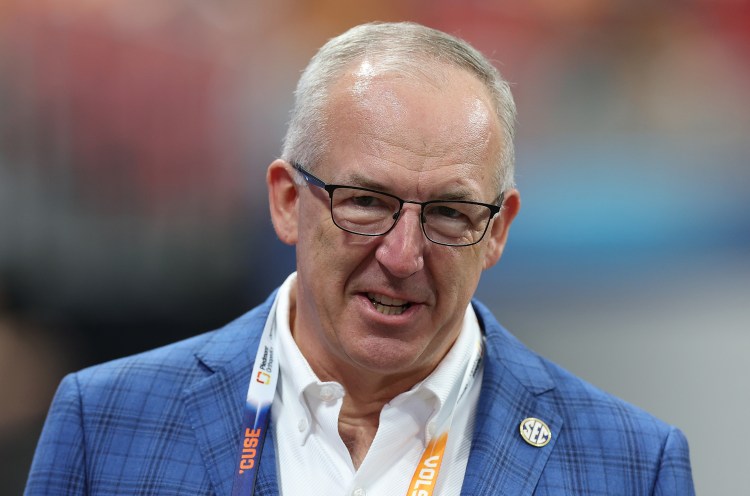
SEC commissioner Greg Sankey and several other power-conference commissioners have taken a position against a Kentucky court case that could potentially give Mitchell and other athletes another season of NCAA eligibility — along with the opportunity to transfer.
And while the legal battle is not over, the latest development could have enormous implications for Kentucky.
A Major Development in the Eligibility Battle
The situation centers on a group of athletes from the 2022 recruiting class who are seeking another year of college eligibility.
According to reporting from WDRB’s Eric Crawford, commissioners from several of the nation’s major conferences have expressed their opposition to the court case.
Sankey is joined by commissioners representing the ACC, Big Ten, Big 12, Big East and Pac-12.
Their joint declaration was filed in Jefferson Circuit Court, where Judge Brian Edwards is considering a request from 13 athletes seeking another season of NCAA eligibility.
For Kentucky, the case is especially significant because Mitchell is among the athletes involved.
That means what happens inside a Kentucky courtroom could potentially have a direct impact on the Wildcats’ roster.
And that is precisely why Kentucky fans are paying such close attention.
Why Mitchell Matters So Much to Kentucky
Mitchell has emerged as one of the most intriguing potential additions available to Kentucky.
The Wildcats have already gone through significant roster movement, and adding an experienced player such as Mitchell could dramatically change the outlook of the team.
Rather than bringing in another young player who would need time to adjust to the college game, Kentucky would potentially be adding someone who already understands the demands of high-level college basketball.
That experience is valuable.
It becomes even more valuable when a program is trying to compete immediately.
For Kentucky head coach Mark Pope, adding Mitchell would represent another opportunity to strengthen the roster with a proven player.
But there is one enormous problem.
Mitchell needs the court ruling to go his way before his potential next move can happen.
And now, some of the most powerful figures in college athletics are arguing against the athletes receiving that opportunity.
Greg Sankey’s Position Creates an Unexpected Twist
This is where things become particularly interesting for Kentucky fans.
Sankey is the commissioner of the SEC — the conference in which Kentucky plays.
Under normal circumstances, Kentucky fans might expect the SEC commissioner to support anything that could potentially make an SEC roster stronger.
If Mitchell receives another year of eligibility and ultimately chooses Kentucky, the Wildcats would presumably become a more talented team.
That could theoretically benefit the SEC as a whole.
Instead, Sankey and the other commissioners are raising concerns about the broader consequences of allowing the athletes to return.
Their argument centers largely around roster stability.
The commissioners believe that allowing the athletes another season of eligibility, particularly with transfer opportunities attached, could create significant roster instability across college sports.
That concern is understandable from a conference-management perspective.
But from Kentucky’s point of view, the situation feels very different.
The Wildcats are not looking at this through the lens of conference-wide roster management.
They are looking at it as an opportunity to add a major piece.
And right now, that opportunity remains tied to the court case.
The Roster-Instability Argument
The central concern from the commissioners is that allowing the athletes to return could create substantial complications for college programs.
College basketball rosters are already changing at an unprecedented pace.
Players can transfer.
NIL opportunities can influence decisions.
Coaches have to manage scholarships.
Programs must constantly evaluate their roster construction.
Adding another potential class of veteran players could create even more uncertainty.
Imagine a program that has already finalized its roster based on the expectation that certain seniors will graduate.
Suddenly, those players receive another season.
Now the coaching staff has to determine whether there is room for them.
If they return, someone else could potentially lose a roster spot.
If they decide to transfer, another school could suddenly become a destination.
That ripple effect is exactly what the commissioners are concerned about.
From their perspective, the issue is bigger than one athlete.
It could potentially affect entire conferences and dozens of programs.
But Kentucky Fans See a Different Side
For Kentucky supporters, however, the conversation is much simpler.
If Mitchell becomes eligible, Kentucky could potentially have an opportunity to land him.
And if he becomes available in the transfer market, the Wildcats would presumably be one of the programs worth watching closely.
That is why this legal battle matters so much in Lexington.
Kentucky has already demonstrated an aggressive approach to roster construction.
The Wildcats are constantly looking for ways to improve the team, and a player with Mitchell’s experience would fit naturally into that strategy.
The possibility of adding another proven contributor could make a significant difference.
But until the legal question is resolved, everything remains uncertain.
That uncertainty is what makes the situation so fascinating.
Is Sankey Actually Trying to Stop Mitchell From Going to Kentucky?
This is where Kentucky fans need to be careful.
It would be easy to frame the story as Greg Sankey personally trying to prevent Mitchell from transferring to Kentucky.
But the situation is more complicated than that.
Sankey’s position is not necessarily about Mitchell specifically.
The commissioners are addressing the broader legal and structural consequences of the court case.
Their concern is reportedly about what another season of eligibility and transfer opportunities could do to roster management across college athletics.
Still, the practical consequence for Kentucky could be exactly what fans fear.
If the court refuses the athletes’ request, Mitchell’s potential move to Kentucky could disappear before it ever truly gets started.
That is why the Wildcats have a legitimate reason to be interested in the outcome.
The Waiting Game Begins
For now, Kentucky fans are essentially watching and waiting.
The court will ultimately have to determine whether these athletes receive another year of eligibility.
Until that decision is made, it is impossible to know exactly what Mitchell’s next move will be.
If the athletes win the case, the situation could become extremely interesting.
Mitchell could potentially have another year of college basketball ahead of him, and his transfer options could suddenly become a major storyline.
Kentucky could then have a chance to pursue him aggressively.
But if the court rules against the athletes, that possibility could disappear.
That is the high-stakes nature of the current situation.
One ruling could completely reshape the conversation.
Why This Could Become a Major Kentucky Story
Kentucky fans have become accustomed to dramatic roster changes.
The modern college basketball offseason is no longer simply about recruiting high school players.
It is about transfers, eligibility rulings, NIL, roster limits and constantly changing circumstances.
The Mitchell situation is another example of just how complicated the modern game has become.
A player can be interested in a new opportunity.
A program can be interested in adding him.
Fans can become excited about a potential commitment.
And then a legal decision can suddenly determine whether the entire possibility exists.
That is exactly what is happening here.
Pope Could Be Waiting on the Answer
For Mark Pope, the situation is undoubtedly one worth monitoring.
The Kentucky coach has spent significant time reshaping the Wildcats and continues to evaluate ways to improve the roster.
A player like Mitchell could potentially give Kentucky another experienced option and provide additional depth and versatility.
But Pope cannot control the court.
He cannot determine whether Mitchell receives another year.
And he cannot force the NCAA eligibility situation to move faster.
All Kentucky can do is remain prepared.
If the court clears the way, the Wildcats could potentially make their interest known.
If it does not, Kentucky will have to move forward with its existing roster plans.
That makes patience especially important.
BBN Has Every Reason to Watch Closely
For Kentucky fans, this is one of those situations where the biggest development may happen away from the basketball court.
There will be no buzzer-beater.
No official commitment announcement.
No recruiting visit that immediately settles the question.
Instead, the future of Mitchell’s college career could depend on a legal decision.
That is what makes this story so unusual.
And with powerful conference commissioners now formally weighing in, the stakes have become even higher.
Sankey and the other commissioners clearly see significant consequences if the court grants the athletes another season and allows them to transfer.
Kentucky, meanwhile, could potentially see the ruling as an opportunity.
Those competing interests are now colliding in a fascinating way.
The Bottom Line for Kentucky
At this point, Kentucky fans should not assume that Mitchell is headed to Lexington.
They also should not assume that the door is closed.
The situation remains unresolved.
What is clear is that the court case could have a direct impact on one of Kentucky’s most intriguing potential roster targets.
Sankey’s opposition adds another layer to an already complicated situation.
The commissioners are concerned about roster instability and the broader impact on college athletics.
Kentucky fans are concerned about something much more immediate: whether Mark Mitchell will get the opportunity to play another season — and whether the Wildcats will have a chance to bring him to Lexington.
That answer is still waiting on the court.
And if Judge Brian Edwards ultimately rules in favor of the athletes, the entire transfer landscape could change almost instantly.
For Kentucky, that could open the door to one of the most interesting roster opportunities of the offseason.
If the ruling goes the other way, however, the Wildcats may have to move on.
For now, BBN can only watch.
Because what initially looked like a straightforward roster decision has suddenly become a much bigger battle involving eligibility, transfer rules, conference power and the future of college basketball.
And somewhere in the middle of all of it sits Mark Mitchell — with Kentucky potentially waiting on the other side of the ruling.
The Wildcats’ next major roster move may not be decided by Mark Pope at all. It could be decided inside a Kentucky courtroom.
And that is why this story is far from over.