.
Michael Malone’s arrival at North Carolina did not happen by accident.
When UNC began searching for a new men’s basketball coach, the Tar Heels knew they needed something different. The program had reached a point where simply making another familiar hire was not enough. Carolina wanted a coach capable of competing in the modern college basketball landscape — a coach with NBA experience, championship credibility, player-development expertise and the personality to handle the enormous expectations surrounding the Tar Heels.
Eventually, that search led to former Denver Nuggets head coach Michael Malone.
But behind the scenes, one of the most important voices in the process belonged to a man who knew both Carolina and Malone exceptionally well:
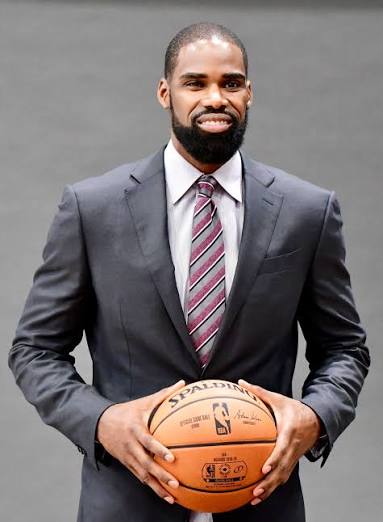
Antawn Jamison.
Jamison wasn’t simply another former Tar Heel offering an opinion.
He had actually played under Malone during Malone’s time as an assistant coach with the Cleveland Cavaliers. That relationship gave Jamison a perspective few other people involved in the search could provide.
And when Malone’s name emerged, Jamison immediately understood why the idea could work.
The former Tar Heel who knew Malone firsthand
UNC officially announced Malone as its new head coach on April 7, 2026. Malone was recommended by a search committee led by Steve Newmark and Bubba Cunningham. The committee also included Board of Trustees Chair Malcolm Turner, Tar Heel legend Antawn Jamison and Rams Club Executive Board Vice Chair Vaughn Moore.
For Jamison, Malone wasn’t some unknown NBA coach.
He had experienced Malone’s coaching firsthand.
Jamison was playing for Cleveland when Malone was on the Cavaliers’ coaching staff. Although their time together was relatively short, the experience left a lasting impression on the former Tar Heel star.
Jamison later explained that he was particularly impressed by Malone’s basketball knowledge and, perhaps even more importantly, his ability to communicate with players.
That became especially significant because Malone had coached in environments where managing superstar personalities was part of the job.
And Jamison had witnessed it himself.
“He could talk to LeBron”
One of Jamison’s strongest arguments for Malone centered on something that goes beyond X’s and O’s.
It was Malone’s ability to command respect.
Jamison recalled that Malone was one of the coaches in Cleveland who could communicate directly with LeBron James without treating the superstar differently.
That mattered.
In Jamison’s view, a successful head coach cannot simply be liked by players. He has to be able to challenge them, demand accountability and still earn their trust.
That was exactly the kind of leadership Carolina wanted.
Then Jamison had to convince Malone
There was another problem.
Malone had spent more than two decades in professional basketball.
Would he actually want to leave the NBA and enter college basketball?
Jamison admitted that he wasn’t initially certain.
But when UNC’s search committee reached out to Malone, Jamison had a message for his former coach.
Essentially, he told Malone that college basketball had changed.
This wasn’t the old version of college coaching where the head coach was responsible for virtually everything.
In Jamison’s description, the modern college program increasingly resembles an NBA organization.
There is a front office.
There are personnel departments.
There are assistants and support staff.
There are resources designed to help a head coach build a roster.
And then there was UNC itself.
Jamison reportedly told Malone that the North Carolina job was one of the most coveted positions in basketball.
That combination made the opportunity difficult to ignore.
And then there was Malone’s personal connection to Carolina
There was another factor that made the situation even more intriguing.
Malone already had a family connection to UNC.
His daughter, Bridget Malone, is a volleyball player at North Carolina.
That meant Chapel Hill wasn’t simply another random college destination for the Malone family.
There was already a personal connection to the university.
Jamison recognized that.
And in his conversation with Malone, he emphasized how much sense the opportunity could make.
For someone who had spent years in the NBA, Carolina offered something unique: a historic basketball program, massive expectations, an established national brand and a chance to build something of his own in the college game.
Jamison wasn’t trying to sell just a job
Perhaps the most important part of Jamison’s role was that he wasn’t simply telling Malone, “Take the job.”
He was explaining why Malone could succeed there.
That distinction matters.
Malone had already coached some of basketball’s biggest stars. He had won an NBA championship with Denver in 2023. He had coached Nikola Jokić and worked with players such as LeBron James, Steph Curry and Klay Thompson during his NBA career.
But college basketball would present an entirely different challenge.
Recruiting.
Transfer-portal management.
NIL.
Player retention.
Roster construction.
And the responsibility of restoring a program that expects to compete for championships.
Jamison believed Malone possessed the personality and basketball intelligence to handle that transition.
The “Carolina Family” question
There was also something symbolic about the hire.
North Carolina had traditionally valued its coaching lineage and connections to the “Carolina family.”
Malone was different.
He wasn’t a former UNC player.
He wasn’t a former UNC assistant.
He wasn’t someone who had spent decades inside the program.
He was an NBA championship coach coming from outside the traditional Carolina circle.
That made Jamison’s involvement even more important.
Jamison could serve as a bridge.
He understood what Carolina meant to former players, while also understanding Malone’s professional background.
Malone himself later emphasized that he wanted to embrace the Carolina family rather than replace it. He said one of his goals was to strengthen the connection between the current program and former Tar Heels.
That message appears to have resonated with Jamison.
From convincing Malone to building the roster
And now, months after the hire, the gamble is entering its next phase.
Malone isn’t simply trying to win games.
He’s attempting to establish an entirely new era of Carolina basketball.
The early results of his roster-building effort have already attracted enormous attention, with reports putting UNC’s 2026-27 roster investment at more than $20 million.
That’s a remarkable number.
But it also illustrates the scale of the challenge Malone accepted.
The coach Jamison helped convince to take the job is now attempting to build a modern college basketball powerhouse in one of the sport’s most demanding environments.
And the expectations couldn’t be clearer.
Jamison’s gamble could become one of UNC’s biggest decisions
Looking back, it’s easy to see why Jamison’s voice mattered.
He knew Malone as a coach.
He knew Carolina as a player.
And he understood what both sides were looking for.
He had seen Malone’s basketball knowledge up close. He had seen his ability to command respect from players. And he believed Malone could translate those qualities into Chapel Hill.
Now the rest is up to Malone.
The former NBA champion has already made his first major statement by assembling a dramatically reshaped roster and staff. UNC’s basketball staff is now complete as well, with Malone bringing together returning Carolina figures, coaches from other college programs and former Tar Heel players.
But the ultimate verdict won’t come from the recruiting rankings, the NIL figures or the excitement surrounding the hire.
It will come in March.
Because if Michael Malone turns North Carolina back into a national championship contender, the story of his arrival will eventually be remembered differently.
It won’t simply be the story of UNC hiring an NBA champion.
It will also be the story of Antawn Jamison recognizing something in Malone before the rest of the college basketball world fully understood what Carolina had found.
And that could make Jamison’s role in this entire saga one of the most fascinat
ing behind-the-scenes chapters of the new UNC era.