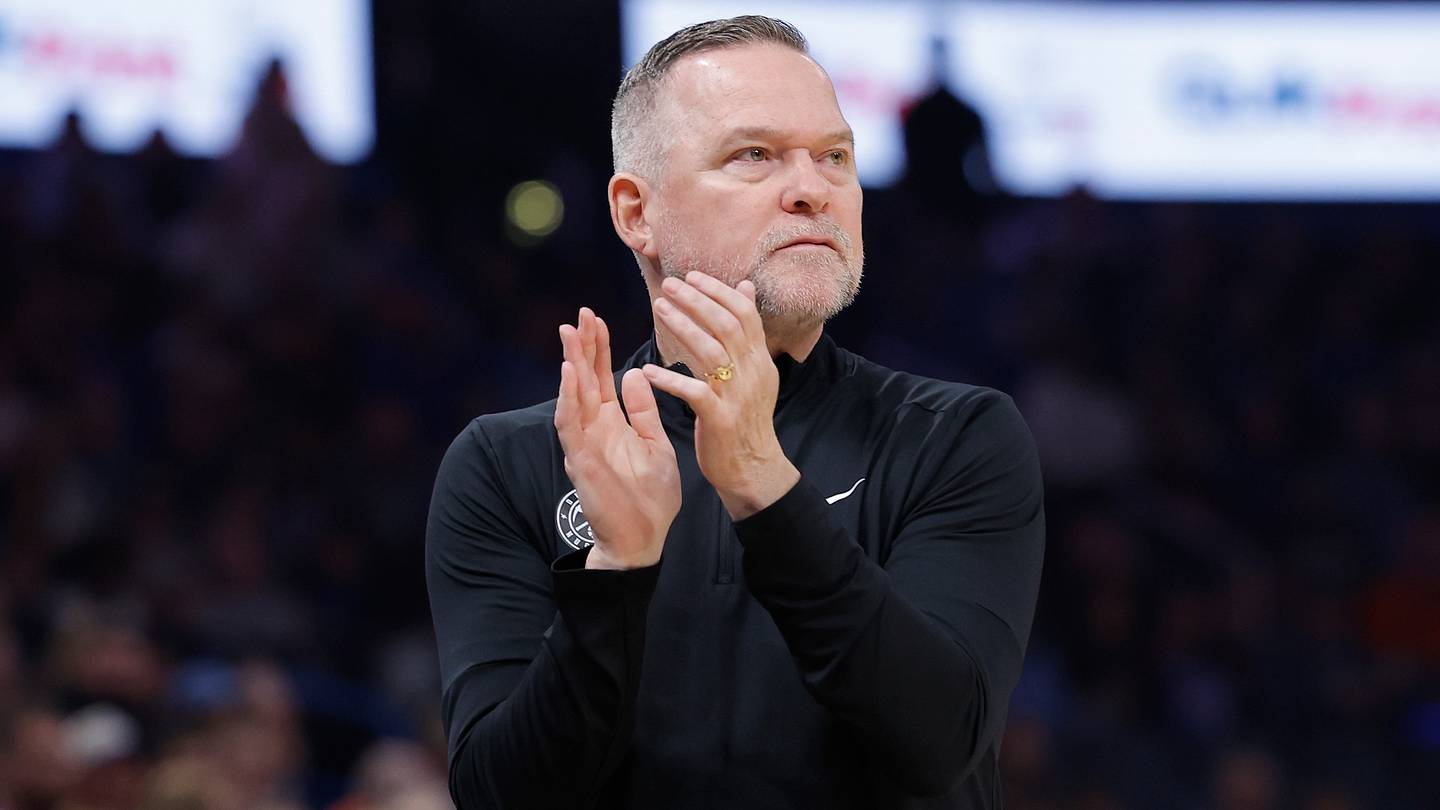
The North Carolina Tar Heels entered the offseason with plenty of work to do after suffering a first-round NCAA Tournament exit for the second consecutive season. With a new head coach in Michael Malone and limited time to reshape the roster, the program faced an immediate challenge: identifying its biggest weaknesses and addressing them before the opportunity passed.
Malone’s arrival came at a difficult point in the offseason, with the transfer portal window already opening. Unlike coaches who had months to evaluate their rosters and build relationships with potential additions, Malone and his staff had to move quickly.
Despite those circumstances, North Carolina managed to put together an intriguing roster. One of the biggest areas of improvement came in the backcourt, where Malone and his staff made an immediate effort to add size, versatility, ball-handling and scoring ability.
MALONE’S BACKCOURT VISION
Speaking with the media on Thursday, Malone discussed the approach he and his staff took when the transfer portal became available.
“When that portal opened the day I got the job, it seems like five months ago, we addressed the backcourt,” Malone said. “We added Terrence Brown, we added Matt Able, we added Neo Avdalas, and I think those three guys combine for one of the more dynamic and exciting backcourts in all of college basketball.”
Malone also emphasized the amount of work the trio has already put in.
“Those guys have all been working very, very hard, and I think our backcourt has size, versatility, and we can go in a lot of different ways with how we use that backcourt,” he continued.
Those comments provide a clear indication of what Malone wanted to accomplish. Rather than simply adding players to fill roster spots, the Tar Heels appear to have targeted guards who can perform multiple responsibilities and give the coaching staff greater flexibility.
TURNING A WEAKNESS INTO A STRENGTH
North Carolina’s backcourt was one of the areas that limited the team’s consistency last season. The Tar Heels struggled to receive reliable production from their guards, particularly when it came to perimeter shooting and creating offense.
The lack of a dependable primary ball-handler also made life more difficult for the offense. When opponents were able to pressure the backcourt, North Carolina sometimes struggled to generate quality looks and maintain offensive rhythm.
That is precisely why the decision to prioritize the position could prove so important.
Terrence Brown, Matt Able and Neoklis Avdalas give Malone several different options. Each player brings a unique skill set, but their ability to handle the ball, attack defenses and contribute away from the basketball could make the group particularly difficult to defend.
There are still questions that need to be answered. Brown and Avdalas will need to become more efficient perimeter shooters after both shot 33% or less from three-point range in 2025. Able, meanwhile, demonstrated shooting ability during his limited role at North Carolina State.
However, the overall potential of the group goes beyond shooting percentages.
VERSATILITY COULD DEFINE THE TAR HEELS
One of the most appealing aspects of North Carolina’s new-look backcourt is its interchangeability.
Instead of relying heavily on one traditional point guard to control the offense, Malone has the ability to place multiple players on the floor who can initiate possessions. That can make the Tar Heels less predictable and give opponents more difficult matchups.
Brown, Able and Avdalas can potentially bring the ball up the court, operate in pick-and-roll situations, attack closeouts and play effectively without the ball.
That versatility could also allow Malone to experiment with different lineups depending on the opponent. Against a bigger team, North Carolina could emphasize size and physicality. Against a team that struggles defensively on the perimeter, the Tar Heels could use their guards to create mismatches and attack relentlessly.
For a new coaching staff attempting to establish its identity, having that kind of flexibility is extremely valuable.
A BIG STEP FORWARD
Building a championship-caliber team requires talent throughout the roster, but elite guard play has become increasingly important in college basketball. The best teams typically have multiple players capable of creating offense, making plays under pressure and taking over when games become difficult.
North Carolina’s previous backcourt issues placed a ceiling on the team’s potential. Malone appears determined to change that immediately.
The Tar Heels may still have plenty to prove before they can be considered legitimate national championship favorites, but the foundation is considerably more intriguing than it was at the beginning of the offseason.
The biggest question now is whether the new pieces can translate their individual abilities into consistent team production.
If they can, Malone may have accomplished something extremely important in his first offseason: turning one of North Carolina’s most obvious weaknesses into one of its biggest potential strengths.
The Tar Heels have a long way to go, but their revamped backcourt gives them a reason to believe that the next chapter of North Carolina basketball could look very different.