


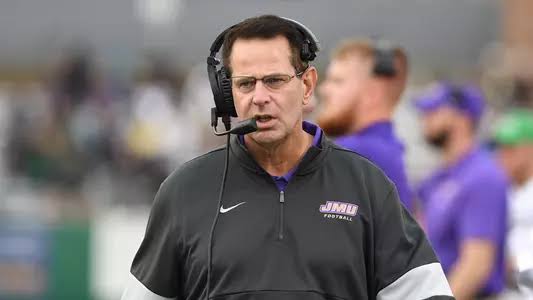
When Curt Cignetti arrived in Bloomington, he wasted almost no time making it clear that Indiana football was entering a new era.
The veteran coach understood that rebuilding a program was about much more than schemes, recruiting and practice. It was also about changing the mindset of the players wearing the Indiana uniform.
And there was perhaps no better place to begin than with Purdue.
The rivalry between Indiana and Purdue stretches back more than a century, with the two programs first meeting in 1891. Every year, they battle for the Old Oaken Bucket, one of the most recognizable rivalry trophies in college football.
For players who grew up in Indiana, the significance of the matchup can be obvious.
For newcomers, however, it has to be taught.
That became particularly important for Cignetti after he took over the Hoosiers. With a large group of new players arriving in Bloomington, several veterans realized that the incoming players needed to understand what the Purdue game meant.
One of those veterans was center Mike Katic.
Katic did not grow up in Indiana. He was a Pennsylvania native, meaning the Hoosiers-Boilermakers rivalry was not something he had experienced as a child.
Yet after arriving at Indiana, he embraced the tradition and eventually became one of the players responsible for passing it on to newcomers.
That task became especially important because Indiana had so many new faces.
Among them was linebacker Aiden Fisher, who arrived after spending his previous college career at James Madison.
Fisher had never experienced a rivalry quite like Indiana-Purdue.
At James Madison, there was no century-old trophy game carrying the same historical weight. The program had developed a series with Coastal Carolina, but Fisher had not experienced the type of deeply rooted rivalry culture that awaited him in Bloomington.
Then came an unexpected encounter.
During the spring semester following Cignetti’s arrival, Fisher and teammate Isaiah Jones were on Indiana’s campus when they crossed paths with a Purdue player who was visiting friends in Bloomington.
The Purdue linebacker already knew about Fisher.
Fisher, meanwhile, was still learning about the rivalry.
The conversation began as ordinary banter, but it quickly became much more personal when the Purdue player questioned the quality of the football Fisher had played at James Madison.
The comments about the Sun Belt clearly struck a nerve.
Instead of allowing the exchange to fade away, Fisher used it as motivation.
Suddenly, the rivalry became personal.
For Fisher, the moment provided a firsthand introduction to the type of emotion that surrounded the Old Oaken Bucket.
And Indiana’s veterans were already making sure the newcomers understood the assignment.
Katic hosted gatherings away from campus where players could spend time together and learn more about Indiana football traditions. The Purdue rivalry was among the topics emphasized during those conversations.
The message was simple: Wearing the Indiana uniform meant understanding the importance of beating Purdue.
Cignetti had already set the tone himself.
From his first day on the job, he made headlines with his blunt assessment of Indiana’s biggest rival. That attitude quickly became part of the culture he wanted to establish.
But the real test would come on the field.
Indiana entered the 2024 Bucket game looking to make a statement.
The Hoosiers had suffered a difficult defeat against Ohio State the previous week, and the Purdue game represented an opportunity to respond in emphatic fashion.
They did exactly that.
Indiana overwhelmed Purdue in snowy conditions, producing one of the most dominant performances in the history of the rivalry.
Quarterback Kurtis Rourke delivered a spectacular performance, throwing for 349 yards and six touchdowns. Purdue, meanwhile, struggled to generate offense through the air, finishing with only 54 passing yards.
The Hoosiers also forced five Purdue turnovers.
By halftime, Indiana had built a commanding advantage.
But Cignetti was not satisfied.
Even with his team comfortably ahead, the coach continued demanding more.
That mentality produced one of the most memorable moments of the afternoon.
With Indiana facing fourth down near midfield in the third quarter, the Hoosiers lined up for what appeared to be a conventional punt situation.
Instead, Cignetti called for a fake.
And the ball went directly to defensive lineman James Carpenter.
At roughly 288 pounds, Carpenter was hardly the player Purdue expected to see carrying the football.
But the defensive tackle took the snap and charged down the left side, gaining 18 yards and keeping the Indiana drive alive.
The play perfectly captured the personality Cignetti was attempting to build.
Indiana was already comfortably ahead.
There was little conventional reason to take such a risk.
But the rivalry meant something different.
The Hoosiers wanted to dominate.
They wanted to establish an identity.
And they wanted everyone to understand that Indiana football was no longer approaching these games with the same mentality as before.
For linebacker Jailin Walker, the atmosphere was familiar.
Walker had grown up around the intense high school rivalry between Varina and Highland Springs in Virginia. That experience had prepared him for the emotional intensity of a rivalry game.
Against Purdue, he delivered one of the finest performances of his career.
Walker recorded four tackles for loss, 1.5 sacks, two pass breakups, three quarterback pressures and a forced fumble.
He described the performance as one of the best games of his life.
For longtime Indiana players, the victory meant even more.
Offensive lineman Carter Smith had experienced the pain of the previous year’s Bucket game, when Purdue defeated Indiana 35-31.
That loss was particularly difficult for Smith, who felt he had struggled against Purdue’s talented pass rushers.
A year later, the story was dramatically different.
Smith protected Rourke throughout the game and did not allow a single quarterback pressure on 35 dropbacks, according to Pro Football Focus.
It was another example of the transformation taking place inside the Indiana program.
Players were developing.
Newcomers were embracing traditions.
Veterans were teaching younger teammates what the rivalry meant.
And Cignetti was demanding a standard that went beyond simply winning.
The most fascinating part of the story, however, may have been the unexpected role played by that Purdue player Fisher encountered months earlier.
A conversation that began as friendly rivalry banter ended up giving Fisher additional motivation.
When the two eventually crossed paths during the Bucket game, their interaction was very different.
The talking had largely disappeared.
The football field had replaced the campus sidewalk, and the rivalry had become real.
Fisher’s experience illustrates something important about Cignetti’s transformation of Indiana football.
A successful culture is not created solely by a coach.
It is passed from player to player.
Veterans explain the traditions. Newcomers absorb them. Rivalries provide emotional fuel. And eventually, players who once knew nothing about the history begin carrying that history themselves.
That was exactly what happened at Indiana.
Players like Katic helped educate the newcomers.
Cignetti established the tone.
Fisher found personal motivation.
Walker thrived in the intensity.
Smith found redemption.
And Rourke led an offense that overwhelmed Purdue.
The result was far more than another victory for the Old Oaken Bucket.
It became a symbol of Indiana’s changing identity.
For years, Purdue had represented one of Indiana football’s most painful obstacles. Under Cignetti, the Hoosiers approached the rivalry with a completely different mentality.
The 2024 victory demonstrated what can happen when talent, preparation, confidence and culture come together.
And perhaps the strangest part of the entire story is that a Purdue player, simply by saying a few words to an Indiana newcomer months before the game, unexpectedly helped strengthen that culture.
For Fisher, the encounter provided motivation.
For Indiana, it became another small piece of a much larger transformation.
The Old Oaken Bucket had always mattered.
But under Cignetti, Indiana’s players
were learning that it was not enough to understand the rivalry.
They had to own it.
And in the snow against Purdue, they showed exactly what that new Indiana mentality looked like.




