


There is a different feeling surrounding North Carolina basketball as the 2026-27 season approaches. The Tar Heels are preparing to enter a new era under Michael Malone, and while the former NBA head coach has already generated plenty of attention with his recruiting work, another development is quietly putting the spotlight on what could become one of the most intriguing rosters in Chapel Hill.
Four UNC players have been recognized among the best players in college basketball at their respective positions and archetypes, giving Tar Heel fans another reason to pay close attention to what Malone is building.
Matt Able, Neoklis Avdalas, Terrence Brown and Jarin Stevenson were all included by CBS Sports college basketball writer Isaac Trotter in his rankings of the best collegiate players based on positional archetypes.
That list is significant because these four players are expected to play major roles for North Carolina this season.
And if the expectations surrounding them become reality, they could become some of the most important pieces of Malone’s first season in Chapel Hill.
The four players bring very different skill sets to the table.
Avdalas and Brown are classified as combo guards, Able is listed as a shooting guard, while Stevenson is considered a stretch four.
That combination alone gives North Carolina plenty of versatility.
Even more intriguing is the fact that all four are expected to be starters this coming season, with Stevenson being the only player among the group who was already on the Tar Heels’ roster last year.
For Malone, that creates an opportunity to build an entirely new identity around a group that possesses different strengths but can potentially complement one another on the court.
Stevenson knows Chapel Hill particularly well.
The Chapel Hill native transferred to North Carolina from Alabama ahead of the 2025-26 season and put together the best statistical season of his college career. As a junior, he averaged 8.1 points and 4.4 rebounds per game.
Those numbers may not immediately jump off the page, but his importance to the upcoming team could be much greater than the statistics suggest.
Stevenson gives Malone a player with experience in the program, familiarity with the environment and the ability to stretch the floor from the frontcourt.
As a stretch four, his shooting ability can create additional space for UNC’s guards and allow the Tar Heels to attack opposing defenses in different ways.
And with three new projected starters joining him, Stevenson could become an important bridge between last season’s team and Malone’s new-look roster.
Then there is Matt Able, whose journey to Chapel Hill is particularly interesting.
Able took an unusual route to North Carolina by transferring from rival NC State.
During the 2025-26 season, he appeared in 34 games for the Tar Heels and averaged 8.8 points and 3.4 rebounds per game while coming off the bench.
Now, his role is expected to change.
Instead of primarily providing production as a reserve, Able could be given a starting position and significantly more responsibility.
That creates an intriguing question for UNC fans.
What can Able produce when he has a larger role from the opening tip?
His experience from last season could prove valuable, especially as Malone introduces his system and attempts to establish chemistry among a roster that has undergone significant changes.
But perhaps the player who has generated the most intrigue among UNC’s offseason additions is Terrence Brown.
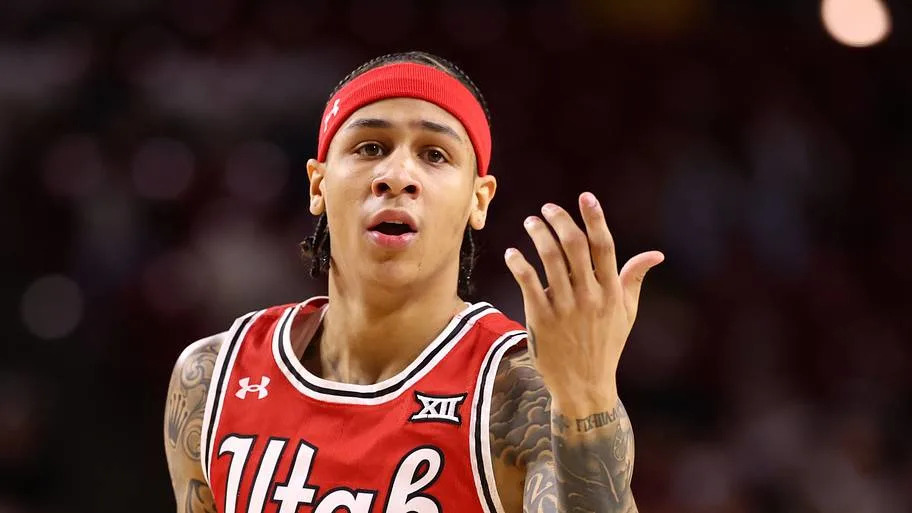
Brown arrives in Chapel Hill after putting together a remarkable individual season at Utah.
Despite playing on a struggling Utah team, Brown averaged a team-best 19.9 points per game.
That scoring production immediately makes him one of the players opposing teams will have to account for.
Brown has also maintained a career shooting percentage of 44%, giving UNC another player capable of carrying a significant offensive workload.
The Tar Heels will need scoring from multiple areas, and Brown could become one of Malone’s most important offensive weapons.
The question is how quickly he can translate the volume and responsibility he had at Utah into a new environment at North Carolina.
At UNC, Brown will be surrounded by more talent and will not necessarily be asked to do everything himself.
That could actually make his offensive role even more interesting.
If defenses cannot focus exclusively on Brown, opportunities could open up for the other Tar Heels around him.
Then there is Neoklis Avdalas, perhaps the most unusual piece of the group.
Avdalas started all 31 games for Virginia Tech last season and averaged 12.1 points and 4.6 assists per game.
But his physical profile makes him particularly fascinating.
Listed at 6-foot-9, Avdalas has the size to create matchup problems while also possessing the skills associated with a guard.
He is classified as a combo guard, but his versatility could allow Malone to use him in multiple ways.
The possibility of Avdalas playing anywhere from position one through position five gives Malone an extremely flexible piece.
Imagine a lineup in which a 6-foot-9 player can handle the ball, facilitate offense and create mismatches against smaller defenders.
That kind of versatility could become particularly valuable during a long college basketball season.
And it may be one of the reasons Avdalas has attracted so much attention heading into the season.
The bigger picture, however, is what these four players represent for Malone’s first UNC roster.
The Tar Heels are not simply bringing in individual talent.
They are putting together pieces with different skill sets.
Stevenson provides frontcourt versatility and shooting.
Able brings experience and scoring from the guard position.
Brown brings proven high-volume scoring.
Avdalas provides unusual size and versatility in the backcourt.
On paper, that is an intriguing combination.
But college basketball is not played on paper.
The biggest challenge for Malone will be turning individual talent into a cohesive team.
That may be the most fascinating part of the entire 2026-27 season.
Malone arrives in Chapel Hill after spending years coaching at the highest level of professional basketball. Now, he has to translate that experience into the college game, where roster construction, player development, transfer-portal additions and chemistry all play enormous roles.
The early signs have certainly attracted attention.
His recruiting ability has already been discussed extensively, and the new-look roster reflects an aggressive attempt to reshape the Tar Heels.
The four players highlighted by Trotter could become central to that transformation.
There is also an element of uncertainty that makes this team especially interesting.
Only Stevenson among these four was already part of the Tar Heels’ roster last season.
That means Malone will have to build chemistry among several players who are learning one another’s tendencies, strengths and weaknesses.
The good news is that the group does not appear to lack versatility.
The combination of size, shooting, scoring and playmaking could give Malone multiple ways to construct his lineups.
Avdalas’ ability to potentially play multiple positions could allow the coaching staff to experiment with different combinations.
Brown’s scoring could provide a consistent offensive option.
Able could benefit from moving into a larger role after spending much of last season as a reserve.
And Stevenson’s familiarity with the program could provide some continuity during a period of significant transition.
That is why the recognition of these four players is more than just another preseason ranking for UNC fans.
It offers an early glimpse at what the Tar Heels could look like under their new head coach.
Of course, rankings do not guarantee success.
The players still have to perform, stay healthy, develop chemistry and adapt to Malone’s system.
But the talent and positional diversity are difficult to overlook.
North Carolina is entering a new chapter, and Malone’s first season will inevitably be judged in part by how quickly he can turn this collection of talent into a functioning team.
The four players recognized by Trotter could be central to that process.
And perhaps that is the biggest reason their rankings have created so much intrigue around Chapel Hill.
UNC does not have to rely on one player to carry the entire season.
Instead, Malone appears to have multiple potential contributors who can impact games in very different ways.
If Brown can maintain his scoring production, if Avdalas can fully utilize his unique size and versatility, if Able can successfully transition into a starting role and if Stevenson can take another step forward, the Tar Heels could have a fascinating foundation.
The 2026-27 season is still ahead.
The games have not been played.
But the anticipation is already building in Chapel Hill.
Four Tar Heels have now been recognized among the best collegiate players within their positional archetypes.
And with Michael Malone beginning a new era at North Carolina, the biggest question may no longer be whether these players have talent.
It may be how
far Malone can take them once all those pieces finally come together.
For Tar Heel fans, that is the mystery waiting to be answered when the new season finally arrives.




