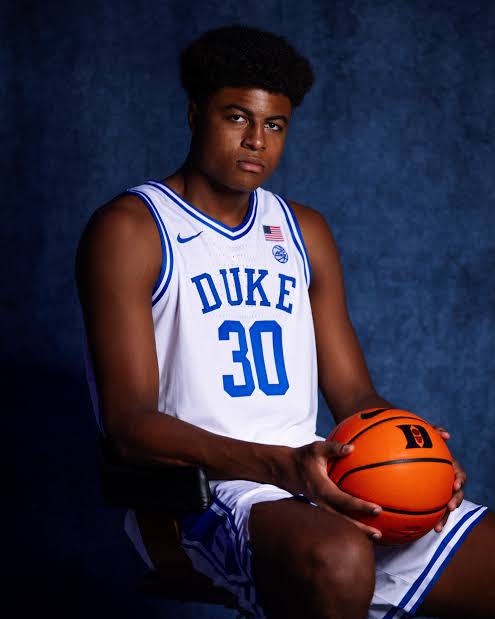
Duke basketball is preparing for another season filled with enormous expectations, and the excitement surrounding Jon Scheyer’s program continues to grow as the Blue Devils get closer to the start of the 2026-27 campaign. With talented newcomers, experienced contributors, and championship ambitions, Duke has the potential to establish itself as one of the most dangerous teams in college basketball.
However, one name is attracting particular attention as fans begin evaluating the team’s potential: Joaquim Boumtje Boumtje.
Praise from a former Duke assistant coach has added another intriguing dimension to the conversation surrounding the young talent and the Blue Devils’ expectations for the upcoming season. As Duke prepares to begin its regular-season schedule in early November, supporters will be eager to discover how the freshman class fits into Scheyer’s plans and whether the team’s considerable talent can translate into a serious national championship challenge.
The expectations could hardly be higher. Duke is widely viewed as a potential top-two team in the country, and anything short of a deep postseason run would likely leave many supporters disappointed.
Yet before the Blue Devils can think seriously about championship celebrations, Scheyer must answer several important questions, including how to distribute minutes among his talented young players.
Former Duke Assistant’s Praise Adds Intrigue Around Boumtje Boumtje
One of the most interesting developments heading into the new season is the attention surrounding Joaquim Boumtje Boumtje and the praise he has received from a former member of Duke’s coaching staff.
When a player attracts positive attention from someone familiar with the standards and demands of the Duke basketball program, it naturally generates interest among supporters. The Blue Devils have built a reputation for recruiting high-level talent, developing players, and competing for championships, making any promising young prospect worth watching.
Boumtje Boumtje’s name is therefore an intriguing part of the conversation as fans attempt to determine which players could emerge as important contributors.
However, the significance of that praise will ultimately be determined by what happens on the court. Positive assessments can raise expectations, but players must still adapt to the speed, physicality, and tactical demands of college basketball.
For a freshman, that adjustment can be particularly challenging. The transition from previous levels of competition to the college game requires more than individual talent. It demands consistency, defensive awareness, effective communication, and the ability to make smart decisions under pressure.
If Boumtje Boumtje can demonstrate those qualities, he could strengthen Duke’s options as Scheyer evaluates his rotation. Nevertheless, his precise role and playing time will depend on his performances, development, and the competition within the roster.
The former assistant’s praise has added another storyline for Duke supporters to follow, but the coming season will provide the clearest indication of what the young talent can contribute.
Jon Scheyer Faces a Major Rotation Decision
While Duke’s talent has generated considerable excitement, having a deep roster can also create difficult decisions for a head coach.
Scheyer enters the season with expectations of competing at the highest level, but one of his biggest challenges will be determining how to distribute playing time among his young players.
The question is particularly important because talented freshmen often arrive at Duke with significant expectations. Supporters want to see what they can do, while the coaching staff must balance individual development with the collective needs of the team.
Giving every promising player substantial minutes is not always possible. College basketball rotations are influenced by matchups, defensive assignments, shooting ability, rebounding, turnovers, and the need to maintain balance across different positions.
A player who excels offensively may need time to develop defensively. Another newcomer might contribute immediately through energy, rebounding, or perimeter defense, even if that player is not yet a leading scorer.
Scheyer must identify which combinations give Duke the best chance to win.
That process could involve experimentation early in the season. Exhibition games and the opening weeks of the regular campaign provide opportunities to evaluate how players perform against different opponents and how their skills complement those of their teammates.
For Boumtje Boumtje and Duke’s other youngsters, the challenge will be to make the most of every opportunity.
A freshman does not necessarily need to become the team’s leading scorer to have an impact. Consistent defense, intelligent movement, unselfish play, and the ability to execute the game plan can all help a young player earn the coaching staff’s trust.
The competition for minutes could become one of the most fascinating storylines surrounding the Blue Devils as the season unfolds.
Could Duke Have One of the Best Freshmen in America?
The suggestion that Duke’s freshman talent could be among the best in the country has added to the excitement surrounding the program.
Expectations for elite recruits are often enormous, especially when they join a team with championship ambitions. Supporters naturally want to know whether the newcomers can make an immediate impact and help Duke compete with the strongest programs in the nation.
However, identifying the best freshman in America before the regular season begins is a difficult task.
College basketball success depends on numerous factors, including individual skill, physical readiness, team chemistry, coaching, and the opportunities available within a player’s role.
Some freshmen make an immediate impact because their teams depend heavily on their scoring and playmaking. Others contribute in more subtle ways before becoming bigger parts of the rotation later in the season.
Duke’s situation will be particularly interesting because the Blue Devils are not simply trying to develop young players. They are expected to compete for major trophies immediately.
That creates a different kind of pressure. Young players must learn quickly while contributing to a team that supporters expect to challenge for a national championship.
For Boumtje Boumtje, the opportunity to establish himself within such a competitive environment could be significant. If he can demonstrate that he belongs at this level, his development may become an important part of Duke’s overall story.
Still, it would be premature to declare him the best freshman in the country without seeing how he performs during actual games.
The excitement is understandable, but the evidence will come through his performances once the season begins.
Duke’s Championship Expectations Are Enormous
Duke enters the 2026-27 season with the kind of expectations that accompany one of college basketball’s most prominent programs.
The Blue Devils possess a reputation built on outstanding players, major victories, and a history of competing for national championships. That tradition creates excitement every season, but it also means that merely being competitive is rarely enough to satisfy the most ambitious supporters.
The supplied outlook describes Duke as a potential top-two team in America, with the possible exception of Florida among the teams expected to challenge at the very highest level.
Such expectations should not be mistaken for guarantees. College basketball is unpredictable, and even the most talented teams can encounter injuries, difficult matchups, shooting slumps, or unexpected defeats.
A strong roster improves a team’s chances, but it does not eliminate the challenges involved in winning a national championship.
The regular season will provide an opportunity for Duke to establish its identity, develop chemistry, and discover which players can be trusted in important situations.
The Blue Devils must also demonstrate that their talent can work together effectively. A collection of highly regarded players does not automatically become a championship team. Success requires communication, discipline, sacrifice, and the willingness to embrace roles that may not always generate individual recognition.
For Scheyer, the objective will be to turn the team’s potential into consistent results.
That means finding the right rotation, developing the freshmen, managing expectations, and ensuring that the team continues improving as the season progresses.
Why the Opening Weeks Could Be So Important
Duke’s regular season is expected to begin in early November, giving supporters relatively little time to wait before seeing the team compete in meaningful games.
Those opening contests could provide important clues about the team’s strengths and weaknesses.
Fans will be watching how quickly the freshmen adjust, whether the returning players establish leadership, and how Scheyer responds when different lineups encounter challenges.
The opening weeks can also reveal which players are ready for substantial responsibilities and which ones may need more time to develop.
For Boumtje Boumtje, any opportunity to demonstrate his abilities could help shape perceptions of his role. A promising performance might increase excitement, while a difficult start would not necessarily indicate that he lacks the potential to contribute later.
Freshman development rarely follows a perfectly predictable path.
The coaching staff must evaluate performances over time rather than allowing one game to determine a player’s future. Consistency and improvement will be especially important as Duke faces stronger opponents and begins preparing for the demands of conference competition.
The Blue Devils will also need to develop a reliable approach on both ends of the floor. Offensive talent can help win games, but defensive discipline, rebounding, and execution under pressure often determine whether a team can survive the toughest postseason matchups.
These are the areas that will ultimately determine whether Duke can live up to its enormous preseason expectations.
National Championship or Disappointment?
Perhaps the biggest challenge facing Duke is the weight of expectation surrounding the program.
When a team is viewed as a potential top-two contender, supporters naturally begin thinking about the Final Four and national championship. Anything less can quickly become a source of frustration, especially when the roster appears capable of competing with anyone.
The supplied assessment suggests that anything short of a national championship could be viewed as disappointing because of Duke’s talent on both ends of the court.
That reflects the extremely high standards associated with the Blue Devils, although a championship is never guaranteed, regardless of a team’s talent level.
The postseason can be unforgiving. A single poor shooting performance, an unfavorable matchup, or a late-game mistake can end a season that otherwise featured months of excellent basketball.
For that reason, Duke must focus on building a team capable of handling different challenges rather than concentrating exclusively on the final prize.
If Scheyer can establish a strong rotation, develop the freshmen, and maintain defensive consistency, the Blue Devils should have the tools to compete with the nation’s best teams.
The contributions of players such as Boumtje Boumtje could become part of that equation, depending on how they perform and what roles they earn.
The Verdict: Duke Has the Talent, but the Court Must Provide the Answers
The attention surrounding Joaquim Boumtje Boumtje, combined with the praise attributed to a former Duke assistant coach, has created another interesting storyline ahead of the 2026-27 season.
The Blue Devils have high expectations, a talented group of young players, and a head coach facing important decisions about playing time and team chemistry.
Scheyer’s ability to manage the rotation could prove crucial. He must determine which freshmen are ready to contribute, how to balance offensive and defensive responsibilities, and which combinations give Duke the best chance of winning against elite opponents.
Boumtje Boumtje will be one of the names supporters are watching as those questions begin to receive answers.
But the most important test remains ahead. Praise creates excitement, recruiting talent creates possibilities, and preseason predictions generate debate. Only performances on the court can establish whether Duke is genuinely capable of dominating college basketball.
With the regular season approaching, the anticipation is growing.
Could Duke’s talented freshmen help turn the Blue Devils into an unstoppable championship contender? The potential is certainly
part of the conversation, but the opening games will begin to reveal whether Jon Scheyer’s team can turn its enormous expectations into reality.