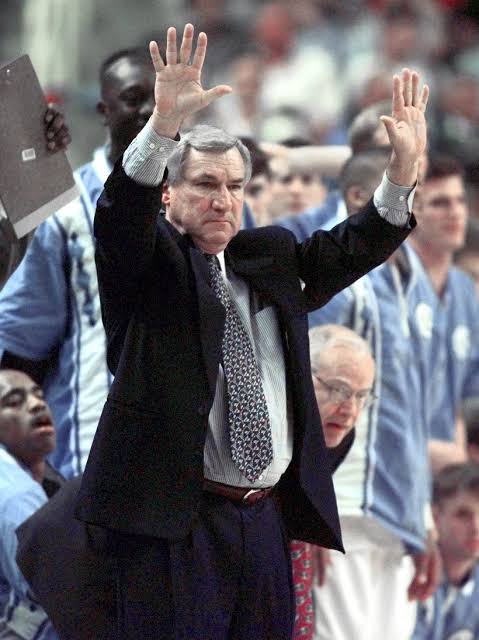
Two historic college basketball programs will meet in Indianapolis on Sunday as the North Carolina Tar Heels prepare to face the Indiana Hoosiers in their second preseason exhibition game. Although the matchup will not count toward either team’s regular-season record, there are several compelling reasons for basketball fans to pay attention.
For North Carolina, the contest offers another opportunity to evaluate Michael Malone’s developing team, examine how the players are adapting to his coaching philosophy, and identify areas that still require improvement before the games begin to count. For Indiana, it represents a chance to measure its progress under Darian DeVries while facing one of the most recognizable programs in college basketball.
The biggest challenge for interested viewers might be finding the game. Sunday’s exhibition will be broadcast on B1G+, meaning fans may need to navigate a streaming service rather than simply turning on a traditional television channel.
Still, the matchup deserves consideration. Beyond the fact that two historic programs will share the court, their shared basketball history, recent coaching struggles, and uncertain futures make this exhibition particularly interesting.
Here are three reasons why UNC fans should make an effort to watch the Tar Heels take on Indiana.
## 1. Two Historic Programs Share a Remarkable Basketball History
When North Carolina and Indiana meet, they bring decades of college basketball tradition into the same arena.
Both programs established themselves as major forces in the sport during the twentieth century, building passionate fanbases and collecting achievements that continue to shape their identities. Their histories include championship celebrations, legendary coaches, memorable tournament runs, and generations of players who helped establish their respective schools as college basketball powerhouses.
North Carolina began playing collegiate basketball in the early twentieth century and has developed into one of the sport’s most successful programs. The Tar Heels have won six NCAA national championships, establishing a tradition that has survived multiple coaching eras and numerous changes in the college basketball landscape.
Indiana has its own impressive legacy, with five NCAA championships and a history that includes some of the most memorable teams in the sport. Under legendary coach Bob Knight, the Hoosiers became synonymous with discipline, toughness, and championship-level basketball.
Despite their similar standing in the sport, the two schools have not met particularly often.
Their first recorded meeting took place in 1961, when Indiana defeated North Carolina 76-70. Since then, their occasional encounters have added another layer to the relationship between these historic programs.
Indiana also defeated North Carolina in the 1981 NCAA championship game, a result that remains an important part of the matchup’s history. The Hoosiers’ all-time advantage over the Tar Heels adds another reason for fans to take an interest when these teams meet again.
The programs have accumulated more than two centuries of combined basketball history, yet their meetings have been relatively rare. Sunday’s exhibition therefore represents another opportunity to watch two traditional powers compete, even if the result will not affect their official records.
For fans who appreciate the history of college basketball, that alone provides a compelling reason to tune in.
There is also a practical benefit to watching the game. Exhibition matchups allow supporters to see how the current generation of players represents its program’s identity. The uniforms, the expectations, and the traditions may be familiar, but the players responsible for carrying those traditions forward are different.
For North Carolina, the question is how the Tar Heels can build another successful chapter in their storied history. For Indiana, the challenge is restoring the consistency and national relevance that once made the Hoosiers one of college basketball’s most feared opponents.
Sunday’s meeting may only be a preseason exhibition, but the history behind it gives the contest significance beyond the final score.
## 2. Recent History Shows Just How Similar These Programs Have Become
The second reason to watch is the striking similarity between the recent experiences of North Carolina and Indiana.
Both programs have spent years trying to reconcile their historic reputations with the demands of modern college basketball. Their fanbases expect sustained success, championship contention, and teams capable of making deep runs in March. However, maintaining those standards has become increasingly complicated.
North Carolina and Indiana each enjoyed championship-winning eras under legendary coaches. Bob Knight helped Indiana secure three NCAA championships during his tenure, while Dean Smith guided North Carolina to two national titles and established a coaching legacy that influenced generations of players.
Their respective programs became associated with distinctive basketball philosophies and an expectation that winning should be a regular occurrence.
The coaching transitions that followed, however, brought new challenges.
Indiana hired former Hoosier player Mike Woodson ahead of the 2021-22 season, hoping that his NBA experience and connection to the university would help restore the program’s former prominence.
North Carolina made a similar decision by promoting former Tar Heel player Hubert Davis to head coach in 2021. Davis inherited a program with enormous expectations and the responsibility of maintaining the standards established by Smith and his successor, Roy Williams.
Although the situations were not identical, both appointments reflected a familiar strategy: bring back someone who understands the program’s culture and believes in its traditions.
The outcomes also differed in important ways.
Davis led North Carolina to the national championship game during his first season, giving Tar Heel fans an unforgettable tournament run. He subsequently guided the team to additional successful campaigns, including an ACC regular-season championship in 2024.
Woodson, meanwhile, struggled to establish the same level of consistency in Big Ten competition during his Indiana tenure.
Nevertheless, both programs experienced periods in which expectations and results did not always align. For fanbases accustomed to discussing championships, seasons that fall short of those ambitions can create considerable frustration.
That shared experience makes Sunday’s game particularly interesting.
Neither team’s supporters are simply looking for a competitive exhibition. They want evidence that their program is moving in the right direction and that the next chapter can restore the excitement associated with their traditional standing in college basketball.
For North Carolina, the matchup offers another opportunity to examine how quickly the players can adjust to Malone’s approach. For Indiana, it provides a chance to demonstrate progress under DeVries against an opponent with comparable historical prestige.
The result will not settle the broader questions surrounding either program, but the performance could offer clues about what supporters should expect as the season approaches.
Will one team look more organized, confident, and prepared for the challenges ahead? Will either coaching staff discover a promising combination of players or an area that needs immediate attention?
Those are the kinds of questions that make preseason basketball worthwhile.
3. Michael Malone and Darian DeVries Face Important Tests for the Future
The third and perhaps most compelling reason to watch Sunday’s matchup is the opportunity to evaluate the direction of both programs under their current leadership.
North Carolina enters a new chapter with Michael Malone, whose professional basketball background brings a different perspective to the college game.
Malone’s experience coaching at the highest level of professional basketball could influence how the Tar Heels approach player development, preparation, recruitment, and tactical execution. College basketball continues to change rapidly, particularly with the transfer portal, name, image, and likeness opportunities, and the increasing importance of roster construction.
A coach who understands the professional environment may offer valuable insight into preparing players for those realities.
However, success in the NBA does not automatically translate into immediate success in college basketball. Malone must demonstrate that he can manage the distinctive challenges of the college game while building a team capable of competing against established programs.
That includes developing relationships with players, finding an effective rotation, creating an offensive identity, and establishing defensive consistency.
Sunday’s exhibition will not provide all the answers, but it offers another opportunity to see how the Tar Heels respond to his leadership.
Can North Carolina execute its offensive sets effectively? Will the players communicate well defensively? Can Malone identify combinations that allow the roster’s strengths to complement one another?
Those questions will be worth watching throughout the contest.
Indiana’s situation is also intriguing.
DeVries is working to establish his own identity in Bloomington after previously building a strong coaching reputation at Drake. During his six seasons leading the Bulldogs, he guided the program to three NCAA tournament appearances, demonstrating an ability to organize competitive teams and produce results.
His challenge at Indiana is considerably different.
The Hoosiers operate under the expectations associated with a historic basketball program, where reaching the NCAA tournament is important but often not enough to satisfy supporters who remember the school’s championship years.
DeVries must build a roster capable of competing consistently in the Big Ten while creating a sustainable path toward postseason success.
His first season provides a starting point, but the next steps are what matter most. Indiana needs to show that it can improve its competitiveness and develop the consistency required to challenge stronger conference opponents.
Facing North Carolina offers an interesting early measuring stick.
Although an exhibition cannot determine how either program will perform over an entire season, the matchup gives both coaches an opportunity to evaluate their teams against recognizable opposition.
For DeVries, a disciplined performance against the Tar Heels could provide encouragement as Indiana continues developing its system. For Malone, the contest is another chance to establish expectations and show that North Carolina is progressing under his leadership.
There is also a larger question surrounding both programs: Can they return to consistently competing for major honors?
North Carolina has the history, resources, and recruiting appeal to pursue deep NCAA tournament runs. Indiana possesses a similarly powerful basketball tradition and a fanbase eager to see the Hoosiers regain their place among the nation’s leading programs.
Restoring that level of success requires more than reputation. It demands effective recruitment, player development, tactical flexibility, and consistent execution.
Sunday’s contest is only one small step in that process, but it could provide an early indication of how each team is responding to its new direction.
Why UNC Fans Should Not Miss Sunday’s Exhibition
The North Carolina-Indiana matchup might not have the stakes of a conference game or an NCAA tournament showdown, but that does not mean it lacks value.
The historical connection between the programs makes the meeting appealing, their recent experiences offer an interesting comparison, and the presence of Malone and DeVries creates additional intrigue.
For Tar Heel supporters, the priority will be seeing how the team develops under Malone and whether the players show encouraging signs of cohesion, discipline, and offensive execution.
Indiana will have similar objectives as it continues building under DeVries.
Ultimately, neither team needs to produce a flawless performance in October. The more important question is whether the players demonstrate progress and whether the coaching staffs can identify areas for improvement before the regular season begins.
That is what makes exhibition basketball useful: it offers a first look at how a team’s plans are translating onto the court.
The broadcast arrangements on B1G+ may make the game less convenient to watch, but fans interested in the future of these programs have good reasons to seek it out.
Two historic basketball institutions will meet, two coaching staffs will evaluate their progress, and supporters will receive another glimpse of what the season might hold.
Sunday’s exhibition will not decide a championship or determine either team’s postseason fate. However, it could offer valuable clues about the direction of two programs determined to strengthen their standing in college basketball.
For North Carolina fans wondering
whether Malone can lead the Tar Heels toward another memorable season, this is another opportunity to start finding answers.
Don’t miss it.