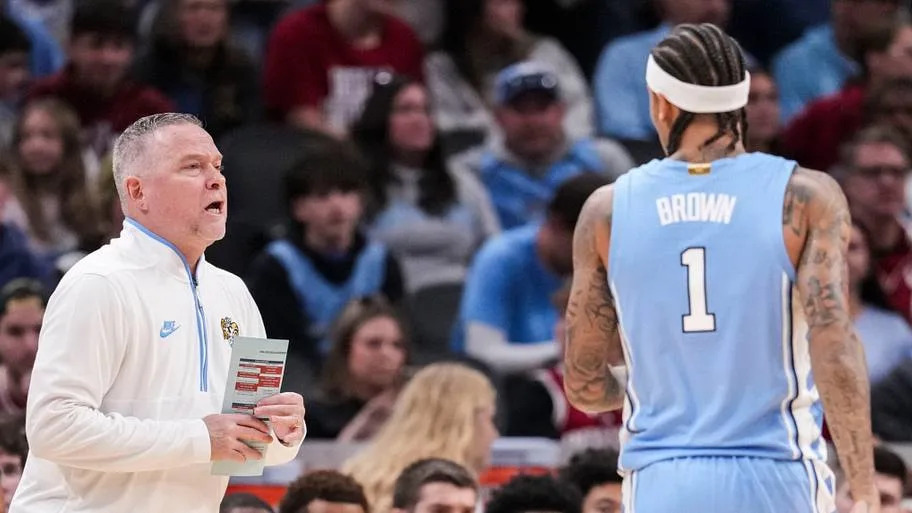
North Carolina basketball has made a massive investment in rebuilding its roster, but the big question now is whether Michael Malone can turn that spending into the results Tar Heels fans expect. With millions of dollars reportedly committed to assembling a competitive team, expectations are rising in Chapel Hill, and the pressure is already building ahead of the 2026–27 college basketball season.
The Tar Heels entered the offseason facing a difficult situation. Several important players departed through the transfer portal and the NBA Draft, while a coaching change forced the program to begin a new chapter under Malone. With only five returning players available when the new head coach arrived, North Carolina had little choice but to move quickly in the transfer market.
Now, the reported financial commitment has placed UNC among college basketball’s biggest spenders. Yet there is one major concern: despite being grouped among programs spending at least $20 million on their rosters, North Carolina was left outside the preseason Associated Press Top 25.
That contrast has created an intriguing question. Did the Tar Heels spend what was necessary to rebuild a championship contender, or did the urgency of the situation force them to pay a premium for a roster that still has something to prove?
Michael Malone Inherited a Major Challenge at UNC
When Michael Malone arrived in Chapel Hill, he was not walking into a settled program with an established roster and a long offseason to prepare.
Instead, he inherited a team undergoing significant changes at precisely the moment when college basketball’s transfer portal was becoming central to roster construction.
North Carolina had experienced departures through both the transfer portal and the NBA Draft. Those exits left the program with just five returning players, creating an urgent need to bring in experienced talent capable of competing immediately.
For a program with the history and expectations of the Tar Heels, simply filling roster spots was never going to be enough.
North Carolina needed players who could handle the pressure of playing at one of college basketball’s most demanding programs. The incoming group also needed to fit Malone’s preferred style, understand their responsibilities quickly, and deliver results without the benefit of a traditional recruiting cycle.
That was a difficult assignment for any new coach.
It was particularly challenging for Malone because his previous experience was built around the NBA, where roster construction, player movement, and team-building operate under a different system. The college transfer portal and name, image, and likeness compensation landscape required him to adapt rapidly.
Consequently, North Carolina’s offseason became a race against time. The coaching staff needed to identify available players, evaluate their abilities, negotiate opportunities to bring them to Chapel Hill, and assemble a team capable of competing against the nation’s strongest programs.
The financial investment reflected the urgency of that mission.
The $20 Million Question: Where Does UNC Stand?
According to reporting by CBS Sports’ Matt Norlander and Isaac Trotter, North Carolina was included in the highest spending tier of power-conference programs in their assessment of offseason NIL roster investments.
That group consisted of programs reportedly spending at least $20 million on their rosters.
The list included Duke, Florida, Kentucky, Illinois, Louisville, Michigan, St. John’s, Tennessee, Texas, Texas Tech, and North Carolina.
Being included in that category places the Tar Heels among the programs making some of the most aggressive financial commitments in the sport.
However, the reported figure should be understood as part of an estimated spending tier rather than a verified, publicly audited UNC basketball budget. NIL arrangements and roster compensation are not always fully disclosed, and the precise financial details of individual deals can be difficult to establish.
Nevertheless, the broader message is clear: North Carolina approached roster construction with an ambition to compete immediately.
The question is whether the talent assembled will justify the investment.
Spending heavily can help a program attract experienced transfers and address weaknesses, but money alone does not guarantee chemistry, consistent performances, or success in March.
A roster can feature talented individuals and still struggle to become a cohesive team. Conversely, a group that receives less attention in preseason rankings can outperform expectations when its players fit together and the coaching staff maximizes their strengths.
For Malone, the challenge is to ensure that North Carolina’s financial commitment produces something more valuable than headlines.
He needs victories.
One Ranking That Raises Serious Questions
The biggest talking point emerged when the preseason AP Top 25 poll for the 2026–27 men’s college basketball season was released.
Among the programs placed in CBS Sports’ highest spending tier, North Carolina was the only team that did not appear in the preseason Top 25, according to the information provided in the original report.
The other programs in that group were all ranked inside the top 23, with eight appearing among the top 16.
That contrast makes UNC’s situation particularly interesting.
Programs such as Duke and Kentucky have established expectations of competing at the highest level, while other big spenders have also built rosters that attracted considerable preseason confidence.
North Carolina, meanwhile, faces questions about how quickly Malone can turn a largely reconstructed roster into a nationally competitive team.
The absence from the poll does not prove that the Tar Heels overspent. Preseason rankings are projections, not final judgments, and they cannot fully account for how a new roster will develop over an entire season.
Still, the comparison raises a legitimate question about value.
If North Carolina is investing at a level comparable to some of the nation’s leading programs, fans will naturally want to see a roster capable of delivering comparable results.
The financial commitment creates an expectation that the Tar Heels should be competitive against ranked opponents, contend in the ACC, and position themselves for a meaningful NCAA Tournament run.
Anything less could intensify scrutiny of the offseason decisions.
Why North Carolina Could Not Afford to Be Patient
There is another side to the spending debate that should not be overlooked.
North Carolina was not building its roster under normal circumstances.
The program had endured consecutive first-round exits from the NCAA Tournament, according to the original report. Those disappointing finishes made another season without significant progress difficult to accept.
For a team with UNC’s tradition, history alone cannot guarantee future success. The program must continue attracting elite players, developing talent, and proving that it can compete for championships.
The coaching transition added another layer of urgency.
Malone arrived as the transfer portal window was opening, leaving little time to evaluate the market and establish a complete roster. By the time a new coach can fully assess his needs, some of the most attractive players may already have committed elsewhere.
That creates a difficult negotiating environment.
When a team has several openings to fill and a limited period in which to fill them, it may have to pursue players aggressively. Waiting for perfect opportunities can leave a program without enough quality depth.
North Carolina therefore faced a choice: spend aggressively to assemble a competitive roster or risk entering the season with too many weaknesses.
Given the expectations surrounding the Tar Heels, the second option would have carried substantial risks.
The financial commitment can also be viewed as an investment in recruiting beyond this season. Prospective players in the 2027 and 2028 classes will be watching how Malone’s first team performs.
A competitive season could help convince recruits that UNC is moving in the right direction. A disappointing campaign, however, could raise fresh questions about the program’s future.
That makes the coming season important not only for immediate results but also for the foundation Malone hopes to establish.
Michael Malone Must Prove the Investment Was Worth It
Ultimately, North Carolina’s offseason spending will be judged by what happens on the court.
Malone can assemble an expensive roster, but the responsibility for turning that group into a successful team belongs to the coaching staff and players.
The first challenge will be developing chemistry.
Transfer-heavy teams often bring together players with different backgrounds, playing styles, and expectations. They must learn to share the ball, communicate defensively, accept their roles, and respond when games become difficult.
That process takes time, even when the players are talented.
The second challenge will be consistency. North Carolina cannot afford to rely solely on occasional standout performances if it hopes to compete with the nation’s best teams.
The Tar Heels will need reliable production across the rotation, strong defensive execution, and the ability to close out tight games.
Malone’s NBA coaching background could prove valuable in establishing professional standards, preparing players for demanding situations, and organizing a team with significant expectations.
However, the college game has its own challenges. Recruiting, roster retention, player development, and adapting to the demands of a college schedule are essential parts of the job.
His ability to manage those responsibilities will help determine whether UNC’s investment translates into success.
Is This a Make-or-Break Season for the Tar Heels?
North Carolina’s circumstances create an unusual combination of patience and urgency.
As a new head coach who inherited a depleted roster, Malone deserves an opportunity to establish his system and build the program in his own image.
At the same time, the Tar Heels cannot ignore the expectations that accompany their history, reputation, and reported financial investment.
The 2026–27 season represents an opportunity to change the conversation around the program.
A strong start could quiet concerns about the preseason rankings and demonstrate that the new roster is better than outside projections suggest. Competitive performances against major opponents would provide further evidence that the offseason strategy was sound.
A slow start, on the other hand, would likely intensify questions about roster construction, player fit, and whether the program paid too much to secure its targets.
The NCAA Tournament will ultimately provide another important measure of progress, although a successful season should not be judged by a single game alone.
For now, the most important issue is whether Malone can turn a collection of new players into a disciplined, confident, and competitive team.
The Verdict: UNC’s Spending Will Mean Nothing Without Results
North Carolina’s reported place among college basketball’s biggest offseason spenders tells an important story about the urgency surrounding Michael Malone’s first season.
The Tar Heels needed to rebuild quickly after major departures, and the timing of the coaching change left them with little room for error. Aggressive spending may have been necessary to assemble a roster capable of competing immediately.
But the preseason AP Top 25 results have created an uncomfortable contrast: North Carolina invested at the level of the sport’s leading programs without receiving the same preseason recognition.
That does not mean the offseason was a failure, nor does it establish that the Tar Heels overpaid. Those conclusions can only be assessed more fairly once the team begins playing meaningful games.
What is clear is that expectations will be high.
Malone must prove that the players brought to Chapel Hill can deliver more than potential and expensive contracts. They must produce wins, compete against elite opposition, and help restore North Carolina’s position among college basketball’s most respected programs.
Did the Tar Heels spend too much, or was an aggressive roster rebuild the only realistic option?
That is the question fans will continue debating until the new season provides the answers.