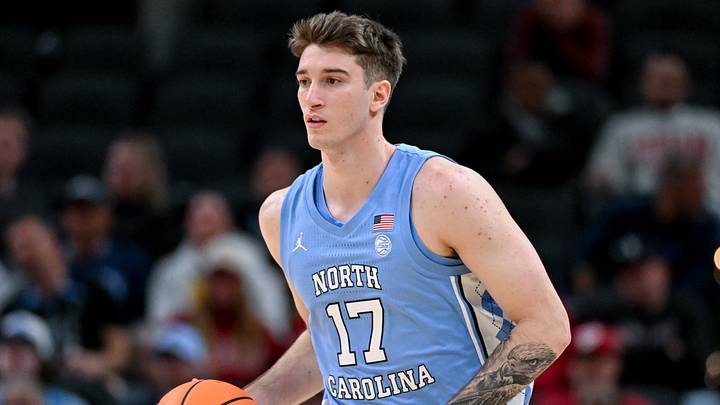
Fans Be WORRIED?
The Tar Heels have yet to find their footing this preseason.
North Carolina basketball fans were hoping to see encouraging signs from Michael Malone’s team as the new season approaches, but the Tar Heels have experienced a difficult start to their preseason preparations. After two exhibition games, it is becoming increasingly clear that this revamped roster still has plenty of work to do, particularly on the offensive end of the floor.
Although preseason performances do not always determine what happens during the regular season, North Carolina’s offensive struggles have raised some important questions. The Tar Heels have talented players, multiple ball-handling options, and a new head coach with considerable basketball experience. However, those ingredients have not yet translated into the smooth, effective offense that supporters want to see.
With the regular season less than two weeks away, there is understandable concern about the team’s readiness. The good news is that there are identifiable reasons behind these early difficulties, and most of them are problems that can potentially be addressed with time, practice, and improved chemistry.
Two issues stand out above the rest: the tendency for the ball to stop moving and the lack of cohesion among players who are still learning how to play together.
Ball Is Sticking, and UNC’s Offensive Potential Is Being Wasted
One of the biggest talking points surrounding North Carolina this preseason has been the construction of its backcourt.
During the offseason, Michael Malone made strengthening the perimeter a priority, bringing in Neoklis Avdalas, Matt Able, and Terrence Brown through the transfer portal. The idea behind assembling this group was to give North Carolina multiple players capable of handling the basketball, creating opportunities, and contributing in different offensive roles.
On paper, that versatility should give the Tar Heels considerable flexibility.
Rather than depending on a single point guard to organize every possession, North Carolina has several players who can initiate the offense, attack defenders off the dribble, and create scoring opportunities for teammates. That variety can make a team difficult to defend because opponents cannot simply focus all their attention on one primary playmaker.
However, the early exhibition performances have exposed a problem that could prevent the Tar Heels from maximizing those advantages.
At times, the basketball has remained in one player’s hands for too long, allowing the defense to settle into position and making it easier to anticipate what North Carolina intends to do next.
That is not the type of offensive basketball Malone wants his team to play.
The head coach has emphasized the importance of ball movement and player movement throughout the offseason. Those principles are essential to creating an offense that generates high-quality shots rather than relying on individual players to manufacture difficult scoring opportunities.
When the ball moves quickly, defenders are forced to communicate, rotate, and make decisions under pressure. One pass can create an opening, while another can turn that opening into a clear scoring opportunity.
When the ball stops moving, however, the defense gains an advantage.
North Carolina’s possessions can become predictable, with players attempting contested shots or trying to beat defenders individually instead of exploiting weaknesses in the opposing defense.
The shooting numbers from the two exhibition games underline the concern. The Tar Heels have converted just 39.3 percent of their attempts, a figure that illustrates how much room remains for improvement.
That percentage alone does not explain every offensive problem, but it reinforces the need for better shot selection, improved spacing, and more consistent execution.
Neoklis Avdalas and Terrence Brown Must Find the Right Balance
The performances of North Carolina’s backcourt players will be particularly important as the team attempts to correct these issues.
Avdalas has led the Tar Heels with eight assists across their first two exhibition games, while Brown has recorded five. Angelo Brizzi has also contributed to the team’s playmaking efforts.
Those numbers demonstrate that North Carolina has players capable of creating opportunities for others. The challenge is turning that individual ability into a consistent team-wide approach.
Across the two contests, the Tar Heels have recorded 25 assists. While that total shows that the ball is moving on some possessions, there is room for a more connected offensive performance given the number of players available to handle and distribute the basketball.
Malone does not necessarily need every possession to feature a long sequence of passes. Basketball is often about recognizing the right opportunity and attacking before the defense can recover.
Nevertheless, the Tar Heels must become more comfortable moving the ball from side to side, using screens effectively, and finding the open player when the defense commits additional attention to the ball handler.
Avdalas and Brown, in particular, will need to understand when to create their own shots and when to involve their teammates.
That balance is critical. A guard who can attack the basket becomes even more dangerous when defenders know that he is equally willing to pass to an open teammate. Likewise, a player who consistently moves the ball can create better driving opportunities by forcing defenders to respect the possibility of a pass.
The objective is not to eliminate individual creativity. Instead, North Carolina needs to make sure individual skills serve the overall offensive system.
If Malone can get his backcourt to embrace that approach, the Tar Heels could eventually become much more difficult to contain.
Lack of Cohesion Is Another Major Concern
The second major issue is understandable, considering the extent of the changes North Carolina has experienced.
With 11 newcomers arriving through the transfer portal and recruiting class, the Tar Heels are essentially trying to build a new team while preparing for the start of a demanding season.
That is no small task.
Every player arrives with different experiences, habits, strengths, and expectations. Some are accustomed to handling the basketball frequently, while others are more comfortable operating without it. Some players thrive in transition, while others prefer a more structured half-court approach.
Bringing those different styles together requires more than simply putting talented players on the same court.
It takes communication, repetition, trust, and a clear understanding of each player’s responsibilities.
North Carolina has had only a few months to begin that process. Consequently, it would be unrealistic to expect the Tar Heels to operate with the same level of chemistry as an experienced team that has played together for multiple seasons.
Still, the preseason performances have highlighted how much progress remains necessary.
When North Carolina’s set plays work as intended, the team has opportunities to create advantages through screens, cuts, and coordinated movement. The problem emerges when those actions break down.
Instead of smoothly transitioning into a secondary option, the offense can revert to one-on-one basketball.
Players begin attempting to solve the possession individually, and the collective structure becomes less effective.
That was particularly noticeable against Indiana. The Hoosiers applied physical pressure to North Carolina’s guards around screens, disrupting the timing of offensive actions and making it more difficult for the Tar Heels to execute their intended plays.
Those defensive adjustments exposed the importance of developing chemistry.
Players must learn how their teammates react when the initial action fails. A guard needs to know whether a teammate will cut toward the basket, relocate to the perimeter, or establish a new screening angle.
Without that understanding, even a well-designed offensive play can quickly lose its effectiveness.
North Carolina’s Physicality Must Improve
Another concern is North Carolina’s ability to handle physical defensive pressure.
The Indiana exhibition offered a reminder that offensive execution becomes significantly more difficult when opposing defenders can disrupt screens, challenge ball handlers, and prevent players from reaching their preferred positions.
The Tar Heels must become more comfortable operating under those conditions.
That does not necessarily mean every player needs to become physically stronger overnight. Instead, the team must improve its positioning, screening angles, timing, and decision-making when defenders attempt to disrupt its rhythm.
Effective screens can create separation without requiring a dramatic physical advantage. Proper spacing can prevent defenders from crowding the ball handler, while decisive passing can punish opponents who overcommit to stopping the initial action.
These details matter because the best offensive teams do not abandon their principles whenever the defense increases its intensity.
North Carolina must learn to respond to pressure with sharper execution rather than allowing possessions to deteriorate into difficult individual attempts.
As the players become more familiar with one another, they should have a better understanding of how to adjust when opponents take away the first option.
That development could become one of the most important factors in determining how quickly Malone’s offense improves.
Should Tar Heels Fans Be Worried?
It is understandable that some North Carolina supporters may feel uneasy after watching the first two exhibition games.
The offensive performances have not been particularly convincing, and the limited time remaining before the regular season creates understandable urgency.
However, there is an important distinction between identifying early warning signs and declaring that the entire season is in trouble.
North Carolina is working with a substantially revamped roster, and Malone is entering his first season as the program’s head coach. Both circumstances create challenges that cannot be resolved immediately.
The exhibition games have revealed areas that require attention, but they have also given the coaching staff valuable information about what needs to improve before the games begin to count.
The priority now should be establishing clearer offensive roles, improving communication, and ensuring that the team’s talented guards consistently create opportunities for one another.
Malone must also help his players understand what to do when their preferred offensive actions are disrupted. If the first option is unavailable, the team needs reliable alternatives rather than depending on individual improvisation.
Improvement will require patience, but patience should not be confused with ignoring the problems.
The Tar Heels need to show measurable progress in their remaining preparations, particularly in ball movement, shot selection, physicality, and execution against defensive pressure.
The Verdict: UNC Has Time to Respond, but the Clock Is Ticking
The biggest takeaway from North Carolina’s preseason struggles is that the team’s offensive potential has not yet translated into consistent production.
The backcourt possesses versatility, and several players have demonstrated the ability to create opportunities for teammates. Nevertheless, the offense must become more connected, less predictable, and more effective when opponents disrupt its initial plans.
The lack of chemistry is understandable given the number of newcomers, but the coaching staff cannot afford to let those growing pains continue indefinitely.
As the regular season approaches, every practice becomes an opportunity to strengthen relationships, clarify responsibilities, and establish the habits necessary for sustained success.
There is no guarantee that the Tar Heels will suddenly transform into an offensive powerhouse when the regular season begins. Equally, two exhibition games are not enough to determine how effective this team can ultimately become.
For now, the most important question is whether Malone can turn North Carolina’s collection of individual talent into a cohesive offensive unit.
If the ball begins moving more consistently, the guards make better decisions, and the players develop a stronger understanding of one another, the early struggles could eventually become a valuable learning experience.
But if the same problems persist when the games start counting, the pressure on Malone and his players will only increase.
Tar Heels fans have reasons to remain patient, but they also have every reason to watch the team’s next steps closely. The talent is there. The challenge is making all the pieces work together before the preseason becomes the regular season.