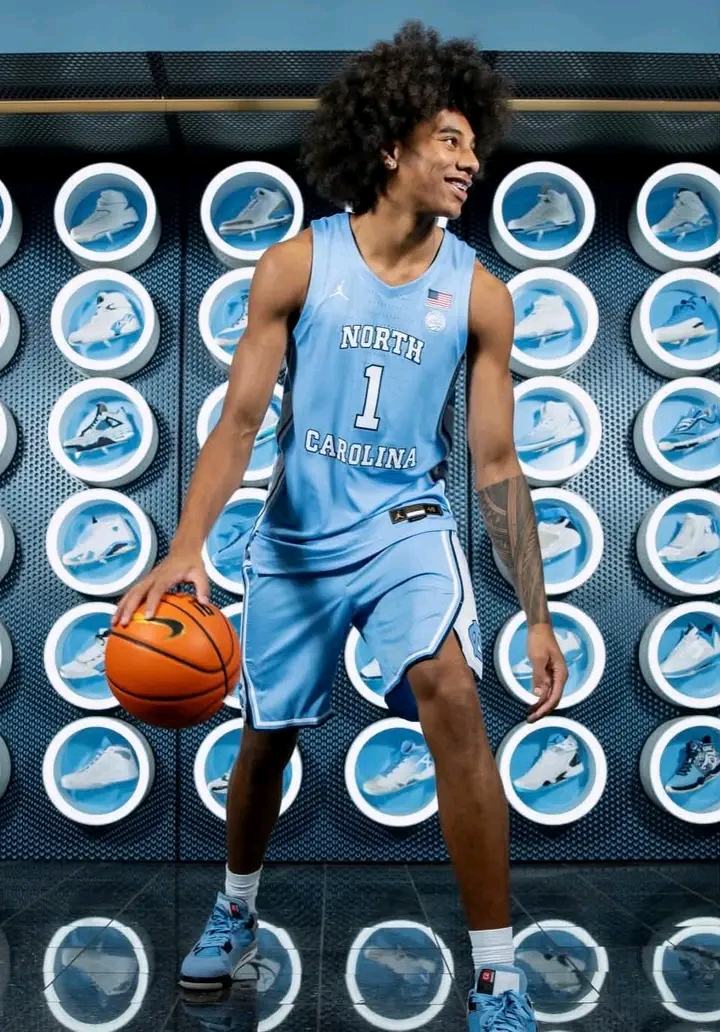
North Carolina basketball is approaching an important stretch of its preseason, with Michael Malone and his coaching staff balancing two major priorities: preparing the Tar Heels for the upcoming regular season and continuing to strengthen the program’s future through recruiting.
As the team prepares for its final preseason exhibition against Charlotte, attention is also turning toward a recruiting landscape that could begin to take shape as highly rated prospects move closer to announcing their college decisions.

The latest episode of Coast to Coast brought together recruiting analysts Sherrell McMillan and Sean Moran, alongside Joey Powell, to examine the developments surrounding North Carolina’s recruiting efforts and discuss what the Tar Heels need to accomplish against Charlotte.
Several important subjects featured in the discussion, including DeMarcus Henry’s visit and announcement, the coaching staff’s approach to its top recruiting targets, and the question of whether North Carolina should prioritize the best available player or the prospect who fits the roster most naturally.
The conversation also turned toward the immediate challenges facing Malone’s team. With the regular season approaching, North Carolina needs to make progress on the boards, improve its offensive execution, and establish greater clarity in its rotations.
For Tar Heels fans, the coming days offer another opportunity to evaluate the team’s progress while watching for developments that could influence the program’s future.
UNC Basketball Recruiting Could Enter an Important Phase
Recruiting remains one of the central storylines surrounding North Carolina as Malone continues building his program.
The coaching staff has been rolling out the red carpet for blue-chip high school prospects, working to establish relationships and convince talented players that Chapel Hill is the right destination for their college careers.
Landing highly rated recruits is important, but recruiting success involves more than collecting impressive names. Coaches must evaluate how prospects fit the team’s style, what positions need strengthening, and which players can make meaningful contributions within the program’s long-term plans.
That challenge becomes even more interesting when several recruits begin approaching decision dates.
As prospects narrow their options and consider their futures, coaching staffs must determine where to focus their attention and how aggressively to pursue their preferred targets. A commitment from one player can influence the team’s priorities elsewhere, particularly when multiple prospects occupy similar positions or offer overlapping skill sets.
For Malone and his staff, the objective is to assemble a roster that combines talent, versatility, and complementary strengths.
The latest Coast to Coast discussion examined the latest recruiting picture, with particular attention given to DeMarcus Henry’s visit and announcement. His situation was among the subjects highlighted in the program’s rundown, reflecting the continued interest surrounding North Carolina’s recruiting efforts.
However, the precise consequences of individual recruiting decisions will depend on what the prospects ultimately choose and how the coaching staff adjusts its plans.
That uncertainty is part of what makes this stage of the recruiting cycle so compelling for Tar Heels supporters.
The Big Recruiting Question: Best Player or Best Fit?
One of the most interesting subjects discussed on Coast to Coast was whether North Carolina should prioritize the best player available or focus on the prospect who represents the best fit for the roster.
It is a familiar question in college basketball, but the answer can have significant consequences for a program attempting to build a balanced team.
Recruiting rankings can provide a useful starting point when evaluating prospects. Highly rated players often possess impressive physical tools, advanced skills, and substantial potential. However, rankings cannot fully predict how a player will perform within a particular system or how comfortably he will fit alongside existing teammates.
A talented guard, for example, might be an outstanding individual prospect but play a position already occupied by several established contributors. Another player with a slightly lower recruiting profile could address a pressing roster need and provide skills the team currently lacks.
Neither approach is automatically correct.
The best decision depends on the roster, the player’s development potential, and the coaching staff’s vision for how the team should operate.
For Malone, identifying that balance will be especially important as he continues shaping North Carolina’s future. The Tar Heels need players who can contribute individually while also making the team more effective collectively.
That means evaluating shooting, ball-handling, defense, rebounding, versatility, and positional needs rather than relying exclusively on recruiting rankings.
The coaching staff must also consider how quickly each prospect could adjust to college basketball and whether his strengths complement those of the players already in the program.
Ultimately, the most successful recruiting class will not necessarily be the one with the highest combined rankings. It will be the group that gives Malone the right pieces to build a competitive and cohesive team.
Charlotte Exhibition Provides Another Test for the Tar Heels
While recruiting offers a glimpse into North Carolina’s future, the upcoming exhibition against Charlotte provides a more immediate test of the team’s readiness.
As the final preseason exhibition, the matchup represents another opportunity for Malone and his players to evaluate what has improved and what still requires attention before the regular season begins.
Exhibition results should not be treated as definitive predictions of future success. Nevertheless, these games can reveal important information about a team’s execution, physicality, communication, and ability to respond when opponents challenge its preferred style.
North Carolina has several areas it needs to address, and the discussion on Coast to Coast highlighted two particularly important offensive and defensive priorities.
The first is rebounding.
The second is the ability to generate quality offensive possessions without relying on individual heroics.
Those areas are closely connected. A team that secures defensive rebounds can prevent opponents from creating second-chance opportunities, while strong offensive rebounding can produce additional possessions and scoring chances.
Likewise, an offense that moves the ball effectively and creates high-quality shots is generally less dependent on difficult individual attempts late in the shot clock.
The Charlotte exhibition gives North Carolina another chance to demonstrate progress in both areas.
Rebounding Must Become a Priority
One of the specific topics highlighted in the Coast to Coast rundown was how North Carolina can improve on the glass against Charlotte.
Rebounding can determine the rhythm of a game, particularly when teams are still establishing their identities early in the season.
Defensive rebounding is about more than height or jumping ability. Players must identify opponents, establish position, make contact when appropriate, and pursue the ball with determination. Guards also have responsibilities in this area, particularly when long rebounds fall outside the immediate reach of the frontcourt players.
If North Carolina can become more consistent in those details, it can limit second-chance points and give its offense a better opportunity to operate.
Offensive rebounding presents a different challenge. Players must decide when pursuing a missed shot is worth the risk of leaving themselves out of position to defend a fast break.
That requires communication and an understanding of each player’s role.
Against Charlotte, the Tar Heels will have an opportunity to demonstrate whether their rebounding fundamentals are improving. Consistent effort and better positioning could be more meaningful than any single highlight play.
For Malone, the goal should be to establish habits that can hold up against different opponents throughout the season.
Quality Offense Without Heroics
Another major topic was the importance of producing quality offense without depending on individual players to rescue possessions.
Talented players can create difficult shots, but a team becomes more difficult to defend when its offense consistently generates good opportunities through coordinated movement.
Effective spacing, purposeful screening, timely passing, and decisive cuts can force defenders to make difficult choices. When one player draws additional defensive attention, teammates must be ready to exploit the space that becomes available.
North Carolina will need that collective approach as the regular season approaches.
When offensive actions break down, players must recognize secondary options instead of immediately turning to isolation basketball. A difficult possession can still produce a quality shot if the team maintains its spacing and continues moving the ball.
The Charlotte exhibition offers another opportunity to assess whether those principles are becoming more natural.
Malone and his staff will also be looking for better decision-making, improved shot selection, and greater consistency from possession to possession.
The objective is not to eliminate individual creativity. Rather, the Tar Heels need to ensure that their players use their individual abilities within an offensive structure that benefits the entire team.
If North Carolina can establish that balance, it should become better equipped to handle defensive pressure when the games begin to count.
Will Malone Tighten the Rotation?
Another question raised during the discussion concerned North Carolina’s rotation and whether it is beginning to take shape.
Coaches often use the preseason to experiment with different combinations, evaluate players in unfamiliar roles, and determine which lineups work best together. That process can be especially important for a team still developing its chemistry.
However, as the regular season approaches, the coaching staff must begin identifying the combinations it trusts most.
A shorter rotation can provide players with clearer responsibilities and allow important combinations to develop greater familiarity. At the same time, maintaining sufficient depth can help a team manage fatigue, injuries, and different matchup demands.
Malone must find the appropriate balance.
The Charlotte exhibition could provide additional information about which players are establishing themselves and which combinations appear most effective. Still, one game alone may not settle every question.
The rotation could continue evolving as the coaching staff gathers more evidence from practices and regular-season competition.
For fans, the key will be watching whether the team’s roles become clearer and whether the players appear increasingly comfortable operating together.
What Would Make Tuesday a Successful Night for UNC?
The Coast to Coast discussion also considered what would constitute a better performance against Charlotte and what might give fans greater confidence in the Tar Heels.
The most encouraging signs would involve progress in the areas that have already emerged as priorities.
North Carolina needs to compete consistently on the boards, generate quality shots, and demonstrate that its offensive principles remain intact when the initial play does not work.
Defensive communication will also be important. Players must recognize their assignments, provide appropriate help, and recover quickly when opponents attempt to create advantages.
Just as importantly, the Tar Heels need to show that they can sustain their effort throughout the contest rather than relying on isolated stretches of strong play.
A convincing exhibition would not guarantee that every problem has been solved, but it could provide evidence that the team is moving in the right direction.
Conversely, continued difficulties in rebounding, offensive organization, or communication would give the coaching staff additional areas to address before the regular season.
The most useful evaluation will focus on the quality of the team’s execution rather than the final score alone.
The Bottom Line: UNC Faces an Important Stretch on Two Fronts
North Carolina’s upcoming exhibition against Charlotte and its continued recruiting efforts represent two important parts of Malone’s developing program.
On the court, the Tar Heels need to demonstrate progress in rebounding, offensive execution, and rotation clarity. The final preseason exhibition provides another opportunity to evaluate those areas before the regular season begins.
On the recruiting trail, the coaching staff is working to attract blue-chip prospects while determining which players best fit its long-term plans. As decision dates approach, the picture of the future roster could gradually become clearer.
The latest Coast to Coast episode brought those storylines together, examining both the immediate challenges facing the team and the recruiting decisions that could influence North Carolina’s future.
There are still questions to answer, and not every decision will become clear immediately. But the coming stretch should provide Tar Heels fans with more information about the team’s progress and the direction of its recruiting efforts.
For Malone, the challenge is straightforward in principle, even if executing it is difficult: prepare the current roster to compete while continuing to build the foundation for future seasons.
How North Carolina responds against Charlotte, and how its recruiting picture develops in the weeks ahead, will be two storylines worth watching closely.