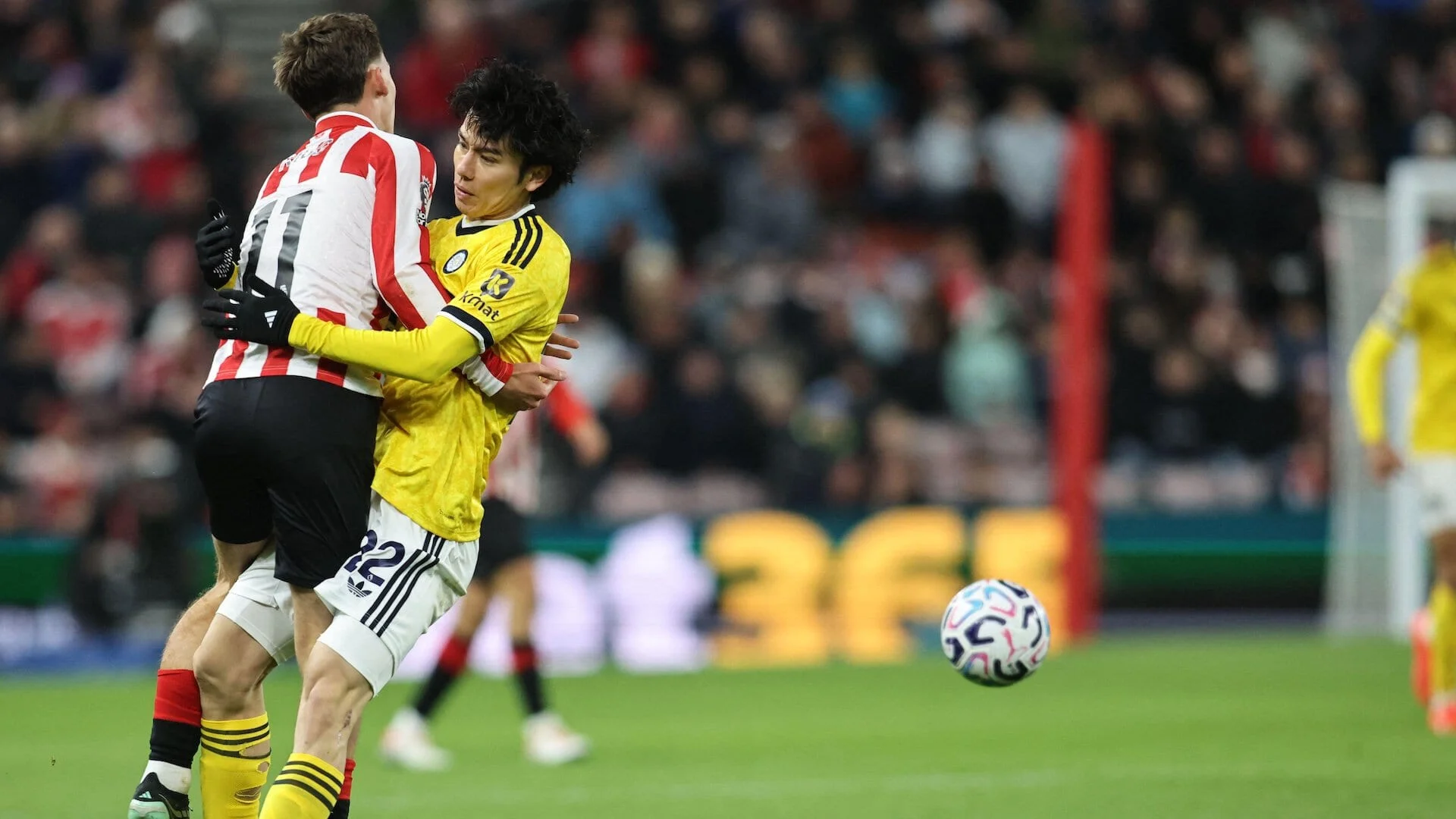
.Leeds United were forced to settle for a goalless draw against Sunderland at the Stadium of Light, delivering another frustrating afternoon for Daniel Farke’s side as their attacking struggles continued. Although the result extended Leeds’ impressive defensive record and kept them seventh in the Premier League table, their lack of creativity and cutting edge in the final third raised fresh questions about the team’s attacking approach.
For long periods, the contest lacked urgency, quality and entertainment. Both teams struggled to establish control, with extended spells of inactivity disrupting the flow of the game. Leeds goalkeeper James Trafford occasionally stood with the ball at his feet, waiting for Sunderland striker Brian Brobbey to apply pressure before restarting play. Those moments reflected the cautious nature of a match that rarely threatened to produce a memorable footballing spectacle.
Sunderland manager Regis Le Bris nevertheless found positives in his team’s performance, highlighting their intensity, togetherness, discipline and consistency. However, those qualities did little to disguise the home side’s attacking limitations, with Sunderland struggling to turn possession into meaningful opportunities.
For Leeds, the bigger concern was not necessarily Sunderland’s threat but their own tendency to make avoidable mistakes when under pressure. Ethan Ampadu misplaced several passes in dangerous areas, while defender Jaka Bijol nearly handed the hosts an opportunity after returning to the starting lineup.
Bijol’s poorly judged back pass fell short of its intended target, allowing Brobbey to race towards goal. Trafford responded decisively, coming off his line to challenge the striker and prevent a potentially costly mistake.
The Leeds goalkeeper continued to demonstrate his importance throughout the afternoon, making useful saves from Brobbey and Angulo. Although these stops were not extraordinary by Premier League standards, they provided reassurance for a defence that has become one of the team’s strongest assets.
Leeds have conceded only six goals in the league this season, with only Arsenal boasting a better defensive record. That statistic underlines the progress Farke’s team have made at the back, even as their performances in the opposite half continue to generate frustration.
The midfield battle proved particularly difficult for Leeds. Ampadu and Ao Tanaka struggled to influence proceedings against Sunderland’s numbers and physical intensity, leaving the visitors short of the control required to build sustained attacking moves.
Harry Wilson and Brenden Aaronson, handed opportunities in place of Noah Okafor and Anton Stach, failed to make the desired impact. Both players found it difficult to create openings or provide consistent support for Dominic Calvert-Lewin, who spent much of the afternoon isolated against Sunderland’s defenders.
With Leeds’ attacking midfielders struggling to influence the contest, their most promising creative moments often came from full-backs Jayden Bogle and James Justin. The pair attempted to provide width and deliver dangerous crosses, but Sunderland’s defence generally dealt with those efforts comfortably.
The second half offered some improvement, although Leeds still struggled to translate their increased attacking activity into clear-cut opportunities.
Justin and Bogle found space down the right flank on several occasions, but their low crosses narrowly missed their intended targets or were intercepted by defenders. Gabi Gudmundsson also fired over the crossbar, providing Leeds with one of their few moments of attacking encouragement.
Justin subsequently cut inside and curled an ambitious effort wide before Leeds threatened from a corner. Tarik Muharemovic met Wilson’s delivery at the back post, but his header was directed straight at Sunderland goalkeeper Robin Roefs.
Another opportunity arrived when Roefs pushed Tanaka’s effort into Calvert-Lewin’s path. The Leeds striker reached the ball first but was knocked over from behind by Luke O’Nien. Despite the contact, no penalty was awarded, leaving the visitors frustrated by another incident that failed to produce a breakthrough.
Leeds came closest to finding a winner during stoppage time. Substitute Sean Longstaff broke forward from midfield and unleashed a long-range effort that forced Roefs into an important save.
Longstaff threatened again moments later when Ampadu delivered a cross that Okafor redirected towards the six-yard box. The midfielder attempted to guide his shot into the opposite corner, only for the effort to strike fellow substitute Lukas Nmecha. It was an unfortunate ending that perfectly captured Leeds’ frustrating afternoon in front of goal.
Despite the disappointing performance, the final result offered some encouragement when viewed alongside the league table. Leeds remained seventh, level on points and with the same record as Brentford above them. Their defensive resilience has helped them remain competitive, even during a difficult run of attacking performances.
However, Farke’s post-match comments raised questions about how he manages players who are given opportunities after spending time out of the starting lineup.
The Leeds manager acknowledged that Wilson, Aaronson and Bijol had found it difficult to make an immediate impact, suggesting that players need time to regain their rhythm before delivering their best performances.
While that argument has merit, it also highlights a challenge facing the manager. Leeds cannot afford to wait indefinitely for attacking players to rediscover their confidence, particularly when the team has struggled to secure victories consistently.
Aaronson has experienced similar difficulties during his time at Leeds, while Wilson will need to demonstrate greater influence as he settles into his role. The club’s summer pursuit of several attacking targets also suggests that additional creativity remains a priority.
Jean-Matteo Bahoya could represent another option worth exploring as Farke searches for solutions. With Leeds struggling to generate consistent opportunities, giving different attacking combinations a chance could provide a clearer picture of the squad’s capabilities.
Ultimately, the goalless draw against Sunderland demonstrated both the strengths and weaknesses of Farke’s team. Leeds remain organised, defensively disciplined and difficult to beat, but their attacking limitations are becoming increasingly difficult to ignore.
Their league position offers reassurance, yet performances like this underline the importance of finding greater creativity and efficiency in the final third. If Leeds want to turn solid displays into victories, they must discover a more reliable way to support Calvert-Lewin and convert promising attacking situations into goals.