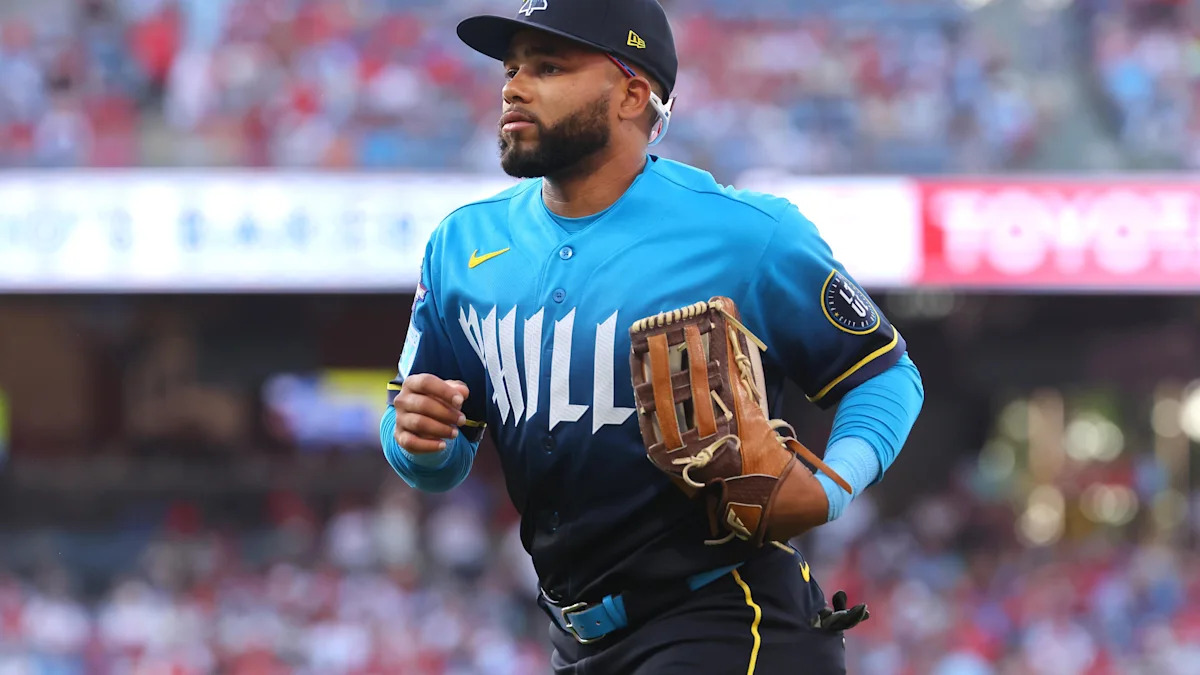
The Philadelphia Phillies spent the 2026 season searching for reliable contributions throughout their roster, but not every player who received an opportunity managed to make a lasting impression. For outfielder Steward Berroa, the campaign offered a brief introduction to Philadelphia, a handful of opportunities at the major league level, and a disappointing statistical return that leaves significant questions about his future with the organization.
Berroa’s name might have caught some fans off guard when they first encountered it. His first name is Steward, not Stewart, as some might have initially assumed. Unfortunately, his performance with the Phillies provided considerably less reason for excitement than his distinctive name.
The 2026 season marked Berroa’s third major league campaign. Before joining Philadelphia, he had spent time with the Toronto Blue Jays and Milwaukee Brewers, gaining experience across multiple organizations while attempting to establish himself as a dependable major league outfielder.
The Phillies acquired him from Milwaukee in early June and initially assigned him to the minor leagues. Although the move gave Berroa an opportunity to develop within Philadelphia’s system, his time with the major league club ultimately proved extremely brief.
He received a call-up toward the end of May and appeared in just six games before returning to the minors. He would spend the remainder of the season there, leaving little evidence that he was ready to secure a permanent place in the Phillies’ plans.
His major league production reflected those struggles. Across six appearances, Berroa hit .143/.143/.143, finishing without a home run or a run batted in beyond his lone RBI hit. His overall contribution amounted to -0.1 Wins Above Replacement, according to the figures provided.
For a player hoping to turn a new opportunity into a meaningful career breakthrough, those numbers represented a disappointing outcome.
WHAT WENT RIGHT FOR STEWARD BERROA?
Despite his limited opportunities, Berroa did manage to produce one memorable moment during his brief Philadelphia stint.
He recorded an RBI single in his Phillies debut, giving the team an immediate contribution from its newly acquired outfielder. While that hit ultimately proved to be the highlight of his major league season with Philadelphia, it at least demonstrated that he could make a positive contribution when given an opportunity.
His minor league performance also offered a few reasons for optimism.
Berroa recorded a .363 on-base percentage in the minors and stole 15 bases, highlighting two potentially useful elements of his game. His ability to reach base and create opportunities with his speed could make him an interesting depth option for a team that values athleticism and defensive flexibility.
He is a switch hitter, meaning he can bat from either side of the plate, and his speed gives him the potential to contribute on the basepaths. His defensive ability could also help him remain useful in situations where the Phillies need additional outfield coverage.
Those qualities are important when evaluating players competing for the final positions on a major league roster. Teams need more than power hitters and everyday starters; they also need versatile reserves who can provide defensive support, steal a base, and handle different assignments.
Away from the baseball field, Berroa also welcomed a child in June, providing a significant personal milestone during a season that offered relatively few professional highlights.
Nevertheless, his positive contributions were not enough to overcome the broader concerns surrounding his offensive production.
WHAT WENT WRONG?
The biggest problem for Berroa was his inability to produce consistently at the plate.
Although he reached base at a respectable rate in the minors, his overall offensive numbers were less encouraging. He hit .251 with five home runs across 242 plate appearances with Lehigh Valley, leaving questions about whether his bat could develop enough to support a sustained major league career.
For an outfielder competing for a roster spot, offensive production matters considerably. Speed and defense can help a player remain valuable, but limited hitting makes it difficult to earn regular opportunities, particularly when established players and younger prospects are competing for the same positions.
Berroa’s six-game major league sample was too small to provide a definitive assessment of his overall ability. However, his .143 batting average and lack of extra-base power during that opportunity did little to strengthen his case for a larger role.
His brief appearance also meant he had limited time to build momentum or demonstrate improvements. Once he returned to the minor leagues, he never received another major league opportunity during the season.
Ultimately, the combination of limited playing time and inconsistent offensive production prevented Berroa from making a meaningful impact in Philadelphia.
WHAT DOES THE FUTURE HOLD?
Looking ahead to 2027, Berroa’s best chance of remaining with the Phillies could involve serving as organizational outfield depth.
His combination of switch-hitting ability, speed, and defensive versatility gives him some value, especially for a team seeking inexpensive alternatives to fill out its roster. Philadelphia could consider retaining him as a depth option who can provide insurance in the minors and potentially step into a major league role when injuries or roster changes create an opening.
Players in this position sometimes earn another opportunity through consistent minor league performances. Berroa would benefit from improving his offensive consistency, getting on base more frequently, and demonstrating that he can contribute beyond his speed and defensive skills.
A stronger showing in spring training could also improve his chances of competing for a reserve position.
However, the path forward will not be easy. The Phillies need dependable production from their bench, and Berroa has yet to establish that he can consistently provide it against major league pitching.
There is still room for development, but Philadelphia should view him as a depth candidate rather than someone guaranteed a place on next season’s roster.
FINAL GRADE: D
Steward Berroa’s 2026 season with the Philadelphia Phillies was largely forgettable.
His RBI single in his debut provided a small highlight, while his minor league speed and defensive versatility offered reasons to keep him in consideration. However, six major league games, a .143 batting average, no home runs, and -0.1 WAR amounted to a disappointing return.
Berroa was not necessarily the least effective reserve outfielder the Phillies used throughout the season, but that distinction offers little comfort when the overall standard was so low.
The verdict: Berroa deserves a D grade for his limited impact in Philadelphia. His athletic tools could earn him another opportunity, but he must become a more consistent hitter if he hopes to turn his potential into a lasting major league career.