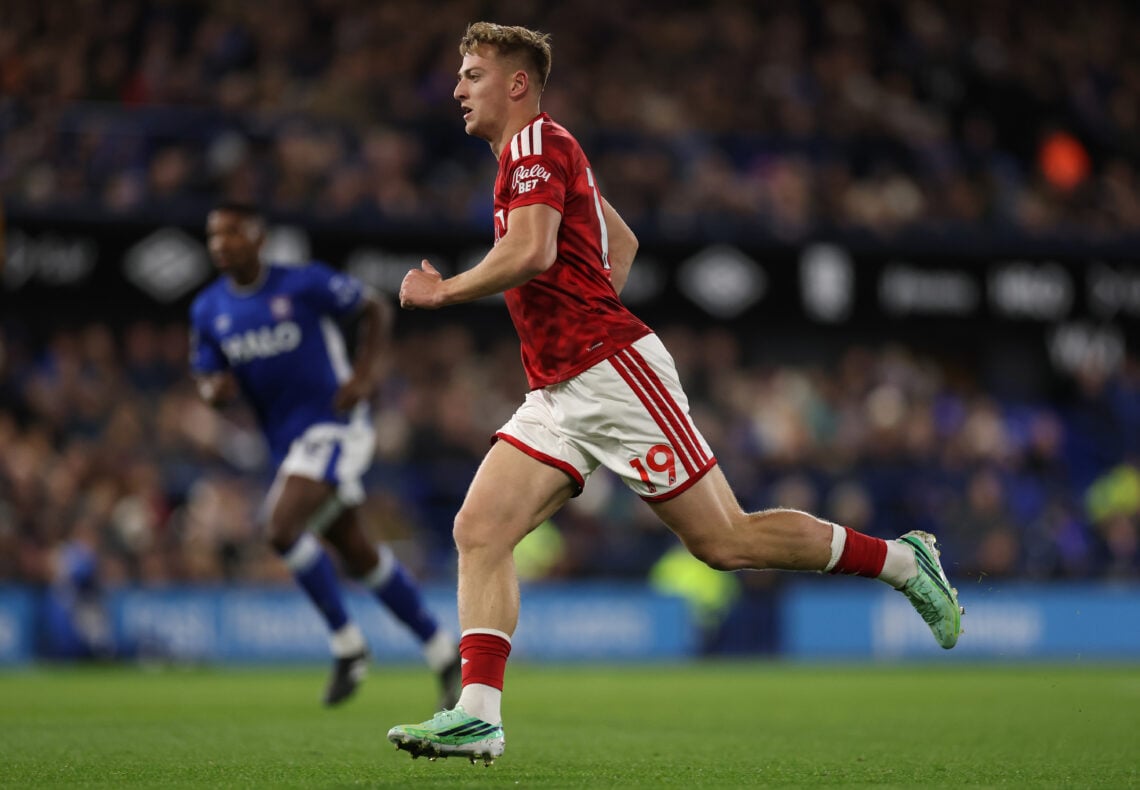
Nottingham Forest’s struggles in front of goal have become an increasingly worrying problem for Oliver Glasner, and finding a solution could depend on getting the best out of summer signing Liam Delap. Despite arriving with considerable expectations, the young striker has managed just one goal in seven appearances, leaving Forest searching for answers as their attacking shortcomings continue to undermine their performances.
Delap was one of the headline additions of Forest’s 2026 summer transfer window, with the club expecting him to provide the physical presence, movement and finishing ability needed to transform their forward line. However, his early performances have raised questions about whether the team is doing enough to create the right opportunities for him to succeed.
While Delap has encouraged his teammates to become more clinical in front of goal, the striker himself has struggled to deliver consistently. His recent display against Ipswich Town highlighted those concerns, as he appeared more involved in physical battles with Dara O’Shea than in threatening the opposition goal. He committed three fouls without registering a shot on target, underlining the difficulties he has experienced.
Former Premier League striker Glenn Murray was critical of Delap’s performance, and the criticism reflects the growing frustration surrounding Forest’s attacking output. Nevertheless, placing the entire responsibility on the young forward would overlook a wider tactical problem. Glasner must find a way to create the conditions in which his striker can reproduce the qualities that made him such an exciting prospect.
UNDERSTANDING WHY DELAP IS STRUGGLING
To understand Delap’s current difficulties, it is important to revisit his breakthrough Premier League campaign with Ipswich Town in 2024/25.
During that season, Delap established himself as a promising top-flight striker, scoring 12 league goals. His ability to finish with either foot, attack dangerous spaces and exploit defensive vulnerabilities made him a significant threat to opposing defenders.
One particularly important aspect of his game was his effectiveness inside the penalty area. All but one of his goals came from inside the box, demonstrating that his greatest strength was getting into scoring positions rather than attempting speculative efforts from distance.
Delap also benefited from attacking situations that allowed him to use his pace and physicality effectively. Quick transitions, direct forward passes and opportunities to run at retreating defenders helped him find the space required to finish chances.
At Forest, however, those opportunities have been considerably harder to come by.
The numbers highlight the problem. Delap has recorded just five shots following fast breaks, with only one of those attempts coming from inside the penalty area. Meanwhile, he has taken nine shots from outside the box compared with 12 from inside it.
Although those figures do not excuse every missed opportunity, they suggest that Forest are not consistently placing their striker in the areas where he has historically been most dangerous.
Glasner must therefore consider whether the team’s attacking structure is helping Delap succeed or forcing him into situations that do not suit his strengths.
GLASNER MUST MAKE FOREST MORE DIRECT
One potential solution is to improve the speed at which Forest move the ball into attacking areas.
When opponents are organised defensively, Delap can become isolated against centre-backs, leaving him with limited opportunities to threaten the goal. Repeatedly asking him to battle defenders without providing meaningful support risks neutralising his biggest strengths.
Forest need to move the ball forward more quickly when possession is recovered. Rather than allowing opposition defenders time to establish their defensive shape, Glasner could encourage his midfielders to look for immediate forward passes whenever space opens up.
Delap’s movement would become particularly important in these situations. By running into the channels between defenders, he could force opponents to turn towards their own goal and create opportunities for himself and his teammates.
The objective should not be to make Forest predictable by constantly playing long balls. Instead, the team needs a better balance between controlled possession and rapid attacking transitions.
When the opportunity presents itself, Forest must recognise it and deliver the ball before the opposition can reorganise.
IMPROVING THE SUPPORT AROUND THE STRIKER
Another priority is ensuring Delap receives enough support from the players operating behind him.
A striker cannot consistently produce goals if he is left fighting multiple defenders without runners providing additional attacking options. Forest’s midfielders and wide players must contribute more through intelligent movement, timely passing and deliveries into dangerous areas.
Glasner could encourage wide attackers to stretch the opposition defence, creating more space centrally for Delap to exploit. Midfield runners arriving late in the penalty area would also give defenders additional threats to monitor.
Better combinations around the edge of the box could help Forest create clearer openings instead of forcing Delap to attempt difficult shots from distance.
Crossing decisions will also matter. Delap needs deliveries that allow him to attack the ball rather than crosses that leave him isolated against several defenders. Low balls across the six-yard area, cutbacks and passes behind the defensive line could all provide opportunities suited to his finishing instincts.
Ultimately, the emphasis must be on quality rather than simply increasing the number of attacks.
DELAP MUST ALSO TAKE RESPONSIBILITY
Although Forest’s tactical approach deserves scrutiny, Delap cannot escape responsibility for his performances.
His physical presence can be valuable, but he must ensure that his involvement in duels contributes to the team’s attacking efforts. Becoming distracted by battles with opposing defenders can prevent him from concentrating on positioning, movement and finishing.
The striker must improve his decision-making, remain composed in promising situations and make his runs with greater purpose. When opportunities arrive, he must demonstrate the clinical instincts that helped him score 12 Premier League goals for Ipswich.
At the same time, Forest must avoid allowing his confidence to deteriorate. Young forwards need consistent opportunities and a clear understanding of their roles, particularly when adjusting to a new club and tactical system.
A DEFINING CHALLENGE FOR GLASNER
Forest’s goal-scoring problems will not disappear simply because Delap finds the net in his next appearance. The wider attacking structure must improve, and the team needs to become more effective at turning promising situations into genuine chances.
However, unlocking Delap could represent a significant step towards addressing those concerns. Glasner has the opportunity to build an approach that takes advantage of the striker’s movement, physical attributes and ability to finish inside the penalty area.
The message is straightforward: Forest must create better opportunities, move the ball forward with greater urgency and provide Delap with the support he needs.
Delap, meanwhile, must respond by improving his movement and rediscovering his finishing touch.
If both sides of that equation improve, Forest could finally begin to resolve their attacking difficulties. For Glasner, getting the best out of his marquee signing may prove crucial to turning frustrating performances into the goals and results his team desperately needs.