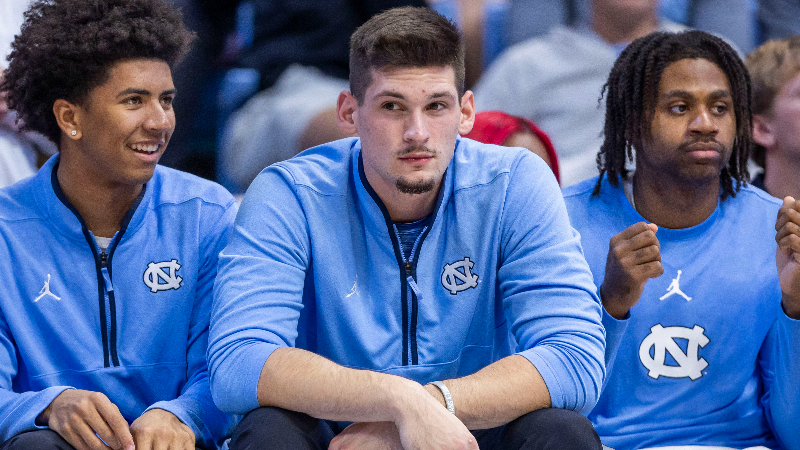
North Carolina basketball is entering a new era under head coach Michael Malone, and while much of the attention has focused on the Tar Heels’ projected starting lineup, the players coming off the bench could ultimately determine how successful the team becomes this season.
UNC has assembled a roster featuring experienced transfers, promising freshmen, and returning players looking for bigger opportunities. On paper, that combination offers plenty of possibilities. However, there are still important questions about consistency, experience, and how quickly the different pieces can come together.
The Tar Heels’ 2026–27 roster features five returning players and 11 newcomers, creating a significantly different group from the one that finished 24–9 last season. With so many new faces, Malone must determine which players deserve regular minutes and which combinations give North Carolina the best chance to win.
The bench could provide valuable scoring, defensive energy, and frontcourt depth. But potential alone will not be enough. UNC needs dependable performances from its reserves when the starters need rest or the game begins to turn against the Tar Heels.
Here is a closer look at why North Carolina’s bench could become a strength—and why uncertainty remains.
A NEW ROSTER CREATES OPPORTUNITIES AND QUESTIONS
The biggest challenge facing Malone is building a reliable rotation with a roster that has undergone considerable change.
North Carolina brought in six college transfers and four freshmen, alongside international addition Alexandros Samodurov. That turnover creates opportunities for players who might otherwise have struggled to earn meaningful minutes.
However, it also means the coaching staff must evaluate players who have different backgrounds, experience levels, and playing styles.
Some transfers have already demonstrated that they can produce at the college level. Others will be adjusting to a new team, a different role, and a new coaching system.
The freshmen face another challenge: learning how to compete consistently against experienced college players.
Malone must decide which players can contribute immediately and which need more development before receiving larger responsibilities.
That process could change throughout the season.
A player who begins the campaign outside the main rotation might earn additional minutes through strong practices or productive performances. Another player could struggle with turnovers, defensive assignments, or shooting consistency and see his role reduced.
For UNC, the goal should be finding a dependable group of reserves rather than simply having a large number of available players.
MAXIMO ADAMS COULD PROVIDE AN IMPORTANT SCORING OPTION
Freshman forward Maximo Adams is one of the players who could make a significant impact off the bench.
Adams offers offensive versatility and the potential to contribute at multiple forward positions. His ability to score from different areas of the court could give Malone additional flexibility when constructing lineups.
will need players capable of providing points when its primary scorers are resting.
A reserve who can attack the basket, make open shots, and keep the offense moving can help prevent the team from losing momentum when substitutions occur.
Adams could have an opportunity to fill that role.
However, his transition to college basketball will require patience. The speed and physicality of the college game can create challenges for even highly regarded freshmen.
His defensive positioning, decision-making, and ability to handle pressure will influence how quickly he earns Malone’s trust.
If Adams adapts well, he could become one of UNC’s most valuable options outside the starting lineup.
ISAIAH DENIS HAS A CHANCE TO TAKE A STEP FORWARD
Sophomore guard Isaiah Denis is another player worth watching.
Unlike many of the newcomers, Denis already has experience in the UNC program. He appeared in 10 games last season, giving him some familiarity with the team and its environment.
That experience could help him compete for a larger role under Malone.
North Carolina needs reliable backcourt options who can protect the basketball, defend opposing guards, and contribute offensively without disrupting the team’s rhythm.
Denis has an opportunity to show that he can provide those qualities.
A larger role would also give him a chance to demonstrate his development after a limited freshman campaign.
Still, opportunity does not guarantee success. Denis will need to show consistency in practice and make smart decisions when he gets on the floor.
If he becomes a dependable rotation guard, UNC could benefit from having another player capable of handling important possessions.
THE FRONTCOURT DEPTH REMAINS A MAJOR QUESTION
Perhaps the biggest uncertainty surrounding UNC’s bench is its frontcourt.
The Tar Heels have several players who could contribute near the basket, including freshman center Sayon Keita and transfer Cade Bennerman.
Keita brings athletic potential and the possibility of providing rim protection. Bennerman offers another option for a team that needs dependable size behind its primary frontcourt players.
However, potential and proven production are different things.
Young big men often need time to adjust to the strength, positioning, and physical demands of college basketball.
They must learn how to defend without fouling, secure rebounds in traffic, and recognize offensive movements before opponents exploit them.
For UNC, these details could determine whether the frontcourt rotation becomes a strength or a weakness.
If Keita develops quickly and Bennerman provides reliable minutes, the Tar Heels could have useful depth inside.
If they struggle with consistency, Malone may have to rely more heavily on his starters.
That possibility makes frontcourt development one of the most important storylines to follow.
ANGELO BRIZZI AND OTHER RESERVES COULD ADD EXPERIENCE
North Carolina also has experienced players who could compete for important bench minutes.
Graduate guard Angelo Brizzi arrives after producing offensively at Buffalo. His perimeter shooting could provide a useful option when the Tar Heels need spacing and additional scoring.
Jaydon Young is another returning player who could compete for a role, while Kevin Thomas offers another option on the wing.
The challenge for each player will be identifying a clear contribution.
Brizzi may need to provide efficient shooting and steady decision-making. Young will have to take advantage of his opportunities, while Thomas could compete for minutes through defense and athleticism.
These roles matter because successful teams rarely depend entirely on their starting five.
Bench players must understand what the team needs from them and deliver when called upon.
Malone will be looking for players who can enter a game without causing a significant drop in execution.
MICHAEL MALONE MUST FIND THE RIGHT ROTATION
A deep roster only becomes an advantage when a coach can use it effectively.
Malone must determine whether UNC is best served by a tight eight-man rotation or whether nine or more players can contribute consistently.
A shorter rotation can provide stability because players become familiar with their responsibilities and receive more opportunities to develop rhythm.
A deeper rotation, however, can help preserve energy, provide matchup flexibility, and create more opportunities for players to contribute.
The right approach may change depending on the opponent.
Against a team with a strong interior presence, UNC may need additional frontcourt minutes. Against a smaller, quicker opponent, the Tar Heels might prefer more versatile players who can defend across multiple positions.
The early part of the season should give Malone opportunities to experiment.
Eventually, though, the Tar Heels will need to establish a dependable group capable of executing under pressure.
FINAL THOUGHTS
North Carolina’s bench has the potential to become an important part of Michael Malone’s first season in Chapel Hill.
Players such as Maximo Adams, Isaiah Denis, Sayon Keita, Cade Bennerman, and Angelo Brizzi offer different qualities that could help the Tar Heels throughout the campaign.
But there are still questions about experience, consistency, and how quickly the newcomers can adapt.
The biggest challenge is turning individual potential into dependable team production.
If the reserves develop into reliable contributors, UNC could have the flexibility needed to compete against strong opponents and navigate a demanding schedule.