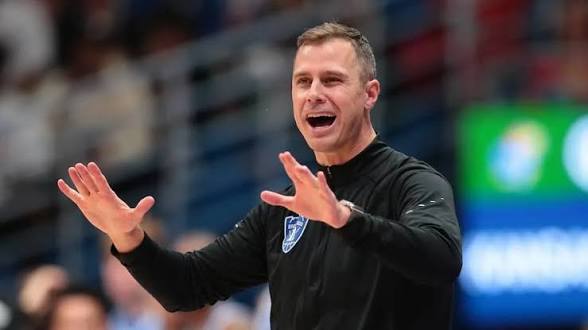
Duke basketball head coach Jon Scheyer has made his ambitions clear, and his latest comments about player development reveal how he wants to take the Blue Devils to another level. With the program continuing to attract talented recruits and compete for major championships, Scheyer believes there is an important area where Duke can establish itself as the best in the country: developing the players who wear the Blue Devils uniform. His declaration, “We’re going to be the best,” sends a strong message about the standard he wants to establish in Durham.
The statement comes at a time when college basketball is changing rapidly. Recruiting remains essential, but bringing talented players into a program is only one part of building a championship contender. Coaches must also help those players improve, adjust to different roles, develop consistency and reach their potential.
For Scheyer, the ambition is about creating a program where player development becomes a defining strength rather than simply another part of the team’s preparation. That vision could prove important as Duke looks to remain among college basketball’s elite programs.
Jon Scheyer Wants Duke to Be the Best at Developing Players
Duke has built its reputation on recruiting some of the country’s most talented basketball players. The program’s history, facilities, national visibility and record of preparing athletes for the next level make it an attractive destination for elite prospects.
However, Scheyer’s latest message highlights a different measure of success.
Rather than focusing exclusively on the players Duke can recruit, the coach wants the program to become exceptional at helping those players improve once they arrive in Durham.
That distinction matters. Recruiting can bring talent through the door, but development determines how effectively players learn to use their abilities. A highly rated prospect may arrive with impressive physical tools and natural scoring instincts, yet still need to improve defensively, become a better decision-maker or learn how to contribute within a team structure.
The same principle applies to experienced players. Even athletes who have already established themselves as reliable contributors can benefit from improving their shooting, strength, positioning, discipline and understanding of the game.
Scheyer’s ambition suggests that Duke wants to make those improvements a consistent part of its identity.
If the Blue Devils can recruit talented players and help them make meaningful progress, the combination could give the program an important advantage in the increasingly competitive college basketball landscape.
Why Player Development Matters More Than Ever
Modern college basketball places enormous pressure on coaches to build competitive rosters quickly.
The transfer portal, name, image and likeness opportunities, changing eligibility circumstances and increasing competition for experienced players have made roster construction more complicated. Coaches must identify talent, recruit effectively, retain important contributors and prepare their teams to compete against opponents with different strengths.
In that environment, player development can become a major difference-maker.
A program that consistently improves its players may be better positioned to handle departures, injuries and changes in the roster. It can also help returning players assume greater responsibilities instead of expecting every new challenge to be solved through another recruiting addition.
For Duke, this approach could be particularly valuable because expectations are already extremely high.
The Blue Devils are expected to compete for ACC championships and make deep NCAA Tournament runs. Simply recruiting talented players is unlikely to satisfy those ambitions if the team cannot translate its individual ability into consistent performances.
Development involves more than scoring additional points. Players must understand defensive rotations, make better reads, communicate effectively and learn how to contribute when the ball is not in their hands.
A young guard may need to improve his decision-making under pressure. A forward may need to become more physical around the basket. A center may need to refine his footwork, defensive positioning and ability to protect the rim.
When those improvements occur across the roster, the benefits can extend beyond individual statistics.
They can make the entire team more versatile, disciplined and difficult to defend.
Recruiting Is Only the Beginning for the Blue Devils
Duke’s recruiting reputation remains one of its greatest strengths, but Scheyer’s vision places additional emphasis on what happens after a prospect commits.
The transition from high school basketball to the college game can be challenging, even for highly regarded recruits. Players must adjust to faster opponents, more complex defensive schemes, increased physical demands and greater expectations.
Some prospects make an immediate impact, while others need more time to develop.
A strong development system can help players navigate that transition by identifying their weaknesses, creating individual improvement plans and providing opportunities to learn through practice and competition.
It can also help players understand their roles within the team’s overall strategy.
Not every player will become the leading scorer, and not every recruit will immediately receive extensive playing time. Successful programs need athletes who understand how to defend, rebound, move without the ball and make the right decisions when opportunities arise.
For Scheyer, building a culture around development could help Duke get more value from the talent already on its roster.
It could also strengthen the program’s appeal to future recruits who want to improve their games and prepare for professional opportunities.
Nevertheless, a commitment to development must be demonstrated through results. Players need to show measurable progress, and the team must translate individual improvement into stronger performances against quality opponents.
That is where Scheyer’s ambitious declaration will ultimately be judged.
Retaining Talent Is Another Important Challenge
Player development and roster retention are closely connected.
When athletes believe a program is helping them improve, they have an additional reason to value their experience there. A positive development environment can support player confidence, strengthen relationships with coaches and give athletes a clearer understanding of their long-term opportunities.
However, development alone does not guarantee that players will remain with a program. Roster decisions can be influenced by playing time, personal circumstances, professional ambitions and opportunities elsewhere.
That means Duke must combine its development philosophy with effective communication and thoughtful roster management.
Players need to understand where they stand, what they must improve and how they can earn greater responsibilities. Coaches must also balance individual goals with the needs of the team.
For a program with championship ambitions, those conversations can be especially important. Talented players naturally want meaningful opportunities, but the team’s success depends on everyone understanding how their contributions fit into the bigger picture.
Scheyer’s vision therefore raises an important question about Duke’s future: can the Blue Devils create an environment where players not only arrive with impressive ability but also make enough progress to become more effective contributors?
If they can, the program could strengthen both its competitive position and its reputation among prospective recruits.
What This Could Mean for Duke’s Future
Scheyer’s declaration is ambitious, but it also establishes a standard against which the program can be evaluated.
If Duke wants to become the best at player development, the results must eventually be visible in how its athletes perform and progress.
That could mean younger players becoming more comfortable in important roles, returning players adding new dimensions to their games and the roster demonstrating greater consistency throughout the season.
It could also mean better preparation for high-pressure situations. Players who understand their responsibilities and trust their training may be better equipped to make decisions when games become tight.
Development can contribute to team chemistry as well. When players improve their understanding of one another’s strengths and tendencies, offensive possessions can become more efficient and defensive communication can become more reliable.
None of these benefits arrives automatically. Player development requires time, effective coaching, individual commitment and a willingness to address weaknesses honestly.
Scheyer must also ensure that the program’s expectations remain realistic. Even excellent development systems cannot guarantee that every recruit will reach the same level or that every season will end with a championship.
Still, setting a high standard can help create a clear direction for the coaching staff and players.
Duke already has the visibility and recruiting appeal to attract talented athletes. Establishing a reputation for consistently improving those athletes could become another important part of its identity.
The Pressure Is Now on to Deliver
Scheyer’s statement, “We’re going to be the best,” is an ambitious declaration, but the real challenge lies in turning those words into a sustained result.
Duke supporters expect the Blue Devils to compete at the highest level. They want to see talented recruits develop, returning players improve and the team perform with the consistency required to challenge for championships.
Player development alone will not determine whether Duke wins the ACC or captures a national title. Recruiting, tactical preparation, health, roster balance and performance under pressure will remain important factors.
However, development can strengthen several of those areas at once.
Players who improve their skills and understanding of the game give coaches more options. A deeper group of reliable contributors can help a team navigate difficult stretches, while better individual decision-making can reduce costly mistakes.
Those improvements could be especially valuable during the demanding parts of the season, when teams face consecutive games against quality opposition.
Scheyer’s challenge is to establish a system that consistently produces that progress rather than relying on occasional individual breakthroughs.
The Bottom Line
Jon Scheyer has made his ambition clear: Duke wants to become the best program in college basketball at developing its players.
The declaration reinforces an important message for the Blue Devils. Recruiting elite talent is valuable, but helping that talent improve is essential to building a program capable of sustaining success.
With college basketball becoming increasingly competitive, Duke will need more than a strong recruiting reputation to maintain its position among the nation’s leading teams. Player improvement, roster retention, coaching and consistent execution will all matter.
Scheyer’s vision provides a clear target, but the Blue Devils must now demonstrate that they can meet it.
The biggest question is no longer simply whether Duke can recruit elite players. It is whether Jon Scheyer can build a program that consistently turns that talent into better basketball players—and, ultimately, a stronger championship contender.