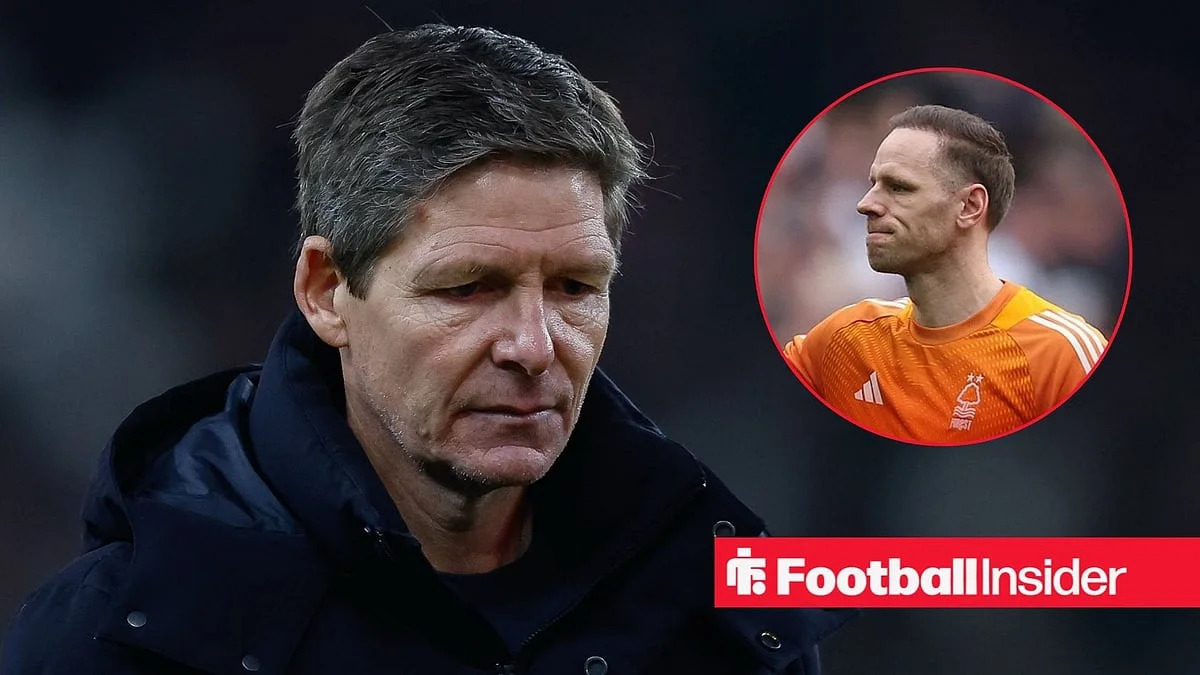
Nottingham Forest’s difficult start to the 2026-27 Premier League campaign is beginning to raise serious questions about the team’s defensive performances, with goalkeeper Matz Sels coming under increasing scrutiny following another disappointing result.
The Tricky Trees have struggled to find consistency in recent weeks, and their latest defeat to Brentford has only increased concerns about the direction of the team under Oliver Glasner. With Forest now enduring a five-game winless run, attention is turning towards several areas of the squad that could require immediate improvement.
Although defensive problems are rarely caused by one individual, the performances of Sels have become an important talking point. The Belgian goalkeeper has been a reliable presence for Forest over the past few seasons, but his latest statistics suggest that his performances may be falling below the standards expected of a Premier League number one.
At 34, Sels remains an experienced goalkeeper with considerable top-flight experience. However, his numbers this season are becoming increasingly difficult to ignore, particularly as Forest attempt to recover from their disappointing run of results.
MATZ SELS’ 58.6% SAVE RATE RAISES SERIOUS QUESTIONS
According to statistics published by FotMob, Sels currently has a save percentage of just 58.6% in the 2026-27 Premier League campaign.
That figure places him among the bottom 20 per cent of goalkeepers in the competition, highlighting the difficulties he has experienced between the posts this season.
For a club attempting to establish itself as a consistent Premier League side, those numbers are concerning.
Goalkeepers are often judged by more than the number of saves they make. Their positioning, decision-making, command of the penalty area and ability to organise the defence are equally important. Nevertheless, save percentage remains a useful indicator of how effectively a goalkeeper is dealing with the attempts coming his way.
Sels’ current figures suggest that Forest are not receiving the level of shot-stopping performances they need.
Even more concerning is his goals-prevented statistic, which currently stands at -1.73.
This indicates that the Belgian has conceded approximately 1.73 more goals than expected based on the quality of shots he has faced. While such statistics do not tell the entire story of a goalkeeper’s performances, they provide another indication that Sels has struggled to make the difference when Forest have needed him most.
His disappointing numbers are particularly surprising considering his previous contributions to the club.
Sels established himself as one of Forest’s most dependable performers and enjoyed an impressive campaign that earned him Premier League Golden Glove recognition in 2024-25. His experience and consistency helped strengthen the team’s defensive foundation.
However, football can change quickly, and his latest performances have raised questions about whether Forest should continue treating him as their undisputed first-choice goalkeeper.
OLIVER GLASNER’S GOALKEEPING DECISION RETURNS TO THE SPOTLIGHT
Forest’s goalkeeping situation is also putting additional attention on Glasner and the club’s summer transfer decisions.
Reports suggested that the Austrian manager wanted to strengthen his goalkeeping department before the start of the current campaign. One reported target was Crystal Palace goalkeeper Dean Henderson, who had previously worked with Glasner.
A reunion would potentially have provided Forest with an experienced alternative and introduced greater competition for the starting position.
However, the club ultimately failed to bring in a new first-choice goalkeeper, leaving Sels in possession of the number one shirt.
That decision is now attracting attention as Forest continue to struggle.
While it would be unfair to place all the responsibility for the team’s disappointing results on Sels, his statistics suggest that the goalkeeping position deserves serious consideration.
Forest have already experienced difficulties maintaining defensive stability, and a goalkeeper who is struggling to outperform expectations only makes the situation more complicated.
Glasner must now decide whether continuing to trust his experienced Belgian goalkeeper is the best option or whether a change could provide the team with a much-needed lift.
COULD JOHN VICTOR BE THE ANSWER?
One alternative available to Glasner is Brazilian goalkeeper John Victor.
The South American has struggled to establish himself as a regular starter since arriving at the City Ground, making only five appearances last season.
His previous Premier League opportunities did not produce particularly encouraging results either, with his save percentage standing at 42.9% during that limited period.
Those numbers hardly make him an obvious replacement for Sels.
However, there is another side to Victor’s story.
Before joining Forest from Brazilian football, he demonstrated considerable shot-stopping ability, recording an impressive save percentage of 81.4%.
That earlier performance suggests that there could be a capable goalkeeper waiting for an opportunity to demonstrate his quality.
A change in environment, improved confidence and consistent playing time could potentially help Victor rediscover the form that attracted Forest’s attention in the first place.
Of course, handing him the starting position would represent a significant gamble. Glasner would need to be convinced that Victor could deliver greater reliability than Sels, particularly during a period when the team cannot afford further defensive uncertainty.
Nevertheless, competition for the number one position could be beneficial for both goalkeepers.
FOREST CANNOT AFFORD TO IGNORE THE WARNING SIGNS
Nottingham Forest’s immediate priority must be to stop their disappointing run and rediscover the defensive organisation that previously made them difficult opponents.
Glasner has several important decisions to make, but the goalkeeping position is becoming increasingly difficult to overlook.
Sels deserves recognition for his previous contributions, particularly his Golden Glove-winning campaign. However, past achievements cannot guarantee future performances, and his current statistics suggest that improvements are urgently required.
Whether that improvement comes through Sels rediscovering his best form or Victor receiving an opportunity remains to be seen.
What is clear is that Forest need greater reliability between the posts if they are serious about turning their season around.
With a five-game winless run already creating pressure, Glasner cannot afford to ignore warning signs that could become even more damaging as the campaign progresses.
The question facing Forest is no longer simply whether Sels remains their established first choice. It is whether he is currently delivering enough to justify keeping that position without serious competition.