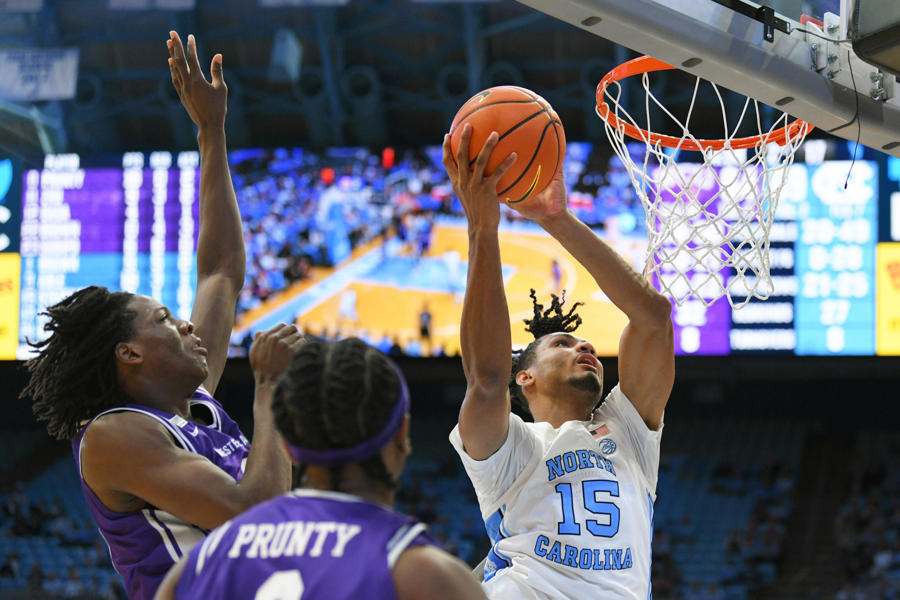
North Carolina head coach Michael Malone has identified a significant weakness that his team must address as the Tar Heels continue their preparations for Wofford. Despite possessing one of the tallest rosters in college basketball, UNC has struggled to control the boards, raising questions about the team’s physicality, defensive discipline and ability to compete against stronger opponents.
The rebounding concerns became particularly evident during North Carolina’s recent matchup against Western Carolina. The Tar Heels entered the contest with a considerable advantage in average height, but that physical superiority did not translate into dominance on the glass. Instead, Western Carolina consistently found opportunities to collect rebounds and extend possessions.
According to KenPom, North Carolina ranks 12th nationally in average height. Western Carolina, meanwhile, sits 202nd in the same category. Despite that considerable difference, the Tar Heels were outrebounded 41-32 by their Southern Conference opponents.
The nine-rebound difference exposed an uncomfortable problem for Malone. Having taller players is supposed to provide an advantage around the basket, particularly when defending missed shots and creating additional offensive opportunities. However, UNC struggled to establish that advantage when it mattered most.
Western Carolina’s success on the offensive glass was especially damaging. The visitors collected 13 offensive rebounds, converting those additional opportunities into 13 second-chance points. Those numbers highlighted how frequently North Carolina allowed its opponents to remain in possessions that should have ended with a defensive rebound.
For Malone, the issue goes beyond simply having taller players on the court. Rebounding requires concentration, positioning, physical commitment and a collective willingness to compete for every loose ball. Without those qualities, even a team with considerable height can struggle against opponents that demonstrate greater determination around the basket.
Following the game, Malone delivered a straightforward assessment of what he expects from his players.
“Before you can run, you have to rebound,” the UNC head coach said.
That statement reflects an important part of Malone’s basketball philosophy. North Carolina wants to play with energy, move the ball effectively and create opportunities in transition. However, those ambitions become considerably more difficult when the team cannot consistently secure defensive rebounds.
A defensive stop is not complete simply because an opponent misses a shot. The possession must end with North Carolina collecting the rebound. Allowing opponents multiple opportunities to score creates unnecessary pressure on the defense and makes it harder for the Tar Heels to establish their preferred rhythm.
It also affects the team’s offensive approach. When UNC secures defensive rebounds, its players can immediately look to push the basketball up the floor, creating transition opportunities before the opposing defense gets organized. Without that first important step, the Tar Heels risk losing one of the potential advantages of their athleticism and roster construction.
The offensive rebounding situation also deserves attention. Although North Carolina wants to capitalize on missed shots at the other end, the team must first demonstrate that it can compete physically when opponents attack the glass.
Western Carolina’s 13 offensive rebounds suggest that UNC must improve its defensive positioning and communication. Players cannot simply watch the basketball after an opponent takes a shot. They must identify their assignments, establish contact where appropriate and make a determined effort to secure possession.
Malone will also need contributions from across the roster. Rebounding cannot become the responsibility of the centers and forwards alone. Guards must recognize opportunities to help, particularly when longer rebounds move away from the basket.
That collective responsibility will become increasingly important as the competition improves.
North Carolina’s upcoming matchup against Wofford provides another opportunity for Malone to evaluate his team’s progress. Rather than focusing exclusively on scoring production or offensive execution, the Tar Heels must demonstrate that they have learned from the Western Carolina experience.
The coaching staff will want to see greater urgency when shots go up, improved positioning underneath the basket and fewer opportunities for opposing players to collect offensive rebounds.
Importantly, the solution does not necessarily require a major change in personnel. North Carolina already possesses considerable size. The challenge is ensuring that its physical attributes translate into consistent performances.
Malone must find a way to make rebounding an important part of the team’s identity rather than an area that receives attention only after disappointing performances.
The Western Carolina numbers offer a clear warning. Being taller does not automatically make a team better on the boards, and North Carolina cannot afford to assume that its physical advantages will solve the problem without effort and discipline.
As the Tar Heels prepare for Wofford, the message from their head coach is unmistakable: rebounding must improve before the team can reach its full potential.
For Malone, the objective is straightforward. North Carolina must become tougher, more aggressive and more reliable around the basket. If the Tar Heels can turn their considerable height advantage into meaningful rebounding production, they will have a stronger foundation for everything else they want to accomplish this season.
The Wofford matchup represents another opportunity to show that the lessons from Western Carolina have been taken seriously. Malone will be looking for a response, and controlling the boards could be one of the clearest indications that his players are moving in the right direction.