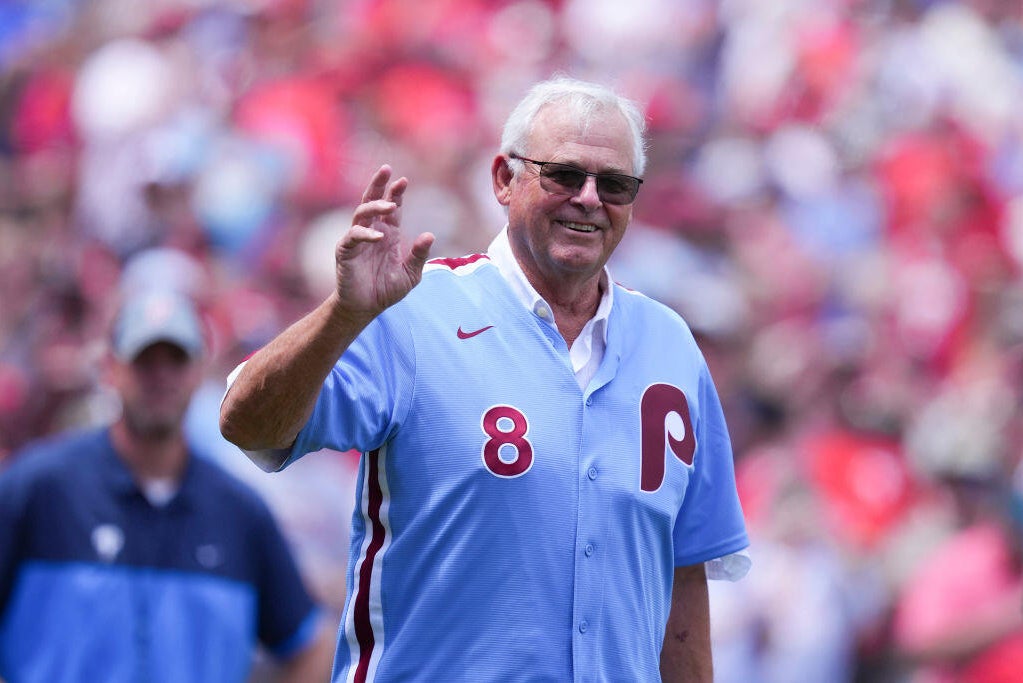
The baseball world is mourning the loss of one of its most respected figures after former Philadelphia Phillies catcher Bob Boone, a key member of the franchise’s historic 1980 World Series championship team, died at the age of 78.
Boone’s passing marks the end of an extraordinary life in baseball, one defined by defensive excellence, consistency, leadership and a family legacy that stretched across multiple generations of Major League Baseball.
The news was shared by his son, former major league infielder Bret Boone, who announced his father’s death in a Facebook post on Tuesday morning. Remembering the man who played such an important role in his life and in the sport, Bret paid tribute to his father’s character and remarkable contribution to baseball.
“Baseball lost a great one,” Bret wrote, describing his father as a man of tremendous integrity.
The announcement quickly brought attention to Boone’s remarkable career and the lasting influence he had on the Philadelphia Phillies, the organizations he represented and the game itself.
A PHILLIES LEGEND WHO HELPED MAKE HISTORY
Boone spent 10 seasons with the Phillies between 1972 and 1981, establishing himself as one of the most dependable defensive catchers in the major leagues.
Although his career included several significant accomplishments, his greatest achievement came in 1980, when he helped Philadelphia capture its first World Series championship in franchise history.
The championship represented a defining moment for the organization and its supporters. After years of pursuing baseball’s biggest prize, the Phillies finally reached the summit, with Boone playing an important role behind the plate.
His defensive abilities made him an invaluable presence. Catching requires exceptional concentration, communication and an understanding of opposing hitters, and Boone consistently demonstrated those qualities throughout his career.
He was particularly respected for his defensive reliability, earning a reputation as one of the finest catchers of his generation.
For Philadelphia supporters, Boone will forever be associated with the championship team that changed the franchise’s history and delivered a long-awaited World Series celebration.
AN EXTRAORDINARY CAREER BUILT ON DEFENSIVE EXCELLENCE
Boone’s achievements extended well beyond his contribution to the Phillies’ championship success.
During his 19-year major league career, he established himself as an elite defensive performer, collecting four All-Star selections and seven Gold Glove Awards.
Those seven Gold Gloves reflected his exceptional consistency and ability to handle the demanding responsibilities of catching at the highest level.
While offensive production often attracts the most attention in baseball, Boone demonstrated that defensive excellence could be equally valuable to a successful team.
He finished his major league career with a .254 batting average, 105 home runs and 826 runs batted in. Although those numbers only tell part of his story, they demonstrate the longevity and consistency he brought to the sport.
His ability to combine dependable offensive contributions with outstanding defensive performances helped him remain an important figure throughout his lengthy career.
Boone also represented more than one organization during his time in the majors, but his connection with Philadelphia remained particularly significant because of his role in the 1980 championship.
BASEBALL WAS A FAMILY LEGACY
Perhaps one of the most remarkable aspects of Boone’s story was the extraordinary baseball tradition within his family.
His father, Ray Boone, also enjoyed a major league career, establishing the foundation for a family that would continue producing professional baseball players across generations.
Bob Boone subsequently watched two of his three sons follow him into the major leagues.
Bret Boone developed into one of the prominent second basemen of his generation, earning three All-Star selections during his playing career.
Aaron Boone also reached the major leagues, building a reputation as a player before eventually moving into management.
Aaron is now the manager of the New York Yankees, one of baseball’s most recognizable franchises.
The family’s continued involvement in professional baseball demonstrates the remarkable influence of the Boone name on the sport.
Bob’s impact was therefore not limited to the teams he represented or the championships he won. His influence extended into the next generation, with his sons continuing the family’s connection to baseball at the highest level.
LIFE AFTER PLAYING AND A LASTING PHILLIES LEGACY
Following his retirement as a player, Boone remained involved in professional baseball, taking on managerial responsibilities with the Kansas City Royals and Cincinnati Reds.
His transition from catcher to manager allowed him to continue contributing to the game, sharing the knowledge and experience accumulated during nearly two decades as a major league player.
Managing presented a different challenge from playing, requiring leadership, strategic decision-making and the ability to guide players through the demands of a long baseball season.
Boone embraced that next chapter, further demonstrating his commitment to the sport.
Philadelphia also ensured that his contributions would never be forgotten.
In 2005, the Phillies inducted Boone into their Wall of Fame, recognizing his achievements and the important role he played in the organization’s history.
The honour provided another reminder of the special relationship between Boone and the franchise he represented for a decade.
His place in Phillies history was secured through his contributions to the 1980 World Series championship, his defensive excellence and the professionalism he displayed throughout his career.
As tributes emerge following his death, Boone’s legacy will be remembered through the championships he helped deliver, the individual honours he collected and the family tradition he helped establish.
For Phillies supporters, he will always be one of the important figures from the team that finally brought a World Series championship to Philadelphia in 1980.
At 78, Bob Boone leaves behind a remarkable baseball legacy that spans generations. His seven Gold Gloves, four All-Star appearances, managerial experience and contribution to Phillies history ensure that his name will remain an important part of the game’s story.