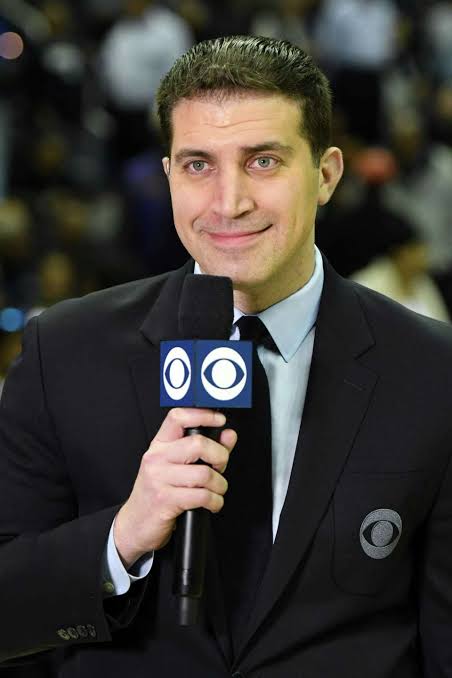
Kentucky’s path back to becoming a serious contender might depend on three players, and respected college basketball insider Jon Rothstein believes the answer to the Wildcats’ biggest problems could be hiding in their backcourt. His latest assessment has given Big Blue Nation an intriguing reason to pay attention.
Jon Rothstein Identifies the Missing Piece in Kentucky’s Puzzle
There is no shortage of expectations surrounding Kentucky basketball, especially with Mark Pope continuing to build his vision in Lexington. However, the Wildcats have encountered some early challenges that have raised questions about their offensive chemistry and overall consistency.
While Kentucky possesses players capable of making important contributions, one particular area appears to need significant improvement: the backcourt.
College basketball insider Jon Rothstein believes the development of Zoom Diallo, Mason Williams, and Alex Wilkins could play a major role in determining how successful Kentucky becomes this season.
According to Rothstein, at least one of these guards needs to elevate his performance considerably if the Wildcats want to finish in the top half of the Southeastern Conference and secure a quality seed in the NCAA Tournament.
“The one thing that needed to happen for Kentucky to be a team that finished in the top half of the SEC and earned a quality seed in the NCAA Tournament was that one of Kentucky’s guards, Zoom Diallo, Mason Williams, or Alex Wilkins, was going to need to play at an all-caliber level,” Rothstein explained.
He also highlighted the lack of coordination among Kentucky’s perimeter players.
“Right now, you don’t see any rhythm, and you don’t see any chemistry on the perimeter.”
That observation touches on something particularly important about Pope’s basketball philosophy.
His offensive approach depends heavily on movement, spacing, intelligent passing, and players understanding how to work together. When those elements come together, Kentucky can become an extremely difficult team to defend.
But when the backcourt struggles to establish a rhythm, the entire offensive structure can become less effective.
Why Kentucky’s Backcourt Could Determine Its Season
One of the most important responsibilities of a successful college basketball backcourt is controlling the pace of the game.
Guards are expected to make intelligent decisions, create scoring opportunities, recognize defensive weaknesses, and ensure their teammates remain involved.
They also need to protect the basketball, particularly against opponents capable of applying intense defensive pressure.
Unfortunately for Kentucky, some of those responsibilities became problematic during the Wildcats’ recent 89-69 defeat to Kansas.
The Jayhawks exposed several weaknesses, particularly when Kentucky attempted to move the basketball and generate consistent offensive opportunities.
The Wildcats committed 15 turnovers, which Kansas converted into 22 points.
Kentucky also struggled from the perimeter, making just four of its 21 attempts from beyond the three-point line.
Those numbers help explain why Rothstein believes the development of the backcourt could become one of the biggest determining factors in Kentucky’s season.
The Wildcats cannot consistently compete against quality opponents if their perimeter players struggle to establish offensive rhythm.
More importantly, Kentucky needs guards who can recognize when to attack, when to distribute the basketball, and when to slow things down.
That balance is essential to making Pope’s offensive system work.
Zoom Diallo Has Already Shown What He Can Bring
Among the three players mentioned by Rothstein, Zoom Diallo deserves particular attention following his performance against Kansas.
Despite Kentucky’s disappointing defeat, Diallo finished as the Wildcats’ leading scorer with 24 points.
His performance demonstrated that he possesses the offensive ability to challenge quality competition, even when the team around him is struggling.
That is an encouraging development for Pope.
However, scoring points is only one part of what Kentucky needs from its backcourt.
Diallo must also help establish better offensive organization, create opportunities for his teammates, and make decisions that allow the Wildcats to maintain their rhythm.
His scoring ability could become particularly valuable if Kentucky finds ways to surround him with better spacing and more consistent perimeter movement.
When a guard can threaten opponents as a scorer while also creating opportunities for teammates, the entire offense becomes more difficult to predict.
Diallo has already provided evidence of his scoring potential.
The next step is finding a way to translate that production into more effective team basketball.
Mason Williams and Alex Wilkins Have an Opportunity to Make Their Mark
While Diallo’s 24-point performance attracted attention, Kentucky needs meaningful contributions from the other guards as well.
Mason Williams and Alex Wilkins are two players whose development could help address the concerns Rothstein identified.
Williams finished with four points against Kansas, while Wilkins contributed eight.
Those numbers alone do not tell the entire story of their performances, but they illustrate why Kentucky needs greater consistency from its perimeter rotation.
The Wildcats cannot rely on one guard to carry the offensive responsibility every night.
Having multiple players capable of creating opportunities would make Pope’s system considerably more difficult for opposing defenses to disrupt.
Williams could help Kentucky by becoming a more consistent contributor within the team’s offensive structure, while Wilkins has an opportunity to provide additional playmaking and scoring support.
The most important factor is how effectively these players complement one another.
Kentucky needs guards who understand when to take control of a possession and when to trust the offensive system.
If one of them begins playing with greater confidence and consistency, it could make a meaningful difference to the team’s overall performance.
That is precisely the type of development Rothstein believes Kentucky needs.
Mark Pope’s Offensive Philosophy Depends on Better Chemistry
One particularly interesting part of Rothstein’s assessment involved the identity of Pope’s basketball system.
“This team and Mark Pope are built on the idea of playing seamless basketball. Like Pope did at BYU.”
That statement is important because it highlights the difference between having talented individual players and having a team that functions effectively together.
Pope’s preferred style requires players to move the basketball quickly, recognize open teammates, maintain proper spacing, and make decisions without unnecessary hesitation.
When those elements work together, Kentucky can generate quality shots and put opposing defenses under considerable pressure.
However, the Kansas game demonstrated how difficult things can become when the perimeter loses its rhythm.
Turnovers interrupt offensive possessions, poor spacing makes it easier for defenders to close passing lanes, and hesitation can prevent the Wildcats from taking advantage of scoring opportunities.
The solution is not necessarily about changing everything Pope wants to accomplish.
Instead, Kentucky needs to become more comfortable executing those principles.
Better communication, improved decision-making, and greater confidence from the guards could help restore the offensive identity Pope wants to establish.
Northern Arizona Provides Kentucky With an Important Opportunity
The Wildcats now have an opportunity to respond when they face Northern Arizona on Friday.
A victory would move Kentucky to 3-1 and provide some positive momentum heading into the next stage of the schedule.
It could also give Pope an opportunity to evaluate how his guards respond after the difficult Kansas experience.
However, simply winning the game will not automatically eliminate the concerns surrounding Kentucky’s backcourt.
What matters is how the Wildcats perform.
Can Diallo continue demonstrating his scoring ability while making his teammates better?
Can Williams and Wilkins provide more consistent contributions?
Can Kentucky take better care of the basketball and generate cleaner offensive opportunities?
Those are the questions supporters will want answered.
The Wildcats need to demonstrate that they can execute their offense against defensive pressure and maintain their composure when opponents attempt to disrupt their rhythm.
A strong performance would be an encouraging step in the right direction.
Could One Backcourt Breakthrough Change Kentucky’s Entire Season?
There is still plenty of basketball ahead, and Kentucky has time to address the issues that became apparent against Kansas.
Rothstein’s assessment provides an interesting perspective on where the Wildcats’ improvement could begin.
Rather than focusing exclusively on the frontcourt or individual scoring performances, his comments point directly toward the development of the backcourt.
Diallo, Williams, and Wilkins now represent three important pieces of a puzzle that Pope must continue putting together.
If one of them develops into the consistently high-level guard Rothstein believes Kentucky needs, it could change the way the entire team operates.
Better perimeter production would create more opportunities for Kentucky’s shooters, improve offensive spacing, and make life easier for the players operating inside.
It could also help the Wildcats become more competitive against the strongest teams in the SEC.
Of course, one player’s improvement will not solve every problem. Kentucky still needs better defensive performances, improved rebounding, and greater consistency across the roster.
But establishing a reliable backcourt could provide the foundation for everything else.
For Big Blue Nation, the most encouraging possibility is that Kentucky’s biggest improvement may not require an entirely new identity.
It may simply require the right player to take the next step.
And with Northern Arizona approaching, the Wildcats have an immediate opportunity to begin showing what they can become.
The biggest question now is which of the three guards will answer the challenge first.
Could Zoom Diallo, Mason Williams, or Alex Wilkins become the missing piece that helps Mark Pope unlock Kentucky’s true potential this season?