

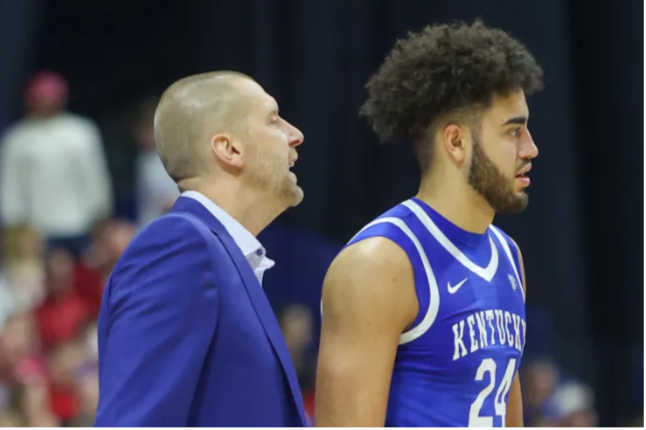
Kentucky basketball is facing another uncomfortable moment, and head coach Mark Pope is increasingly finding himself under pressure as frustration continues to grow among the Wildcats faithful. Following Kentucky’s disappointing 90-76 defeat to Indiana, questions are being raised about Pope’s repeated explanation that his team is still young and inexperienced. What initially appeared to be a reasonable explanation for the team’s struggles is now becoming a major talking point, with critics questioning whether the head coach is using inexperience to avoid addressing deeper problems within the programme.
For a programme with the history, resources and expectations of Kentucky, disappointing performances rarely go unnoticed. Big Blue Nation expects more than occasional flashes of potential. Supporters want consistency, discipline, strong performances against quality opposition and, most importantly, results that reflect the prestige of the Wildcats basketball programme.
The latest defeat has therefore created another difficult conversation surrounding Pope’s leadership, his roster management and the team’s ability to compete at the highest level.
Kentucky’s Defeat to Indiana Raises More Questions
Kentucky entered its matchup against Indiana hoping to deliver an encouraging performance and build momentum. For a significant portion of the first half, the Wildcats appeared capable of getting the job done.
They went into the halftime break holding a narrow 47-45 advantage, giving supporters reasons to believe that the team could eventually secure an important victory.
However, the second half told a completely different story.
Indiana returned with greater intensity, took advantage of Kentucky’s weaknesses and gradually established control of the contest. The Wildcats struggled to maintain their earlier momentum, while Indiana found ways to create opportunities and turn the game in its favour.
By the final buzzer, Kentucky had suffered a 90-76 defeat, a 14-point loss that further intensified scrutiny of the team’s performances.
For supporters, the disappointing result was not simply about losing another game. It was about the manner in which Kentucky surrendered control after appearing competitive during the opening half.
The performance raised questions about the team’s adjustments, defensive consistency and ability to respond when opponents increase the pressure.
Mark Pope’s Inexperience Explanation Is Facing Growing Criticism
One of the biggest controversies surrounding Kentucky is Pope’s continued description of his roster as young and inexperienced.
There is no question that building a successful college basketball team requires time. Players must develop chemistry, understand their individual responsibilities and become comfortable operating within the coaching staff’s system.
However, critics believe that the inexperience argument is becoming increasingly difficult to defend when several players on the roster already have meaningful college basketball experience.
Among the names attracting attention are Milan Momcilovic, Zoom Diallo and Alex Wilkins.
Momcilovic has accumulated more than 100 college starts, while Diallo has started approximately 50 games. Wilkins has also gained valuable experience at the college level.
These numbers have prompted questions about whether Kentucky’s problems can genuinely be attributed to a lack of experience.
Critics argue that having experienced players should provide a foundation for consistency, particularly in challenging situations. Players who have already competed in numerous college games are generally expected to understand the demands of high-level basketball.
That does not mean experience automatically guarantees success. However, it does make it harder to explain repeated difficulties simply by describing the roster as inexperienced.
The Numbers Are Creating an Uncomfortable Conversation
Another statistic has added fuel to the discussion surrounding Pope’s comments.
Kentucky reportedly ranks 79th among 362 Division I programmes in average player experience. That ranking has become an important part of the argument for those questioning the coach’s explanation.
For a programme with Kentucky’s reputation, supporters naturally expect the roster to possess enough experience and talent to compete against nationally recognised opponents.
The Wildcats are not expected to be perfect, and rebuilding a competitive team is never a straightforward process. Nevertheless, the standard at Kentucky is considerably different from that of an ordinary college basketball programme.
Every season comes with enormous expectations, and performances are judged against the history of a team that has consistently competed for championships.
The concern is that Kentucky’s difficulties appear to extend beyond the normal growing pains associated with introducing new players into a system.
When experienced players are already available, supporters want to see those players delivering performances that demonstrate their experience and understanding of the game.
Pope’s Overall Record Is Also Becoming a Talking Point
The pressure surrounding the Kentucky head coach is not limited to the Indiana defeat.
Pope has recorded 50 victories and 28 defeats across his first 78 games as Kentucky’s head coach.
Although that record includes victories that demonstrate the team’s potential, the losses have also created questions about Kentucky’s consistency, particularly against stronger opposition.
One particularly concerning statistic highlights the frequency with which the Wildcats have struggled against major opponents.
Kentucky has fallen behind by at least 15 points in 21 of its 53 games against Power Five opponents and Gonzaga during Pope’s tenure.
While not every significant deficit has resulted in a defeat, the numbers suggest that the Wildcats have experienced recurring difficulties when facing quality competition.
For a programme accustomed to national attention and championship expectations, that pattern is difficult to ignore.
Supporters want a team that can remain competitive for the entire 40 minutes, make necessary adjustments and respond when opponents begin controlling the game.
Falling behind by substantial margins repeatedly creates concerns about preparation, defensive organisation and the team’s overall mentality.
Is Coaching Becoming the Bigger Issue?
As criticism grows, another important question is beginning to emerge: how much responsibility should Pope accept for Kentucky’s struggles?
Roster construction, player development and game management are all important responsibilities of a head coach.
Although injuries, player availability and roster changes can influence results, coaches are ultimately expected to find solutions and make the necessary adjustments.
When a team repeatedly struggles with similar problems, supporters naturally begin looking beyond individual player performances.
They want to know whether the coaching staff is identifying weaknesses early enough, preparing players effectively and making the right decisions during crucial moments.
Kentucky’s defeat to Indiana has therefore become more than another disappointing result. It has reopened discussions about whether Pope’s approach is producing the consistency required at a programme of this magnitude.
His supporters may argue that the team needs additional time to develop, but critics believe that patience should not prevent legitimate questions from being asked.
Big Blue Nation Wants Answers, Not More Excuses
The expectations surrounding Kentucky basketball are enormous, and that pressure comes with the territory of leading one of college basketball’s most recognised programmes.
Pope inherited a job where success is measured against an extraordinary history. Supporters understand that rebuilding a team takes effort, but they also expect visible progress.
The latest loss has placed the spotlight firmly on the head coach, particularly because the inexperience explanation is now facing increasing scrutiny.
The Wildcats have talent, resources and players with meaningful college experience. The challenge is turning those advantages into consistent performances and victories.
For Pope, the coming games could become increasingly important in determining how quickly confidence returns among the supporters.
Kentucky must demonstrate that it can learn from its mistakes, compete more effectively against quality opponents and maintain its intensity throughout entire games.
Ultimately, the question is no longer simply whether Kentucky has enough experience.
The bigger question is whether Mark Pope can get the best out of the players available to him and deliver the level of basketball that Big Blue Nation expects.
As the criticism continues to grow, one thing is becoming increasingly clear: Kentucky supporters want answers on the court, and the pressure on Pope will only intensify if the results do not improve.