

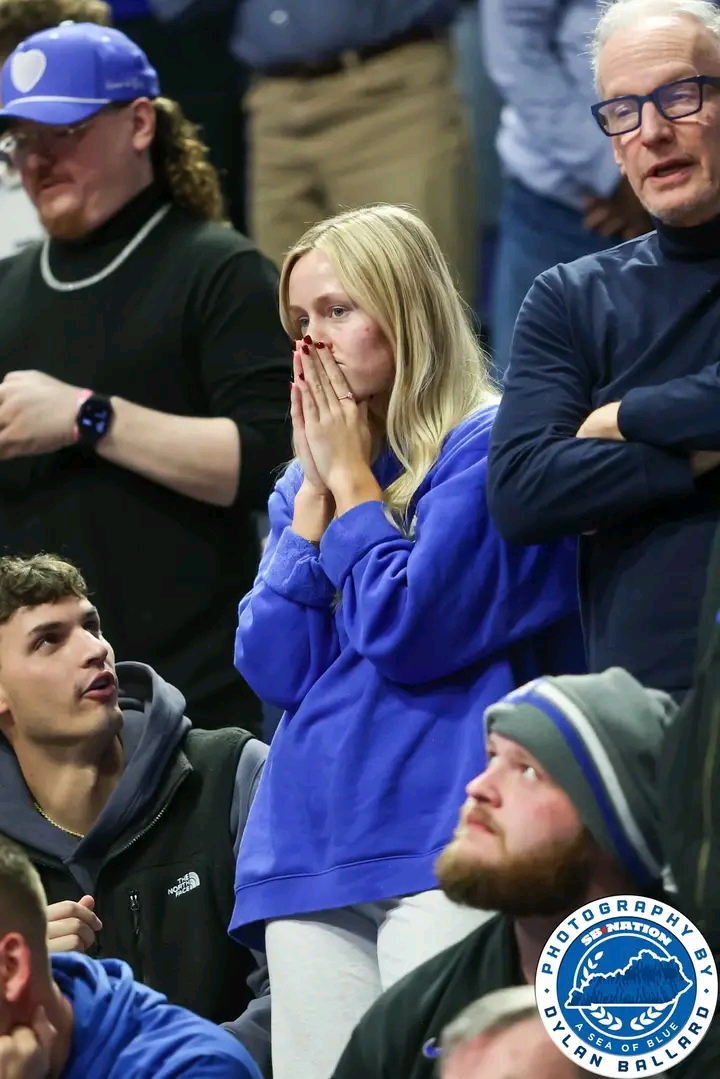
Another painful defeat has left Kentucky fans searching for answers, but the 73-71 overtime loss to Wichita State may have exposed a much deeper problem than the final score suggests. With Mark Pope facing growing questions over his team’s performances, the Wildcats’ latest collapse has brought several troubling issues into focus, and the concerns extend far beyond one missed shot.
Kentucky basketball endured another heartbreaking night at Rupp Arena on Friday, and this time, the disappointment came in a way that could make the growing concerns surrounding Mark Pope’s team even harder to ignore. The Wildcats had opportunities to take control, but their inability to sustain momentum, dominate the boards and execute during crucial moments ultimately proved costly in a 73-71 overtime loss to Wichita State.
The defeat was particularly frustrating because Kentucky appeared to have found a promising rhythm during the first half. However, that momentum disappeared after the break, and the Wildcats once again struggled to find the answers when the game became increasingly competitive.
While the final score tells the story of a two-point defeat, the problems exposed during the contest could be considerably more worrying. Rebounding deficiencies, offensive stagnation and questionable late-game decisions have become difficult to overlook, leaving Mark Pope with several issues to address as Kentucky prepares for another demanding stretch of its schedule.
Kentucky’s promising first half could not prevent another frustrating collapse
The opening minutes at Rupp Arena were far from encouraging for either team. Kentucky struggled to find its shooting rhythm, while Wichita State also experienced difficulties converting opportunities.
The Wildcats started 4-of-13 from the field during the first eight minutes, but the Shockers’ poor shooting initially prevented them from building a significant advantage.
Even during that relatively slow start, however, one troubling issue was already becoming apparent. Wichita State repeatedly found opportunities on the offensive glass, putting pressure on Kentucky’s frontcourt and exposing a weakness that would become increasingly important as the game progressed.
Kentucky eventually responded with a much-needed offensive run. The Wildcats produced a 12-0 stretch, with Mason Williams delivering a three-pointer that helped the home team establish a 31-25 advantage at halftime.
For a moment, there was reason for optimism. Kentucky appeared to have regained control, and the Wildcats had managed to build a lead despite their early shooting struggles.
Unfortunately, that positive momentum did not last.
Wichita State came out aggressively after the break, and Jordan Frison immediately began causing problems for Kentucky’s defense. He scored 13 points during the opening eight minutes of the second half, outscoring Kentucky during that stretch and helping the Shockers take a 47-42 lead.
The Wildcats suddenly found themselves chasing the game again, and the contest gradually developed into a tense battle in which neither side could establish consistent control.
Wichita State exposed a major weakness Kentucky cannot afford to ignore
One of the biggest concerns emerging from Friday’s defeat was Kentucky’s inability to compete effectively on the boards.
The Wildcats entered the game without Malachi Moreno, and his absence undoubtedly affected the team’s interior presence. However, the scale of the rebounding problem was difficult to explain solely by the missing center.
Wichita State finished with 23 offensive rebounds, an extraordinary number that allowed the visitors to repeatedly extend possessions and create additional scoring opportunities.
The Shockers ultimately won the overall rebounding battle 55-36, demonstrating just how thoroughly they dominated an important aspect of the contest.
Will Berg, standing at 7-foot-2, collected 20 rebounds, while Dillon Battie finished with 17. Both players individually recorded more rebounds than Kentucky’s starting frontcourt combination of Ousmane N’Diaye, Milan Momcilovic and Franck Kepnang, which managed only 13 combined.
That statistic is particularly concerning for Mark Pope because rebounding is not always determined by height or athletic ability alone. Positioning, anticipation, physicality and the willingness to consistently box out opponents are equally important.
Kentucky’s players repeatedly struggled to establish those fundamentals, allowing Wichita State to take advantage of opportunities that should have been contested more aggressively.
Missing Moreno certainly made the challenge more difficult, but the Wildcats’ collective effort on the glass raised questions about whether the team has enough physical toughness and discipline to compete consistently against opponents that attack the boards relentlessly.
This is a problem Pope cannot simply hope will disappear.
The power forward position is becoming an increasingly difficult problem
Another issue that stood out during the defeat was Kentucky’s lack of production from the power forward position.
Ousmane N’Diaye and Justin McBride combined for zero points and five rebounds, leaving the Wildcats with very little contribution from players expected to provide support in the frontcourt.
That lack of production creates difficult decisions for Pope, particularly when the team needs additional scoring, physicality and rebounding.
One possible solution involves moving Milan Momcilovic to the power forward position and playing Kam Williams at small forward. Pope experimented with that arrangement, but it also creates another challenge.
Kentucky already struggled to control the boards against Wichita State, and using a smaller lineup could make the rebounding problem even more pronounced.
The Wildcats’ guards have also struggled to consistently contribute defensively on the glass, particularly when opponents attack from the weak side.
Consequently, Pope faces a difficult balancing act. He needs more offensive production from the power forward position, but changing the lineup could expose an already vulnerable rebounding unit.
There is no obvious solution, and that is precisely why the issue could continue affecting Kentucky in the coming games.
Kentucky’s offense stalled when the pressure increased
Perhaps one of the most frustrating aspects of Friday’s performance was the way Kentucky’s offense gradually became stagnant.
The Wildcats recorded seven assists during the first half, suggesting that ball movement and teamwork were helping them generate scoring opportunities.
However, that approach disappeared after halftime.
Kentucky managed just three assists during the second half and overtime, a significant decline that reflected the team’s growing difficulty finding effective offensive solutions.
Instead of moving the ball quickly, the Wildcats frequently relied on individual players attempting to create opportunities through dribbling and driving into crowded areas.
That approach became increasingly predictable, allowing Wichita State to defend more comfortably and limiting Kentucky’s ability to generate open looks.
The problem is not simply that Kentucky missed shots. The concern is that the Wildcats struggled to consistently create the type of opportunities that can help a team survive difficult shooting stretches.
When games become tight, ball movement, patience and decision-making become particularly important. Kentucky failed to demonstrate enough of those qualities during the closing stages.
Until Pope’s players become more comfortable moving the ball and trusting their teammates, similar offensive struggles could continue appearing against opponents capable of applying defensive pressure.
Late-game decisions could haunt Mark Pope after another painful loss
The final minutes of regulation and overtime provided Kentucky with opportunities to escape with a victory, but several crucial moments ultimately went against the Wildcats.
Michael Gray Jr. scored 10 of Wichita State’s final 14 points in regulation, helping the Shockers tie the game at 65 with 47 seconds remaining.
Kentucky had a chance to respond after a chaotic sequence involving Mason Williams, but the Wildcats were unable to capitalize on the opportunity to secure the victory before overtime.
The extra period brought more drama.
Milan Momcilovic stepped out of bounds with just over 30 seconds remaining while Kentucky was trailing by two points. Rather than immediately fouling, the Wildcats allowed the possession to continue and eventually regained the ball with only five seconds remaining.
However, the subsequent inbound play became another frustrating moment.
A coaching decision left Alex Wilkins attempting to pass the ball to Mason Williams, but the ball went out of bounds. Wichita State then threw a long inbound pass, which Franck Kepnang intercepted, giving Kentucky another opportunity.
Instead of taking the ball toward the basket, Kepnang passed it back to Momcilovic, whose open three-point attempt missed.
Wichita State escaped with a 73-71 victory.
Those late-game decisions will inevitably attract scrutiny, particularly because Kentucky had opportunities to improve its chances of winning during the closing seconds.
Kam Williams offered a bright spot, but Kentucky needs much more
Despite the disappointment, Kam Williams delivered a performance worth recognizing.
The guard finished with 16 points and eight rebounds, showing determination and contributing in an area where Kentucky desperately needed additional effort.
His performance was one of the more encouraging aspects of the night, but individual contributions were not enough to compensate for the team’s broader problems.
Kentucky needs more players consistently producing, particularly in the frontcourt, where rebounding and scoring contributions have become increasingly important.
The Wildcats cannot rely on a handful of players to carry the team whenever opponents expose weaknesses in the lineup.
Pope will need to find a way to create greater consistency across the roster, improve the team’s offensive structure and ensure that defensive fundamentals become a priority.
Virginia now presents another important test for Kentucky
Kentucky’s next challenge will come against Virginia on Wednesday night in the SEC/ACC Challenge, giving Pope and his players little time to dwell on the Wichita State defeat.
The upcoming matchup could provide an opportunity to respond, but it will also test whether Kentucky can address the problems exposed at Rupp Arena.
The Wildcats must improve their rebounding, find better offensive rhythm and demonstrate greater composure during crucial moments.
Friday’s defeat was not simply about missing a final shot. It was about several recurring problems combining to produce another frustrating result.
Kentucky still has time to improve, but the pressure to find answers is becoming increasingly difficult to ignore.
For Mark Pope, the Virginia matchup could represent an important opportunity to show that the Wildcats can learn from their mistakes.
The question now is whether Kentucky can respond before these troubling patterns become even more damaging to its season.