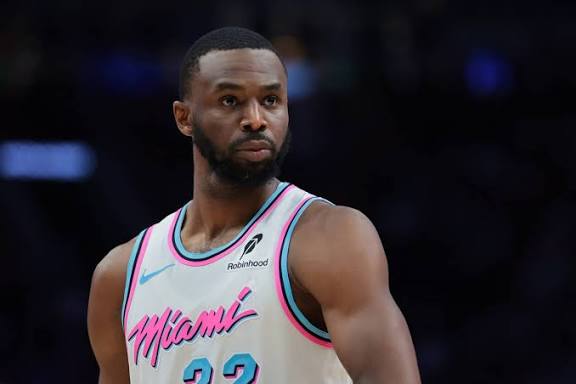
He knocked down 48.4% of his three-point attempts in the playoffs — putting him among the top shooters in the NBA that postseason. If you had to guess who shot that hot, who immediately springs to mind? Nikola Jokić? Luka Dončić? LeBron James? Maybe Jalen Brunson, Karl‑Anthony Towns or Anthony Edwards?
Surprisingly, none of those. The scorching-hot shooter was actually Rui Hachimura of the Los Angeles Lakers.
It’s easy to understand why some Lakers fans have floated the idea of trading him — and we’ll get to why — but before that, it’s critical to appreciate just how much value Hachimura brings. It’s that value which makes him an intriguing trade target for a club like the Miami Heat.
In this hypothetical scenario, the Lakers prioritize length, perimeter defense, and more natural fits around their stars — while the Heat secure one of the league’s most underrated scoring forwards. Here’s how this deal could benefit both sides.
Proposed Trade: Hachimura to Miami
Miami receives: Forward Rui Hachimura + Guard/Forward Dalton Knecht + Center Maxi Kleber
Los Angeles receives: Forward Andrew Wiggins + Forward Jaime Jaquez Jr.
The Lakers currently straddle two timelines: maximizing their championship window now with LeBron James still in the fold, while also anticipating the post-LeBron era, whether that shift comes in 2026 or sooner. This trade leans toward immediate contention. By adding more size and defensive presence on the wing, Los Angeles could re-build its status as a serious title threat. That’s where Andrew Wiggins comes into the picture.
Why Andrew Wiggins Fits in L.A.
Wiggins brings playoff experience, top-tier perimeter defense, and the versatility to match up against elite wing scorers. Listed at roughly 6’7″ (or 6’8″) with a long wingspan, he’s physically built to guard the likes of Durant, Edwards or other high-end wings — something the Lakers have often lacked in recent postseasons.
In the 2024-25 regular season, Wiggins averaged about 18.0 points, 4.5 rebounds and 2.6 assists per game. He remains in his prime at age 30, so the notion of a sharp decline isn’t imminent.
What the Lakers Would Be Giving Up
Trading Hachimura won’t be an easy decision—especially given his efficient shooting and reliability. In the 2024-25 regular season he averaged about 13.1 points per game and shot roughly 50.9% from the field.
The playoff shooting number cited above underscores his value in the clutch.
But the Lakers would be making a deliberate trade-off: sacrificing some scoring punch in exchange for defensive versatility. With Dončić and James capable of shouldering much of the scoring burden, Los Angeles could justify the move in order to shore up their wing defense.
Dalton Knecht vs. Jaime Jaquez Jr.
In this proposal, Dalton Knecht might be on the move. While he has upside, his fit in L.A. may already be constrained, and a fresh development path in Miami’s system could be beneficial.
Jaime Jaquez Jr., meanwhile, would provide the Lakers with a gritty, versatile forward. Although his role dipped late last season, Jaquez has shown strong motor, positional flexibility and gritty defense. If his outside shot becomes more consistent, he could develop into a true two-way contributor.
Hachimura: Hidden Weapon
For the Heat, acquiring Hachimura would mean landing an underrated scoring forward. While his defense and rebounding sometimes draw critique, his offensive toolkit is legit. He can generate his own shot, score efficiently in the mid-post, attack close-outs and move in transition.
In high-leverage moments for the Lakers, Hachimura repeatedly delivered. Being plug-and-play in many offensive sets, he could fill a forward-scoring void in Miami’s rotation.
The Contract Situation
Hachimura is entering the final year of his deal, which means the Lakers need to decide: extend him, or trade him while his value is high. Exchanging him now for a more proven two-way wing like Wiggins could allow L.A. to stay competitive while retooling.
While some fans may under-appreciate Hachimura’s contributions, his numbers and on-film work speak volumes — he’s an efficient, poised scorer who elevates his play under pressure. On a roster with Dončić and James, his role may be more replaceable than on a younger team.
Final Thoughts
This trade would be bold, but both teams could emerge stronger.
For the Lakers, it’s about beefing up their defense and adding playoff-tested versatility. For the Heat, it’s about acquiring fresh scoring and forward-depth. If Los Angeles is genuinely committed to contending while LeBron’s window remains open, this kind of move—though risky—might be exactly the kind of strategic shake-up that pushes them back into the championship mix.