


Michael Malone Saw Something Others Missed. Now One Former ACC Rival Could Become the Secret Behind a High-Octane UNC Attack—and If He Takes the Next Step, Tar Heel Fans Might Be Witnessing the Beginning of Something Special
When Michael Malone accepted the challenge of rebuilding North Carolina basketball, he inherited far more uncertainty than stability.
The departures of Caleb Wilson, Henri Veesaar, Seth Trimble, and several other key contributors left the Tar Heels facing one of the most dramatic roster overhauls in recent memory. For a moment, many around college basketball wondered whether the program would experience a rebuilding season under its new head coach.
Instead, Malone attacked the transfer portal aggressively and methodically, piecing together a roster capable of competing immediately in the ACC.
And while the additions of Terrence Brown, Matt Able, Alexandros Samodurov, and several highly regarded newcomers have grabbed headlines, there may be another player who ultimately determines just how dangerous North Carolina becomes.
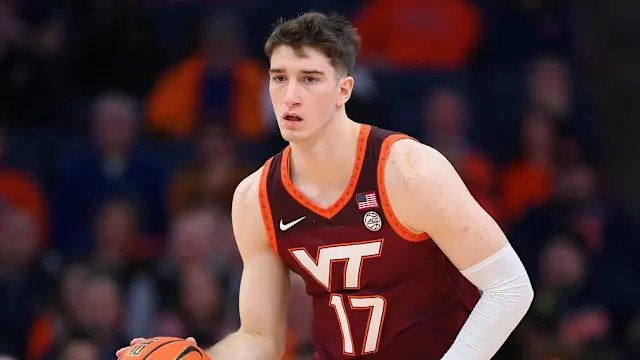
That player is former Virginia Tech standout Neoklis Avdalas.
Malone’s First Major Move
Long before other pieces began falling into place, Avdalas became Michael Malone’s first significant addition.
That alone speaks volumes.
Malone could have pursued countless guards in the portal, but he prioritized the 6-foot-9 Greek playmaker almost immediately. His size, vision, versatility, and professional background made him a unique weapon—one capable of changing the complexion of North Carolina’s offense.
Avdalas averaged 12.1 points, 4.6 assists, and 3.1 rebounds last season at Virginia Tech while showcasing the ability to function as both a scorer and facilitator.
While his shooting percentages left room for improvement, his overall skill set made him one of the most intriguing players available in the portal.
Malone clearly saw something special.
And now Tar Heel fans are beginning to understand why.
A Different Kind of Point Guard
At 6-foot-9, Avdalas doesn’t fit the traditional mold.
He’s bigger than most guards.
He’s long enough to defend multiple positions.
And perhaps most importantly, he possesses the court vision and creativity of a true floor general.
His size alone creates matchup problems.
Smaller guards struggle to contest his passes and shots, while bigger defenders often lack the foot speed to stay with him off the dribble.
That versatility is exactly what Malone wants for his offense.
Throughout his NBA coaching career, Malone has thrived with playmakers who can create advantages and keep defenses guessing.
Avdalas fits that philosophy perfectly.
Why He Could Unlock Everything
North Carolina’s roster suddenly features scoring threats everywhere.
Terrence Brown brings elite shot-making ability.
Matt Able provides athleticism and star potential.
Jarin Stevenson returns with valuable experience.
Alexandros Samodurov and Sayon Keita give the Tar Heels size and versatility in the frontcourt.
But none of that matters if the offense lacks a conductor.
That’s where Avdalas enters the picture.
If he can consistently initiate offense, attack defenders, and create opportunities for teammates, North Carolina’s ceiling changes dramatically.
Instead of simply being an ACC contender, the Tar Heels could emerge as one of the most explosive offensive teams in the country.
His ability to operate in pick-and-roll situations, push the pace in transition, and find shooters around the perimeter could make UNC exceptionally difficult to defend.
The Best-Case Scenario Is Scary
The most optimistic projections for Avdalas are exciting.
If his outside shot becomes more consistent and his efficiency improves, the Greek star could blossom into one of the premier playmakers in college basketball.
His combination of size and skill resembles the type of players NBA teams covet.
And with Malone’s experience developing talent at the highest level, there’s reason to believe Avdalas’ game could reach another level in Chapel Hill.
In that scenario, North Carolina’s offense becomes incredibly versatile.
Opponents would have to defend Brown’s shooting, Able’s athleticism, Stevenson’s experience, and the interior presence of the big men—all while trying to contain a 6-foot-9 point guard capable of dissecting defenses.
That’s a nightmare for opposing coaches.
There Are Still Questions
Of course, nothing is guaranteed.
Avdalas shot just 31.4 percent from three-point range last season and 38.6 percent overall.
Those numbers suggest that efficiency remains a work in progress.
Consistency will be crucial.
Can he limit turnovers?
Can he become a reliable perimeter threat?
Can he handle the pressure that comes with leading one of college basketball’s most storied programs?
Those questions remain unanswered.
But the talent is undeniable.
Why Malone Believes
Perhaps the biggest reason for optimism lies in who recruited him.
Michael Malone didn’t inherit Avdalas.
He chose him.
He identified him.
And he made him a priority.
That speaks louder than statistics.
Malone has spent decades around elite basketball minds and championship-caliber players. His evaluation carries weight.
If he believes Avdalas can become the engine behind North Carolina’s offense, that’s a belief worth taking seriously.
Because history shows that great coaches often see potential long before everyone else does.
The Piece That Could Define the Season
Much of the attention surrounding North Carolina has focused on the roster makeover itself.
And rightfully so.
After losing so much talent, few expected the Tar Heels to recover this quickly.
But championship teams are rarely built around talent alone.
They’re built around players who elevate everyone around them.
Players who make offenses flow.
Players who transform good rosters into dangerous ones.
For North Carolina, that player may very well be Neoklis Avdalas.
Michael Malone saw something others missed.
Now, the former Virginia Tech standout has an opportunity to prove that the first move of the Malone era might end up being the most important one of all.
And if his development unfolds the way the Tar Heels hope, Chapel Hill could soon discover that its biggest offseason acquisition wasn’t the loudest one.
It was simply the one capable of making everything else work.




